Snowbird Tram Proposal: What to Know Before You Go Up
The doors close. The cabin lifts off the ground. For the next ten minutes, Little Cottonwood Canyon opens up beneath you, the granite walls climbers spend all summer on shrink to the size of your palm, and there’s nowhere else to be.
That’s the appeal of a Snowbird tram proposal. It’s also the catch: this tram is a public ride, shared with up to a hundred strangers, and most proposal guides never mention that part out loud. They show you the postcard shot from Hidden Peak and skip straight past the logistics that decide whether your moment feels like yours or like a show for whoever else happens to be standing nearby.
Here’s how to plan a Snowbird tram proposal around the fact that it’s a shared ride: how the tram mechanically works, what it costs in each season, how much privacy you get, and the specific way I stage the moment once you’re standing at 11,000 feet instead of pretending the ride itself is private.
TL;DR
The tram covers 1.6 miles and about 2,900 vertical feet in roughly 10 minutes, up to Hidden Peak at close to 11,000 feet.
Cabin capacity runs up to 100 people today, so the ride up is never private. Plan the actual proposal for Hidden Peak, not the cabin.
Winter: tram access comes bundled into a day lift ticket, up to $200 depending on the date. Summer: a tram-only round trip has run around $52 weekday / $58 weekend in recent seasons.
Hidden Peak has a 23,000-square-foot building (The Summit) with a 10,000-square-foot deck, dining, and a private second-floor space used for weddings and events.
Weekday mornings outside of resort event weekends (Snowbird’s Oktoberfest, typically late August, is a known busy one) give you the thinnest crowd.
Why Propose on the Snowbird Tram
Most Utah proposal locations hand you the moment gradually. You hike for an hour, round a bend, and the view slowly builds until you’re standing in front of it. The tram does the opposite. It compresses the whole build into ten minutes and one set of doors opening onto an alpine summit, which is why it works so well for a proposal specifically: the structure of the ride itself does half the emotional lifting before you've even stepped off the cabin.
You get a built-in rhythm a trail can’t hand you for free: the doors closing, the valley dropping away, the anticipation climbing right alongside the cabin, and then the doors opening onto Hidden Peak with the whole Wasatch Range spread out in front of you. That structure does a lot of the emotional work before either of you says a word.
It’s also a distinctly different kind of proposal photo than what most Utah couples end up with. Red rock arches and alpine lake overlooks dominate this state’s proposal photography, and for good reason, but a granite-walled canyon giving way to a 11,000-foot summit view is its own look entirely, more dramatic in scale than almost anywhere else within a half hour of Salt Lake City.
There’s a practical upside too. Unlike a backcountry trail, Hidden Peak comes with an actual building, working restrooms, and a full-service restaurant. If part of your vision includes toasting the moment somewhere warm with a view instead of hiking straight back down, this is one of the only proposal spots in the state where that’s built into the location itself, not something you have to plan as a separate stop.
It's also worth naming who this spot tends to fit best, since it isn't the right call for every couple. Long-distance couples flying in for a short weekend gravitate toward the tram because it doesn't demand a full day of driving and hiking the way Moab or Zion would. Couples who already have a relationship with the mountain, maybe you ski there every winter, or Little Cottonwood Canyon is where you had an early date, get an extra layer of meaning out of proposing somewhere that already matters to you. And couples who want a built-in celebration afterward, food, a view, somewhere to sit down and let the moment sink in, get something most trailhead proposals can't offer without a separate stop in the car.
How the Tram Works
Before you build a proposal around this tram, it helps to know what you’re booking a ride on, and what kind of machine carries you up the canyon wall.
The Snowbird Aerial Tram runs on 1.6 miles of cable, climbing about 2,900 vertical feet from the base area to Hidden Peak, which sits close to 11,000 feet in elevation. The ride itself takes roughly 10 minutes, a smooth, steady climb rather than a quick chairlift hop, with panoramic windows that keep the canyon in view the entire way up. You'll watch the base area, the parking lots, and eventually the whole floor of Little Cottonwood Canyon shrink beneath you as the cabin climbs the granite wall, a distinctly different sensation than riding a chairlift or driving a switchback road, since there's no track or road underneath you, just the two cables and open air.
The cabins carry up to 100 passengers today. That’s down from the original 1971 cabins, which carried 125 people before a 2022 upgrade replaced them with a modern car. Either number tells you the same story for planning purposes: this is a large, shared public cabin, not an intimate gondola built for two. Picture a city bus turned on end and wrapped in glass, standing room mixed with a handful of bench seats, and you have a fair sense of what boarding feels like on a moderately busy day.
There’s no version of this ride where you book a private car. Snowbird doesn’t sell the tram as a private charter for a proposal, and I’d rather tell you that plainly than let you plan around an option that doesn’t exist. What you’re booking is a shared scenic ride to a summit that happens to be an excellent place to propose once you’re off the cabin and standing on your own two feet. If a fully private ride is non-negotiable for you, a helicopter tour is the only way to get that in this canyon, and that's a different budget and a different kind of vendor than a scenic resort tram ticket.
Booking & Logistics: Tickets, Schedule, and Cost
What you pay for the tram depends almost entirely on which season you’re proposing in, since the resort prices it two different ways.
Winter Pricing
In winter, tram access comes bundled into a day lift ticket rather than sold as its own scenic-ride pass. A day ticket runs up to $200 depending on the date, higher on a holiday or a powder weekend, lower on an ordinary weekday. You’re technically buying full mountain access, not just a ride to the summit and back, which matters if you’re not planning to ski or ride: you’ll pay the same lift-ticket price as someone who is.
Summer Pricing
Summer works differently and, for a proposal that’s only about the ride and the view, more efficiently. A tram-only round trip has run in the neighborhood of $52 on weekdays and $58 on weekends in recent seasons, cheaper than winter because you’re not paying for chairlift access you have no use for. Booking online a few days ahead has historically saved a bit over paying at the window, worth checking when you buy. Treat both of these numbers as a starting point, not gospel: resort pricing shifts season to season, so confirm the current rate on Snowbird’s own site before you lock in a date.
Schedule
Winter tram and lift hours generally run 9am to 4pm, though that’s worth reconfirming against the current season’s posted hours rather than assuming it holds every year. Summer departures tend to start mid-morning rather than at sunrise, one recent visitor reported the first car of the day around 11am, so this isn’t a spot built around a pre-dawn proposal the way a hiking trail might be. Once the tram is running, it cycles on a continuous loop rather than a handful of scheduled departures, so you’re rarely waiting long once you’re at the base with a ticket in hand.
What This Means for Planning
Build your day around a specific departure window, not a specific minute. Arrive with enough buffer to park, buy or scan your ticket, and get in line without feeling rushed, especially if this is a summer weekend or anywhere near Oktoberfest. And because there’s no way to reserve a specific car or guarantee who else is riding with you, plan the proposal itself for Hidden Peak, not for the ten minutes in the cabin. More on how that staging works, step by step, further down this page.
Parking
Snowbird's base area has multiple lots, and the closest ones to the tram dock fill first on busy weekends and Oktoberfest dates. Arriving 30 to 45 minutes before your intended departure gives you a solid buffer for parking and the walk to the dock, longer than that if you're coming up on a peak Saturday. A tighter arrival window is fine on a quiet weekday morning, but building in the extra time costs you nothing and saves you from rushing into a proposal already frazzled from a parking hunt.
Thinking About the Tram Specifically?
Tell me your season and rough travel window, and I’ll walk you through what a Snowbird tram proposal costs, start to finish, before you buy a single ticket.
Let’s address the part every couple wonders about and few guides answer directly: no, you will not have this tram to yourselves.
A cabin built for up to 100 people is, by definition, a public space. On a busy weekend, expect the ride up to be noticeably crowded, shoulder to shoulder in spots, with tourists, skiers, or hikers depending on the season. Even on a quiet weekday, you’re unlikely to be the only two people in the car. If your mental picture of this proposal is a private glass box with just the two of you and the mountains, that image belongs to a different kind of experience, a private helicopter tour, say, not the Snowbird tram.
Here’s the reframe that makes this work anyway: the ride up isn’t the proposal. It’s the arrival. Hidden Peak, once you’re off the cabin, is a different environment entirely, a wide summit with a 10,000-square-foot outdoor deck and multiple vantage points spread across the building and the terrain around it. That space gives both of you room to step away from the crowd that just rode up with you, and it gives me room to find a spot with a clean sightline that doesn’t put us in the middle of foot traffic.
Think of it the way I'd think of a busy trailhead parking lot at a national park: nobody expects privacy in the lot itself, but a hundred yards down the trail, the crowd thins fast because most visitors only came for the view closest to their car. Hidden Peak works on a similar principle. A lot of the tram's passengers snap a few photos near the doors, grab something from the coffee shop, and head back down within twenty minutes. Give it a little time and a little distance from the unloading area, and the crowd around you naturally sorts itself into people who are staying to look around, a much smaller, much calmer group to be standing near for a proposal, than the wave of people who ducked out for a five-minute photo op and headed back to the dock.
Timing still matters even with that extra room. A weekday morning departure, especially outside of any event weekend, means fewer people get off the tram with you in the first place, which makes finding a quiet corner of the deck considerably easier than it would be on a packed Saturday in ski season or during Oktoberfest weekend in late summer. I’ll help you weigh that against your actual travel dates when we talk.
Summer vs. Winter: Which Fits Your Proposal
Snowbird runs scenic tram rides in both seasons, and they’re distinctly different experiences, not just the same ride with a different jacket.
Summer
Summer riders are mostly hikers, sightseers, and mountain bikers heading up for trail access rather than snow. The crowd tends to move faster, people are there to hike or explore and keep moving, which can work in your favor if you want the deck to clear out a bit as the morning goes on. Wildflowers typically peak from mid-July into early August across the alpine terrain around Hidden Peak, worth factoring in if a green, blooming backdrop matters to your photos more than a snowy one. The tradeoff is Snowbird’s Oktoberfest, typically held over a couple of weekends in late August, which draws a considerably bigger crowd than an ordinary summer Tuesday. If your travel dates land anywhere near it, expect the tram, the base area, and Hidden Peak itself to be busier than usual, and plan your timing accordingly. Early September, once Oktoberfest wraps and before the tram shifts toward winter prep, tends to be one of the calmer stretches of the whole season.
Winter
Winter rides share the cabin with skiers and riders heading up for first tracks, a different energy entirely: more gear, more layers, more excitement about the snow itself than the view. Weekends and powder days run heaviest, understandably, since that’s when skiers most want to be there, particularly the morning after a big overnight storm. A midweek morning, especially one without fresh snow overnight, is your best shot at a thinner crowd in this season. Early season (typically late November into December, snowpack depending) and late season (March into April) tend to draw fewer skiers than the heart of a normal winter, since the snow is either just arriving or already softening, which can work in your favor if a quieter tram matters more than peak powder conditions. Once you’re at Hidden Peak, winter also gives you an option summer doesn’t: skiing or riding back down together afterward instead of taking the tram, if that fits how you two spend a mountain day.
Which One to Pick
If quiet matters more to you than snow, summer is the easier season to plan around, fewer event weekends to dodge, and a more predictable crowd pattern overall. If the whole vision includes turns down the mountain afterward, or you want snow in every photo, winter is worth the extra crowd management. Either way, a weekday beats a weekend inside whichever season you land on, and neither season is objectively better for photos: summer gives you exposed granite and open sky, winter gives you a white, hushed version of the same view. Tell me which one matches the mental picture you're already carrying around, and we'll build the day around that season specifically.
What’s at the Top: Hidden Peak & The Summit
Hidden Peak isn’t just a viewpoint with a sign. There's an entire building up there, and knowing what's inside it changes how you plan the moment and everything right after it.
The building at the summit, called The Summit, covers about 23,000 square feet and includes a main-floor cafeteria seating around 190 people, a coffee shop, restrooms, and a retail area, plus a second-floor space that seats roughly 180 and gets used for weddings and business functions when it’s booked out. Outside, a 10,000-square-foot deck wraps the building with 360-degree views, open for dining and standing room whenever weather allows.
That combination gives you options most mountain proposal spots don’t have. If you want a quick photo and then a hike or ski back down, that’s the whole plan. If you want to walk from the proposal straight into a sit-down celebration with a view, The Summit's dining service or the deck can handle that too, worth confirming table availability and current hours directly with Snowbird if a proper meal up there matters to your plan. And if you’re dreaming even bigger, the second-floor private space that hosts weddings tells you this mountain is already set up for that kind of celebration, something worth asking Snowbird about directly if a larger event ever enters the picture down the road.
For the proposal itself, the deck's size is the biggest asset. A hundred people getting off the tram spread out fast once they're standing on 10,000 square feet of open deck with views in every direction, which is the room I need to find you a quiet corner and a clean angle without either of you feeling like you're performing in the middle of a crowd. The building itself also gives us a fallback: if wind or weather makes the open deck uncomfortable, there's an indoor option a few steps away, something an exposed trail summit simply doesn't offer.
How I Plan a Tram Proposal With You: My 3-Step Process
A tram proposal has different logistics than a trail proposal, no scouting a mile ahead of time, no cover story about a random hike. Here’s how the planning breaks down, step by step, once you reach out.
Step 1
We Pick the Season and the Day
Summer or winter, weekday or weekend, and whether an event like Oktoberfest is anywhere near your dates. I’ll flag any date that’s likely to run crowded before you buy tickets, and help you land on a departure window that gives us the best shot at a quiet stretch of the deck once you're up top.
Step 2
We Choose Where at Hidden Peak
Deck corner, a spot along the building, or a short walk out onto the terrain if conditions allow, we settle on the actual moment's location once you're off the tram, based on the view you want and how much separation from the crowd matters to you.
Step 3
I Blend Into the Ride, Then Get Positioned
I ride the tram like any other passenger, camera included, since there's no discreet way to shoot a shared cabin unnoticed. Once we're both off at Hidden Peak, I get into position with a longer lens before you're anywhere near ready, so the moment itself is captured as it happens, not staged for the camera.
What to Expect on Proposal Day
Here’s the full timeline of a Snowbird tram proposal day, so nothing catches you off guard once you’re there.
BASE AREA
Tickets, Line, and Boarding
We meet near the tram dock, tickets or lift passes ready. I ride the same departure as you, or the one right before it, so I'm already at Hidden Peak, or close behind you, without it looking planned.
THE RIDE UP
Ten Minutes, Shared Cabin
The doors close and the cabin lifts. This part is public, so treat it as the buildup, not the moment. Enjoy the view opening up beneath you. I'm somewhere in the same cabin, not shooting you directly yet, just another passenger with a camera.
ARRIVAL
Off the Tram, Into Position
The crowd from your car spreads out fast once everyone's off and exploring the deck. I move to the spot we planned in advance, positioned with a clean sightline before you're anywhere near ready.
THE MOMENT
Down on One Knee at 11,000 Feet
This is the part I can't script, and it shouldn't be. I shoot continuously from a distance with a longer lens, so I capture the unscripted reaction as it happens, not a recreated version of it a minute later.
AFTER
Celebrate at the Summit or Head Back Down
Once the shock wears off, we shoot celebration portraits with the view behind you. From there, it's your call: a meal at The Summit if the timing and table availability line up, or the tram (or a run down the mountain, in winter) back to the base.
Is a Tram Proposal Right for You?
Not every couple should propose on this tram, and I'd rather tell you that upfront than let you book a ticket for a spot that doesn't fit what you want.
If you want…
Snowbird tram: good fit?
A dramatic alpine payoff with zero hiking
Yes, this is the tram's biggest strength.
A built-in "doors open to a view" moment
Yes, no other spot on this site replicates that structure quite the same way.
Dining or celebration built into the same spot
Yes, The Summit's dining and deck make this one of the few proposal spots in Utah where that's already built in.
Total privacy with zero strangers nearby
No. The ride up is a shared public cabin. Plan for a public setting, staged well, not a private one.
A pre-dawn or sunrise proposal
No. Summer departures typically start mid-morning; this isn't a sunrise location.
Comfort with heights and an exposed, glass-walled ride
Worth checking with your partner first if either of you is uneasy with heights.
If most of that first column matches what you're picturing, the tram is worth booking. If total privacy is the priority above everything else, it's worth reading the next section before you commit.
One more pattern worth naming from the couples I've worked with: the tram tends to fit people who already think of Snowbird as "their" mountain, whether that's a first-date memory, a family ski tradition, or just a spot you keep coming back to. If Little Cottonwood Canyon doesn't hold any particular meaning for the two of you yet, a different Wasatch location might carry more weight in the story you'll tell later, which is why the alternatives below are worth a look before you buy a ticket.
Still Deciding If This Is the Spot?
Tell me what you're picturing, alpine drama, a quiet trail, snow in the photos or not, and I'll help you land on the Wasatch spot that fits best, tram or otherwise.
A tram proposal trades privacy for drama and convenience. If that trade doesn't work for you, a handful of nearby Wasatch spots make the opposite trade, more effort, considerably more privacy.
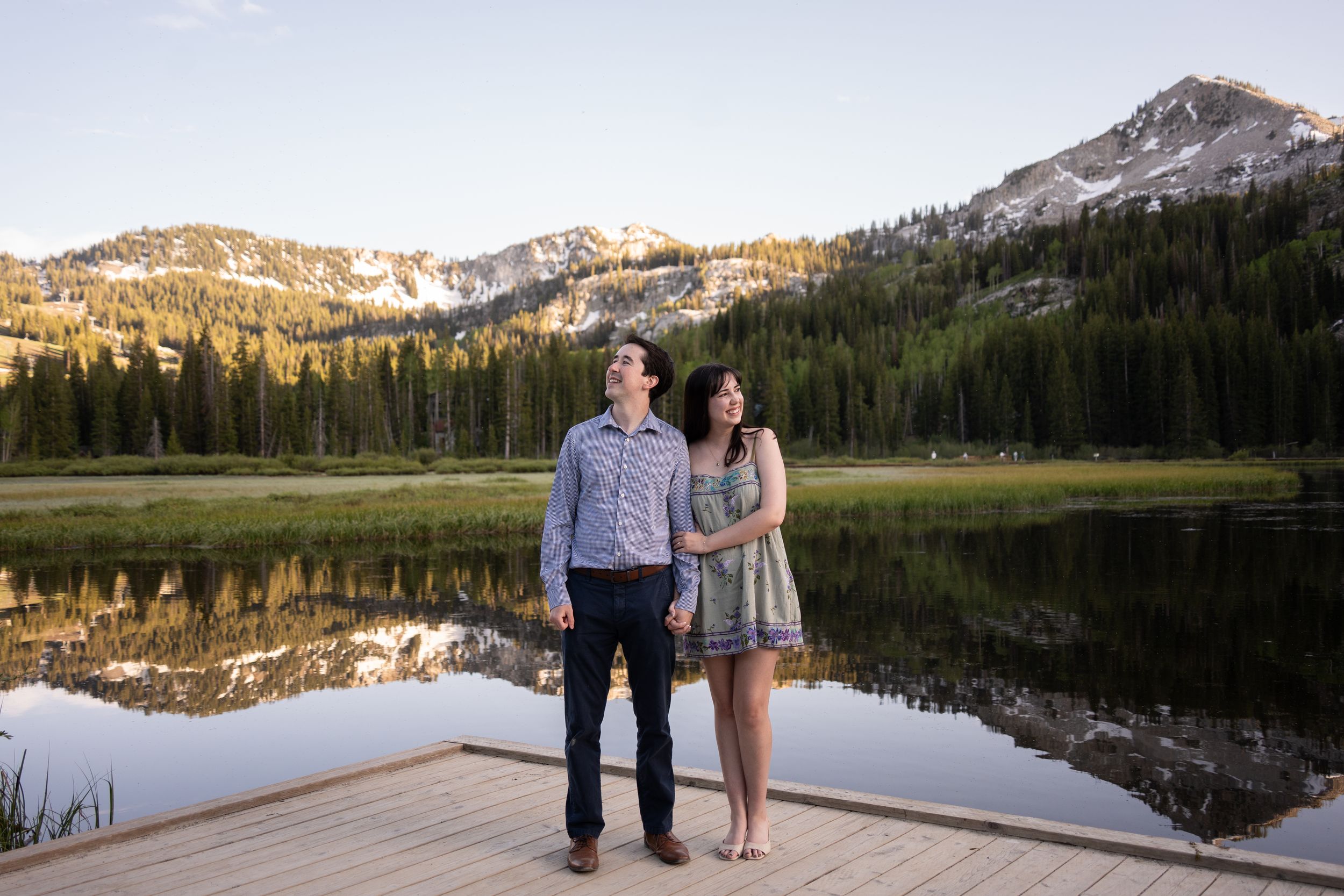
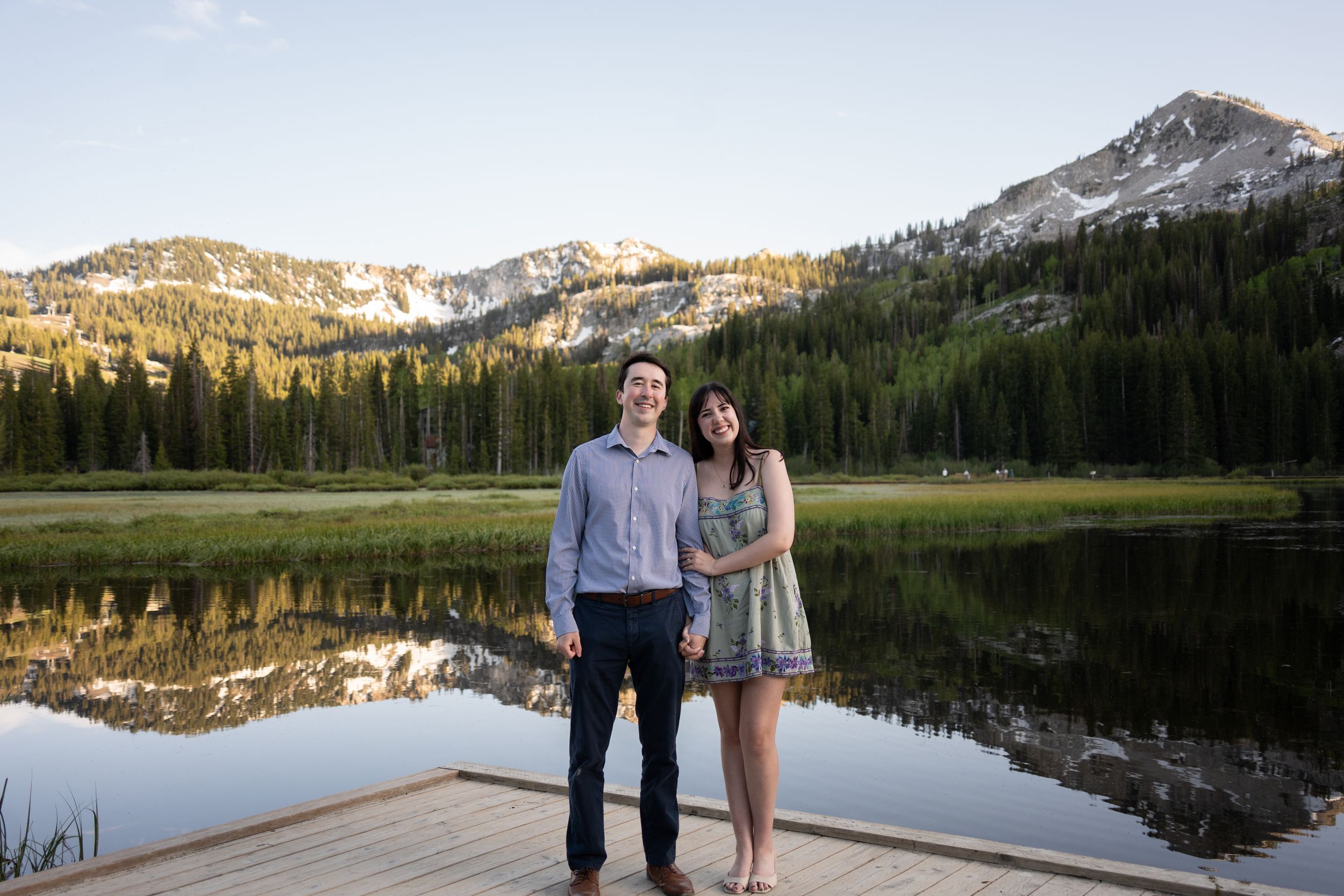
Silver Lake in Brighton gives you an easy, mostly flat boardwalk loop around an alpine lake, a quiet setting most mornings without any ticket or tram required. Provo Canyon, closer to Utah County, offers waterfalls and canyon scenery reachable by a short walk rather than a summit ride. Park City covers a wider range of trail-based options for couples who want actual hiking built into the proposal itself, the kind of effort that naturally filters out casual crowds the way the Delicate Arch trail does down in Moab.
None of these require a lift ticket, a shared cabin, or working around an Oktoberfest weekend. What they don't offer is the tram's specific built-in moment, doors opening onto an 11,000-foot view in under ten minutes, or a restaurant a hundred feet from where you got engaged. Which tradeoff is right for you comes down to what you're picturing more than which spot is objectively better.
Cost is a factor too, worth naming plainly. A hiking-trail proposal at Silver Lake or Provo Canyon costs nothing beyond photography, no ticket, no lift pass. The tram adds a modest but noticeable line item on top of your session, one more reason to weigh privacy and budget together rather than picking a location on drama alone.
Altitude, Ring Safety, and What to Wear
Altitude
Hidden Peak sits close to 11,000 feet, a meaningful jump from the Salt Lake valley floor at roughly 4,300 feet. Most people feel fine after a short adjustment period, but a few notice mild lightheadedness or shortness of breath at that elevation, especially if you flew in within a day or two of your proposal. Drink water in the hours before you go up, hold off on alcohol until after the moment, and don't schedule the tram as your first stop the morning you land if either of you is prone to altitude sensitivity.
Ring Safety
Decide who's carrying the ring and how before you're standing in a lift line. A zipped inner jacket pocket beats a loose pants pocket every time, especially with a bulky winter coat in the mix. If you're proposing in winter, consider a small drawstring pouch clipped inside a pocket so the ring can't work its way out through a glove.
What to Wear
Temperatures at the summit run noticeably cooler than the base, even on a warm summer afternoon, and wind on an open deck at that elevation cuts harder than the same wind would at the valley floor. Bring a warmer layer than you think you'll need regardless of season. In winter, dress for the mountain, not for a photo: a warm coat, gloves, and boots that handle snow and ice matter more than looking a certain way, since the celebration portraits happen right after the moment, not instead of dressing for the weather. In summer, a light jacket or pullover is enough for most of the year, but check the forecast the morning of, since afternoon storms build fast at this elevation.
Footwear
The tram dock, the deck, and the walkways around The Summit are paved or decked, not a dirt trail, so you don't need hiking boots just to make the ride. If you're planning to walk out onto any surrounding terrain for a specific photo angle, though, a supportive shoe beats a dress sandal or a heel, since the ground beyond the immediate deck area turns to loose rock and uneven alpine terrain fast.
Common Planning Mistakes to Avoid
Most of the ways a Snowbird tram proposal goes sideways trace back to one of a handful of avoidable mistakes. Here's what I see couples run into most often, and how to sidestep each one.
Treating the Ride Up as the Moment
This is the single biggest planning mistake. Couples picture the cabin doors closing as the start of a private, intimate scene, then arrive to a car full of strangers and feel thrown off before the day has even started. Build your expectations around the ride being public and the proposal happening at Hidden Peak, and the shared cabin stops being a disappointment and starts being just the transportation it was always meant to be.
Skipping the Weather Backup Plan
An open deck at 11,000 feet is exposed to wind, sudden temperature drops, and, in summer, fast-building afternoon storms. Couples who show up with no plan B for weather end up scrambling if conditions turn, either pushing through an uncomfortable proposal or losing the moment entirely to a closed tram. Talk through a backup location and a backup time window before your date, not on the morning of.
Underestimating the Cost Difference Between Seasons
Booking a winter day lift ticket when a summer tram-only ticket would have covered the same visit for less money is a common, easily avoidable overspend. If skiing or riding isn't part of your plan, a summer proposal is the more budget-friendly version of this same experience.
Not Confirming Restaurant Availability in Advance
If a celebration meal at The Summit is part of your vision, don't assume a table will be waiting. Weekend and event-weekend service fills up, and the private second-floor space requires its own advance booking through Snowbird directly. Confirm this piece before you build your whole day around it.
Forgetting the Ring Needs a Plan
A loose pocket and a bulky winter glove are a bad combination. Decide on a secure, zipped spot for the ring well before you're standing in a lift line fumbling for it, covered in the ring safety section above.
Why Book Someone Who Knows This Mountain
I know the tram isn't private, and I plan around that plainly. You won't hear a promise of a hidden, staged moment on the ride itself, because that isn't how this specific location works, and I'd rather set the right expectation upfront than let you find out on the day.
I know Hidden Peak's layout. Which corners of the deck give the most separation from a fresh crowd off the tram, and how the building and terrain break up sightlines once you're both up there.
I ride the tram like a passenger, not a photographer. Camera in hand, blended into the crowd, so the ride up doesn't tip anyone off before you're both ready.
I know the seasonal crowd patterns. Which weekends to avoid, when the deck clears out, and how summer and winter riders behave differently once they're off the cabin.
One quote, no surprises. Since Snowbird sits well within the standard Wasatch Front radius, a session here typically doesn't need a travel fee added on top of the base rate, something I'll confirm with you directly on your planning call.
Photographer
Your Snowbird Proposal Photographer
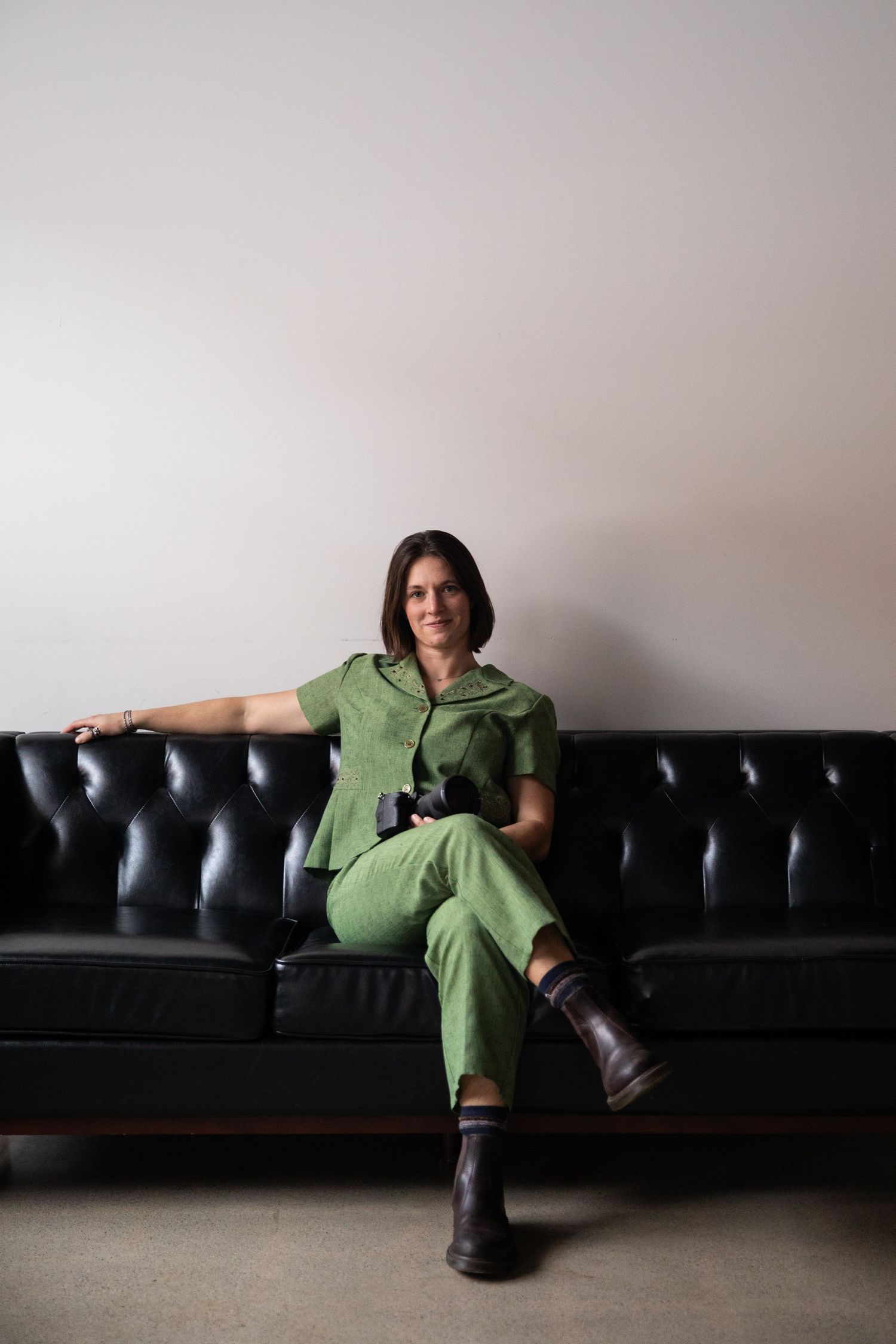
I'm Jade, a Utah-based proposal photographer, and Little Cottonwood Canyon is one of my regular stops. I know the tram schedule shifts by season, how the crowd at Hidden Peak thins out once people scatter across the deck, and how to ride up as just another passenger so nothing about the trip up tips off your partner. Whether the plan is a quick moment before you ride back down or a full celebration at The Summit afterward, I'll help you build the day around what you two want most.
Proposal photography starts at $845. Snowbird sits well within the standard Wasatch Front radius, so a session here typically doesn't carry the travel fee that a farther destination like Moab would, worth confirming on your planning call along with your exact date and season. You'll have 40+ edited images and video within 24 hours either way.
Frequently Asked Questions About Snowbird Tram Proposals
Is the Snowbird tram open in both summer and winter?
Yes. Snowbird runs scenic tram rides in both seasons. In winter, the cabin typically shares the ride with skiers and riders heading up for first tracks. In summer, it's hikers, sightseers, and mountain bikers headed to Hidden Peak instead. Confirm current operating days before you build a trip around a specific date, since the tram does close occasionally for weather or maintenance.
Can a photographer ride the tram without other passengers noticing?
Not on the ride itself, and that's not the plan. The cabin holds up to 100 people, so there's no discreet corner to shoot from unnoticed on the way up. The hidden positioning happens once you're both off the tram at Hidden Peak, where a 10,000-square-foot deck and multiple viewpoints give me room to find a spot and stay out of your eyeline until the actual moment.
How much does a Snowbird tram ticket cost?
It depends on the season. In winter, a day lift ticket runs up to $200 depending on the date, and tram access is included in that price rather than sold separately. In summer, a tram-only round trip has run in the neighborhood of $52 on weekdays and $58 on weekends in recent seasons, cheaper than a winter lift ticket since you're not paying for chairlift access you won't use. Confirm the current price on Snowbird's own site before you book, since resort pricing shifts season to season.
What's the backup plan if the tram is closed for weather or maintenance?
If the tram's down, the plan moves to a different location nearby, somewhere in Little Cottonwood Canyon or a short drive down toward the valley. That decision can happen the day of if it has to, so a closure doesn't cost you the day. This is one of the reasons I ask for a backup contact number the morning of a mountain proposal, so we can make the call fast if conditions change.
How long is the actual tram ride?
About 10 minutes each way, covering 1.6 miles of cable and roughly 2,900 vertical feet from the base to Hidden Peak, which sits close to 11,000 feet. It's a smooth, steady ride with panoramic windows the entire way, not a quick chairlift hop. That's long enough for the anticipation to build without feeling like a wasted afternoon if the actual proposal happens once you're on solid ground at the top.
Is it cold or hard to breathe at Hidden Peak?
Hidden Peak sits close to 11,000 feet, noticeably higher and cooler than the Salt Lake valley floor. Most visitors feel fine after a short adjustment period, but a few notice mild lightheadedness or shortness of breath at that elevation, especially if you flew in within a day or two of your proposal. Drink water beforehand, skip the alcohol until after, and bring a warmer layer than you think you need. Temperatures at the summit run noticeably cooler than the base, even on a warm summer afternoon.
Can we celebrate at The Summit restaurant right after?
The building at Hidden Peak, called The Summit, has a cafeteria-style main floor and a second-floor private dining space that's used for weddings and events, plus an outdoor deck for regular dining service when it's open. Whether table service or the private space is available for your specific date and party size is something you'd confirm directly with Snowbird, not something I can promise as part of a photography package. It's worth asking about when you're locking in your date if a sit-down celebration at the top matters to you.
What day and time has the fewest people on the tram?
A weekday morning departure, outside of any resort event weekend, gets you the thinnest crowd in both seasons. Weekends run heavier in winter with skiers chasing fresh snow, and in summer, event weekends like Snowbird's Oktoberfest (typically late August) draw a much bigger crowd than an ordinary Tuesday. If your travel dates are flexible at all, a weekday avoids both crowd sources at once.
Do we need a permit to propose at Snowbird?
No. Snowbird is a private resort, not public park land, so there's no government permit process standing between you and a proposal there, the way there might be for a formal ceremony at a national park. A valid tram or lift ticket to access Hidden Peak is all you need to buy. If your plans grow to include a larger private event, like reserving the second-floor dining space, that's a resort booking to arrange directly with Snowbird, separate from anything a photographer handles.
How fast will we get our Snowbird proposal photos?
Within 24 hours. You'll have 40+ edited images and video of the moment the next day, so you can start sharing the news while it still feels new instead of waiting weeks to see how it turned out.
The Tram Is a Serious Option, Not a Novelty
Once the timing and the ride itself make sense, the rest is just picking the moment at the top. A hundred strangers on the ride up doesn't have to cost you the moment you're picturing, it just changes where that moment happens. If you're thinking about proposing at Snowbird, tell me your dates and I'll walk you through how it comes together, ticket to timeline.
Utah-based wedding, elopement, and proposal photographer since 2025. I've scouted these locations myself, so the advice here comes from firsthand experience, not guesswork.