Best Proposal Spots in Arches National Park for Out-of-State Couples
Everyone who’s never been to Arches wants to propose at Delicate Arch. It’s the one spot I talk almost everyone out of.
Here’s the deal: Arches is huge, it gets crowded, and it gets brutally hot. If you’ve only seen it on a screen, you can’t tell which arch gives you a jaw-dropping backdrop with nobody around, and which one turns your proposal into a performance for fifty strangers.
I live and shoot here. Below is the full breakdown of the 11 spots I send couples to, inside the park and just outside it, plus the logistics (timed entry, season, permits, what to wear) that trip up out-of-state couples every year.
Everything inside the park sits within about 20 minutes of the visitor center, so you can pull off two different backdrops in one morning if you want.
TL;DR
11 spots covered here: Double Arch, South Window, Turret Arch, Park Avenue, Broken Arch, Balanced Rock, Sand Dune Arch, Delicate Arch (why I usually skip it), plus Corona Arch, Dead Horse Point, and Canyonlands just outside the park.
Arches charges a $30/vehicle entrance fee (as of this writing); no 2026 timed-entry reservation as of a February 2026 NPS announcement.
No permit is required for a proposal anywhere on this page. Permits only apply to formal wedding ceremonies.
Summer highs regularly top 100°F, so build your timing around sunrise or the last hour before sunset.
Corona Arch, Dead Horse Point, and Canyonlands sit minutes from the park entrance if you want red rock without the fee or the crowds.
Proposal photography starts at $845, with travel added since Arches sits outside the standard hour-of-Wasatch-Front radius. You’ll have 40+ edited images and video within 24 hours.
Why Arches Is Worth the Crowds
Arches earns its reputation. Nowhere else in Utah gives you this many natural stone frames, this close together, this easy to reach.
Most national parks make you choose one signature view and build your whole trip around it. Arches hands you a menu instead, all within a single park boundary: the twin openings of Double Arch, the wide desert sweep of Park Avenue, the quiet privacy of Broken Arch, a formation balanced on a pedestal that needs no hike at all. That range means the spot gets built around what you and your partner want, not whichever arch has the most tagged photos.
It also solves the "which national park" debate a lot of couples get stuck on. Arches sits five miles from downtown Moab, which means Corona Arch, Dead Horse Point, and Canyonlands are all within a 20 to 30-minute drive of wherever you’re staying. You’re not choosing between red rock and river canyons. You get both, in the same trip, often the same morning.
And because a proposal itself needs no permit anywhere in this park, or on any of the BLM land just outside it, your booking timeline runs on my calendar and your travel dates, not a government office’s turnaround time. That’s a true advantage if you’re planning this from out of state on a tight trip window. If Moab and the wider area around Arches end up being your basecamp for the whole trip, I’ve also built a complete guide to every proposal spot in the greater Moab area, including several of the BLM spots covered here.
Tell Me Your Travel Dates
Give me your dates and what you’re picturing, big classic arch or a quieter corner of the park, and I’ll send back the spots that fit before you spend another weekend scrolling geotags.
The Challenge With Planning an Arches Proposal From Out of State
Here’s what stresses couples out about planning this from far away: you’re trying to make a once-in-a-lifetime decision about a park you’ve never stood in, based on photos other people took in different light, at a different time of day, with no way to check yourself before you land.
Add up what that costs you. Hours scrolling Instagram geotags trying to guess which arch is which. More hours cross-referencing park alerts for a timed-entry system that changes year to year. A group chat debating whether Double Arch or Delicate Arch is “the good one.” A nagging worry that you’ll pick a spot, fly out, and find it packed with fifty strangers at the exact minute you planned to get down on one knee. That’s easily a full weekend of research for something you only get one shot at.
I’ve hiked every trail on this page more than once, scouted them at different times of day and different seasons, and photographed proposals at more than one. When you tell me your travel dates and what you’re picturing, big classic frame, total privacy, zero hiking, I can tell you in one conversation which spot fits, not which one has the most tagged photos.
I know which parking lots fill up by 9am on a Saturday in April. I know which arch holds golden hour longest and which one gets harsh, flat light by 10am. I know the cover story that gets a couple onto the Broken Arch trail without tipping off your partner, and I know when to skip a spot entirely because the light or the crowd won’t cooperate that day.
You don’t need to become an Arches expert before your trip. You need one conversation with someone who already is.
Best Spots to Propose in Arches: 11 Options
Eleven spots, eleven different experiences, split between inside the park and the red rock just outside it. Here’s the full depth on each one: distance, difficulty, crowd patterns, best time of day, and the plain tradeoffs, not just a highlight reel.
The Windows Region: Three Arches, One Parking Lot
If I had to send every couple to one area of Arches, it’s the Windows. It’s one of the prettiest sections of the park and one of the easiest to access, which matters when you’re planning around a partner who has no idea what’s coming: you’re not dragging her on a brutal hike in nice clothes, you’re getting massive red-rock drama for a short, easy walk.
The full loop through North Window, South Window, and Turret Arch runs about 1.2 miles round trip. Double Arch sits in the same parking area but is its own short, separate spur, an easy 0.6-mile out-and-back with about 91 feet of elevation gain, flat and smooth enough that it’s rated accessible for strollers and wheelchairs for most of its length. Budget 45 minutes to an hour if you want to see all three arches without rushing.
Double Arch: Massive Scale, Minimal Walking
If Delicate Arch is the one on the license plate, Double Arch is the one that photographs biggest. Two enormous arches meet overhead at roughly the same point, and standing under them gives you scale that’s hard to overstate in person, let alone in a photo.
The tradeoff is popularity: it’s one of the more visited spots in the park, so timing matters if you want the frame to yourselves. Early morning, ideally the first hour after the park opens, or the last hour before sunset both thin the crowd noticeably. Midday in spring or summer is when it’s busiest, sometimes busy enough that getting a clean, unobstructed shot takes a few minutes of patience.
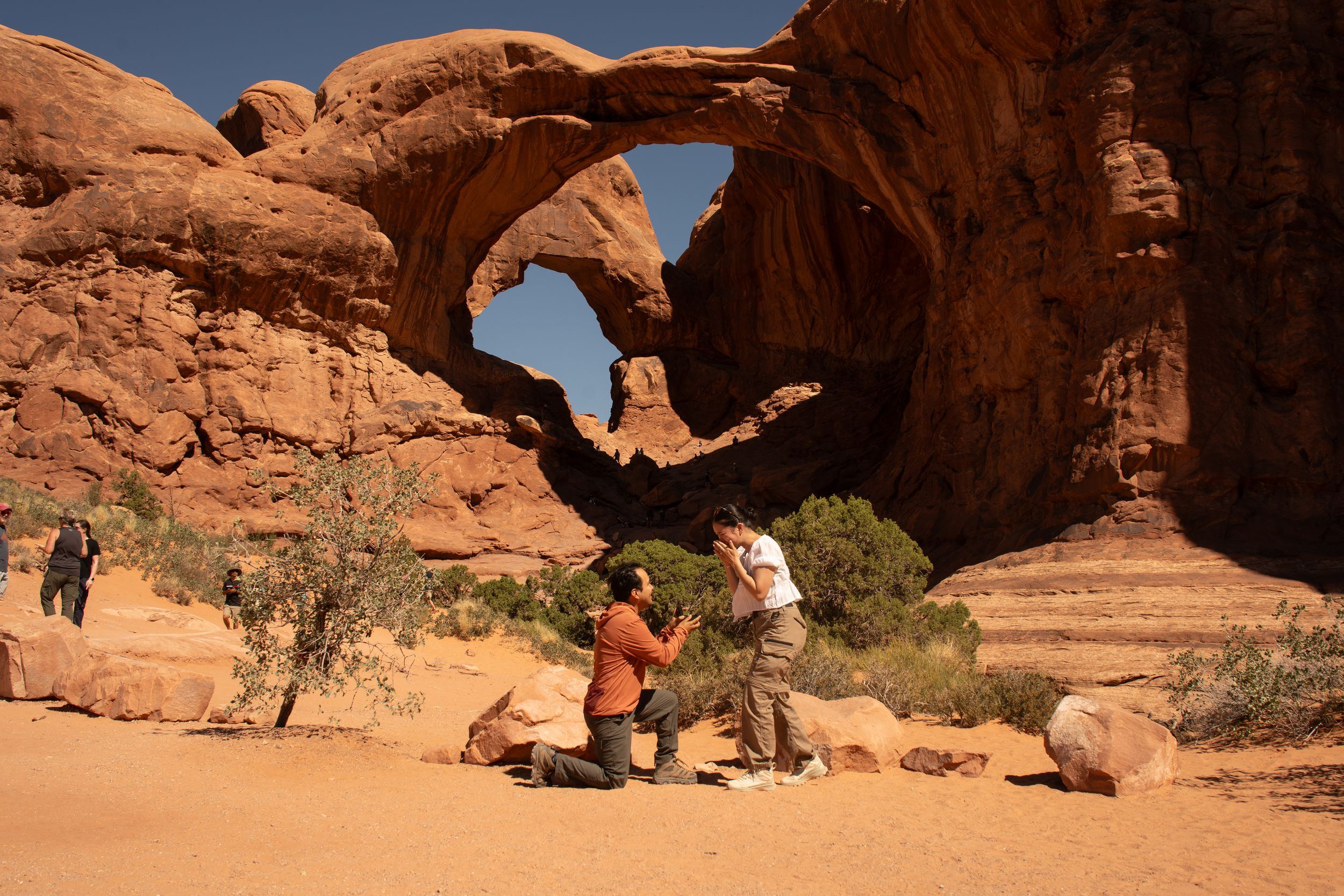
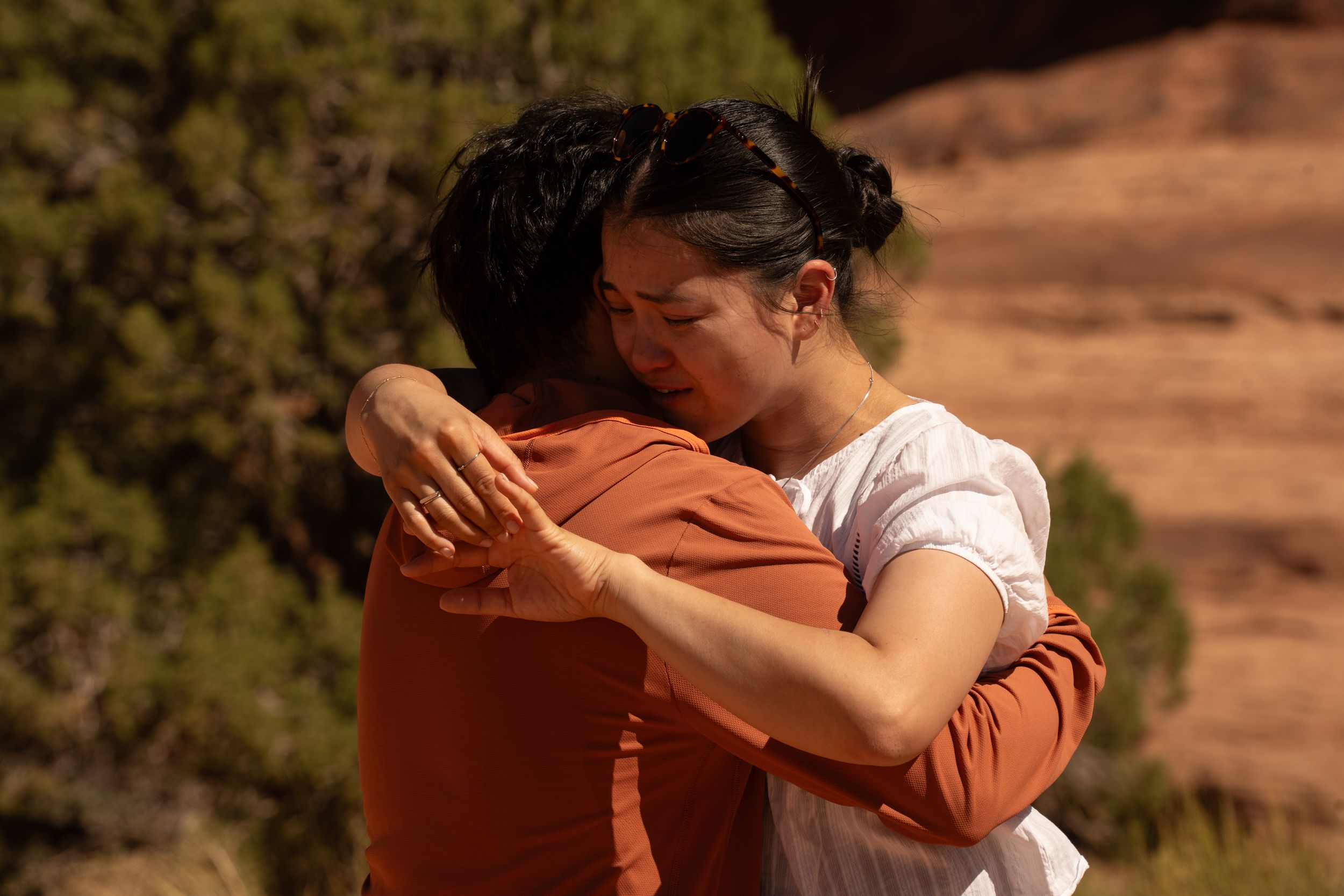
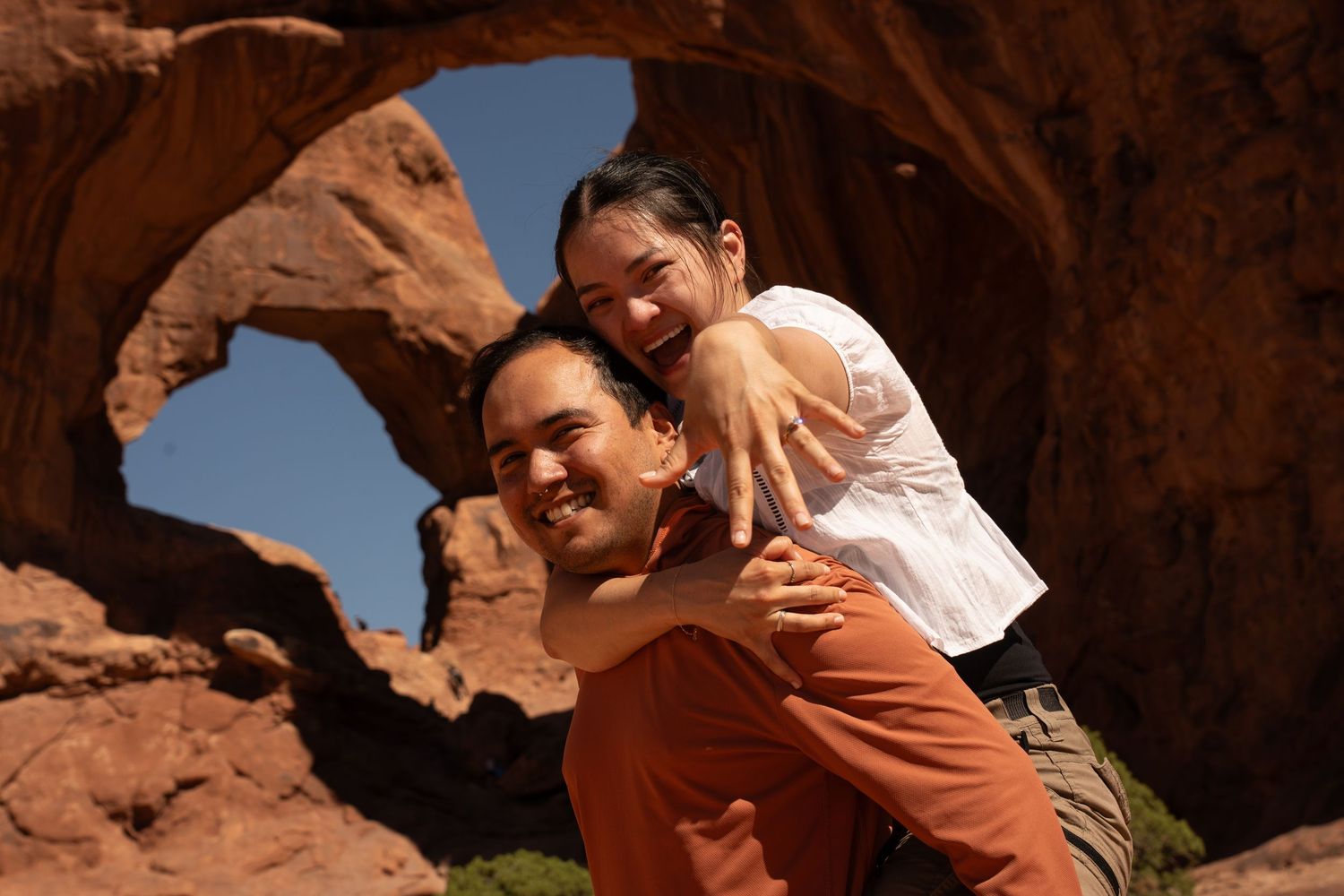
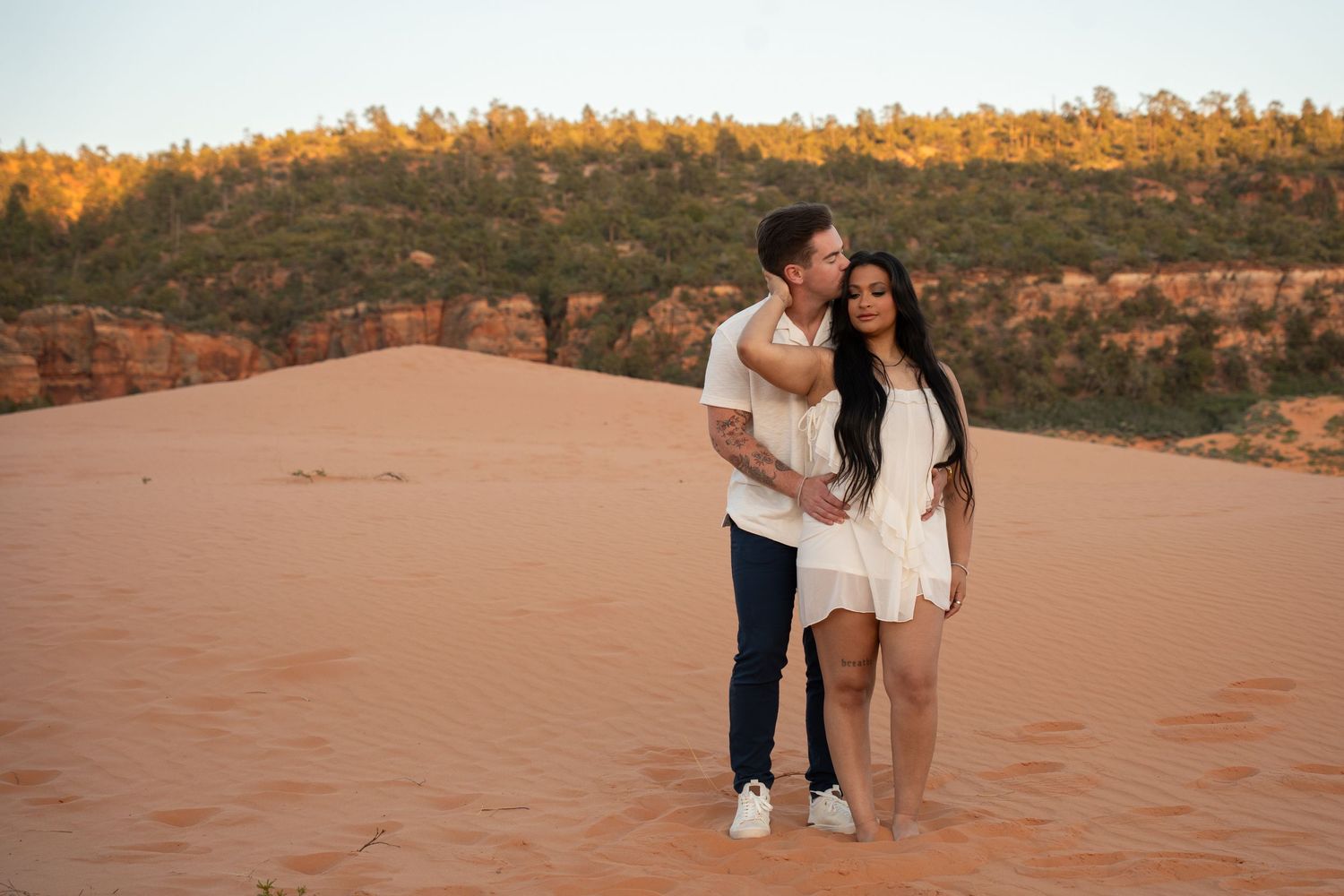
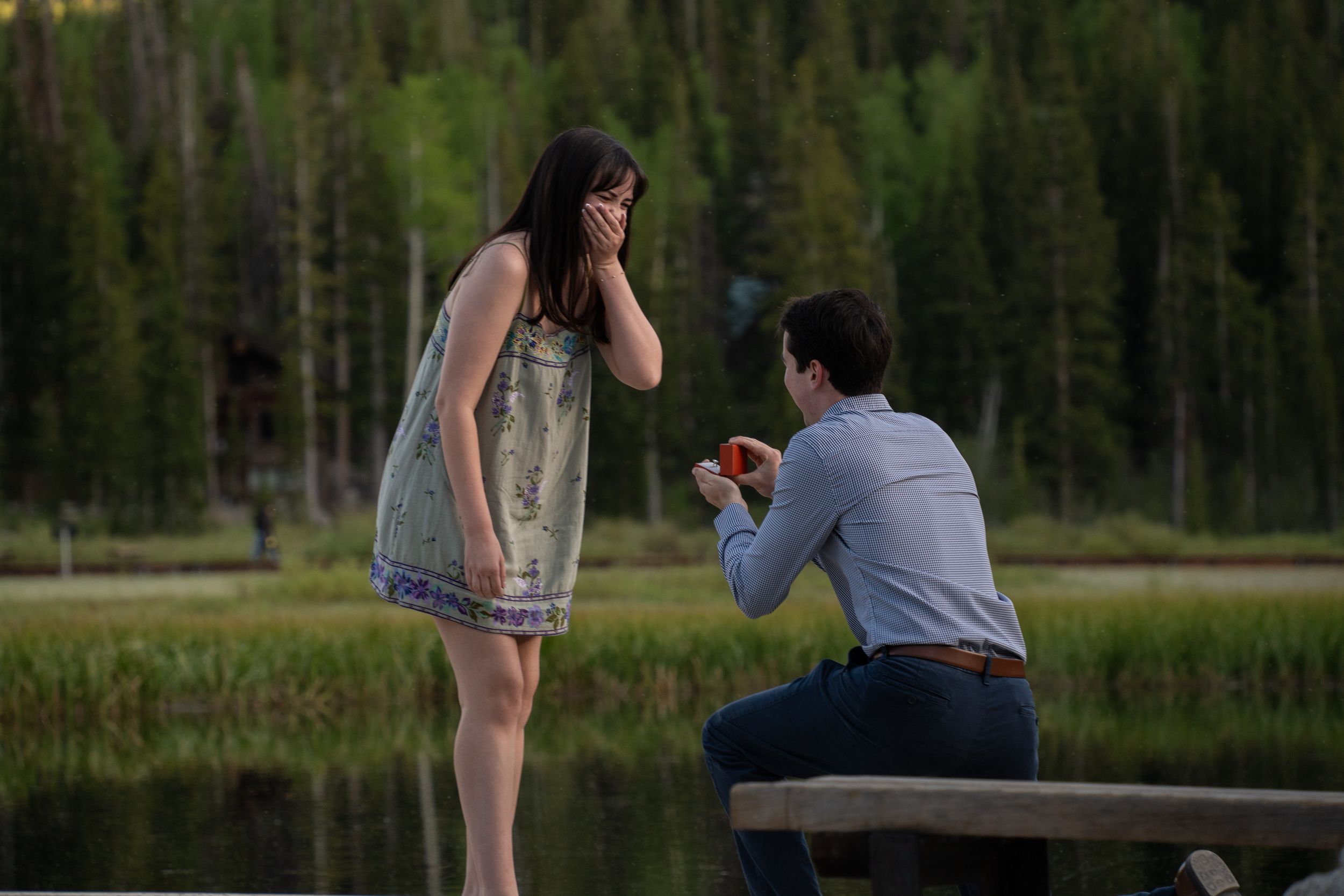
Aaron wanted Arches to look unmistakably like Arches: big and dramatic. He first considered Turret Arch, but the angles were trickier to shoot, so he switched to Double Arch for the bigger, cleaner frame. His cover story was two film cameras and a few good bird photos on the trail. Lyna had no idea until the very last second. Read the full story of Aaron and Lyna’s Double Arch proposal.
Distance: 0.6 miles out and back, ~91 ft elevation gain, rated easy, mostly flat.
Accessibility: Rated stroller and wheelchair accessible for most of the trail's length.
Best time: First hour after opening or the last hour before sunset, to avoid the midday crowd.
Fee: Standard $30/vehicle Arches entrance fee; no separate permit for a proposal.
South Window: Beautiful and Quieter
The South Window is one of my favorites for a lower-crowd backdrop within the same easy Windows loop. It sits a short walk from the Double Arch/Windows parking area, part of the same roughly 1.2-mile round trip that covers all three arches in this region.
Most visitors head straight for Double Arch since it’s the biggest and most photographed, which means South Window often has a noticeably thinner crowd at the same time of day. You get comparable drama, a huge sandstone opening framing the desert beyond, without competing for the same few feet of trail as everyone doing Double Arch.
I don’t have a documented proposal from South Window specifically on this page yet, separate from the wider Windows-region photos above. If a slightly quieter alternative to Double Arch is what you’re picturing, this is worth a look before you default to the busier spot next door.
Distance: Part of the ~1.2-mile Windows Loop; a short walk from the shared parking area.
Crowds: Consistently thinner than Double Arch at the same time of day, since most visitors go there first.
Best time: Morning light hits it clean and even; golden hour warms the whole opening.
Photos on this page: None specific to South Window yet; I know the spot from scouting the Windows Loop directly.
Turret Arch: Frame Yourselves Right Inside It
Turret Arch is the one spot in the Windows region where you can walk right up and stand inside the opening itself, framed by rock on every side. It sits across a small wash from the Windows parking area, part of the same easy loop as Double Arch and South Window.
It draws a serious crowd too, so timing matters here the same way it does at Double Arch. The advantage: because most first-time visitors beeline for Double Arch's bigger scale, Turret Arch often has a shorter wait for a clean shot, especially early or late in the day.
Aaron and Lyna's proposal originally considered this exact spot before switching to Double Arch for a bigger, cleaner frame, proof that it's a legitimate contender, not a consolation prize. If standing literally inside the arch, rather than in front of it, is the image you're picturing, Turret Arch is the one spot on this page built for that.
Distance: Part of the ~1.2-mile Windows Loop, a short walk across from the main parking area.
The look: The only spot in the Windows region where you can stand framed inside the opening itself.
Best time: Early morning or the last hour before close, when the Double Arch crowd thins the whole area out.
Photos on this page: None specific to Turret Arch yet; it was seriously considered for Aaron and Lyna's proposal before they switched to Double Arch.
Park Avenue: Big Drama, Tiny Walk
If you want the most cinematic backdrop in the park for almost no hiking, Park Avenue is criminally underrated for proposals.
It’s a soaring corridor of giant sandstone monoliths right near the park entrance, walkable as an easy out-and-back of about 1.8 miles with roughly 308 feet of elevation gain, rated easy the whole way. Some couples do it as a one-way walk with a car shuttled to the far end, which cuts the distance roughly in half if you have two drivers. Either way, you get towering, dramatic scale without a long trek in.
Early light down that canyon is dramatic, the monoliths catch it at a low angle that most of the park doesn’t. It’s a strong pick for a couple who wants a backdrop that reads as epic without reading as exhausting, and because it’s close to the entrance, it’s easy to pair with a sunrise Windows visit the same morning.
I don’t have a documented proposal from Park Avenue yet. I know the trail well from scouting it in different light, and I’d be glad to plan a proposal here if the dramatic-canyon-without-a-workout combination is what you’re after.
Distance: ~1.8 miles out and back, ~308 ft elevation gain, rated easy.
Shuttle option: Can be walked one-way with a car staged at the far end, roughly halving the distance.
Best time: Early morning, when low light rakes across the monoliths.
Photos on this page: None yet; I know the trail from scouting it, not yet from a documented proposal there.
Broken Arch: Zero People Around
If your top priority is privacy, nobody watching, nobody photobombing, Broken Arch is my pick.
It’s a quiet, peaceful loop of about 1.9 miles with roughly 190 feet of elevation gain, rated easy despite the mileage. The catch is that it’s a proper walk to get there, not a five-minute stroll, so it works best for a couple who’s okay with some hiking and can build a believable “let’s go check out this trail” reason to be out there.
For a lot of my out-of-state couples, that mile-plus is worth it to have the whole place to yourselves. It’s also one of the few named arches in the park you can walk directly through, rather than just standing in front of, since the trail passes beneath the opening itself.
Distance: ~1.9-mile loop, ~190 ft elevation gain, rated easy.
Crowds: Consistently one of the quieter named arches in the park, since the extra walking filters out the day-trip crowd.
The look: One of the few arches in the park you walk directly through, not just in front of.
Fee: Standard $30/vehicle Arches entrance fee; no separate permit for a proposal.
Balanced Rock: No Hike At All
Not everyone wants to walk. If that’s you, Balanced Rock is a great option: a flat, paved 0.3-mile loop with only about 42 feet of elevation gain, rated accessible for strollers and wheelchairs.
You can propose just off the trail, barely any walking involved, and still get an incredible backdrop. Frame it with Balanced Rock itself, or turn slightly and get the La Sal Mountains behind you, two totally different gorgeous looks from basically the same spot. This is the one I reach for when a couple wants big scenery with minimal effort, whether that’s because of mobility, timing, or just not wanting a hike to be part of the story.
Christian and Bianca chose this exact spot for that reason: big, unmistakable scenery, with a walk short enough that arriving dressed up and unwinded was never a concern. Read more about their proposal in the gallery below.
Distance: 0.3-mile loop, ~42 ft elevation gain, rated easy and accessible.
Two looks, one spot: Frame with Balanced Rock itself, or turn toward the La Sal Mountains for a different backdrop.
Best time: Golden hour lights the rock formation warm orange; works well any time of day since there's little elevation to chase shade on.
Fee: Standard $30/vehicle Arches entrance fee; no separate permit for a proposal.
Sand Dune Arch: Gorgeous, But Expect a Wait
Sand Dune Arch is a beautiful, tucked-away space between two sandstone walls, with soft sand underfoot and really distinctive light filtering through the narrow gap. It’s short, an out-and-back of only about 0.3 miles with roughly 108 feet of elevation gain, rated easy.
The catch is that it’s popular for the same reasons it’s worth seeing, short and photogenic, so it can get busy enough that it feels more like a line than a private moment, especially midday. It pairs naturally with Broken Arch, since the two trailheads sit close together and some couples combine them into one longer outing.
I don’t have a documented proposal from Sand Dune Arch specifically on this page yet. It’s worth considering if the enclosed, narrow-canyon look appeals to you more than an open arch, we’d just want to plan the timing carefully so you’re not proposing in a queue.
Distance: ~0.3 miles out and back, ~108 ft elevation gain, rated easy.
The look: A narrow, shaded sandstone corridor, distinctly different light than any open-desert spot on this page.
Crowds: Busy for its short length; early morning or the last hour before close avoids the worst of it.
Photos on this page: None yet; I know the spot from scouting it, not yet from a documented proposal there.
Delicate Arch: The One I Usually Talk Couples Out Of
Delicate Arch is the one on the license plate, the single most photographed formation in Utah, and the spot almost every couple asks about first. It’s also the one I steer most couples away from for a proposal, though not always.
The hike itself is a serious commitment: about 3 miles round trip with roughly 480 feet of elevation gain, mostly exposed slickrock with a narrow ledge for the final stretch. The National Park Service rates it difficult, and it earns that rating in the summer heat especially, there’s almost no shade the entire way.
The bigger issue for a proposal specifically is the crowd. It’s one of the most popular hikes in the entire park, and it’s rare to get it to yourself, especially at sunset when everyone else has the same idea. Getting down on one knee in front of a packed viewpoint can turn an intimate moment into a performance for strangers, and that’s not what most couples are picturing when they imagine this.
If you’re still set on this exact arch, it’s doable. I’ve written up the full timing, positioning, and crowd-avoidance plan separately, since it deserves its own space rather than a few paragraphs buried in a spot-list: see the dedicated guide to Delicate Arch proposal timing for how I’d stage one.
I haven’t documented a proposal at Delicate Arch myself, so I won’t put up a photo here that wasn’t taken at this exact spot. I know the trail well from scouting it, and I’m glad to plan one if this specific arch is the look you’re set on.
Distance: ~3 miles round trip, ~480 ft elevation gain, rated difficult by the NPS.
Crowds: Consistently one of the busiest hikes in the park, especially at sunset.
If you go anyway: See the dedicated Delicate Arch proposal timing guide linked above for the full plan.
Photos on this page: None yet; I haven’t documented a proposal here, and I won’t pass off a stand-in as if it were taken here.
Not Sure Which Arch Fits You Yet?
Tell me about the two of you, hiker or not, crowd-tolerant or not, and I’ll help you match a spot to your plans before you land in Moab.
Here’s what most out-of-state couples don’t realize: some of the best red-rock spots near Arches aren’t inside the park at all. They sit minutes away on Bureau of Land Management or state park land, often quieter, with no entrance fee or timed-entry rule to track.
Corona Arch: The Showstopper Without the Entrance Fee
Corona Arch sits on Bureau of Land Management and city land off Potash Road (UT-279), about a 20-minute drive from the Arches visitor center. Because it’s BLM rather than National Park land, there’s no entrance fee and no Special Use Permit standing between you and booking it.
The hike is a moderately strenuous 3-mile round trip, with a couple of sections that use a steel cable and short ladder to help you up slickrock. Neither requires climbing experience. The payoff is a freestanding sandstone arch roughly 105 feet wide and 140 feet tall, big enough to frame both of you with canyon walls stacking up behind, and one of the few spots nearby where recreational drone flight is allowed under standard FAA rules, unlike every national park, which bans it outright.
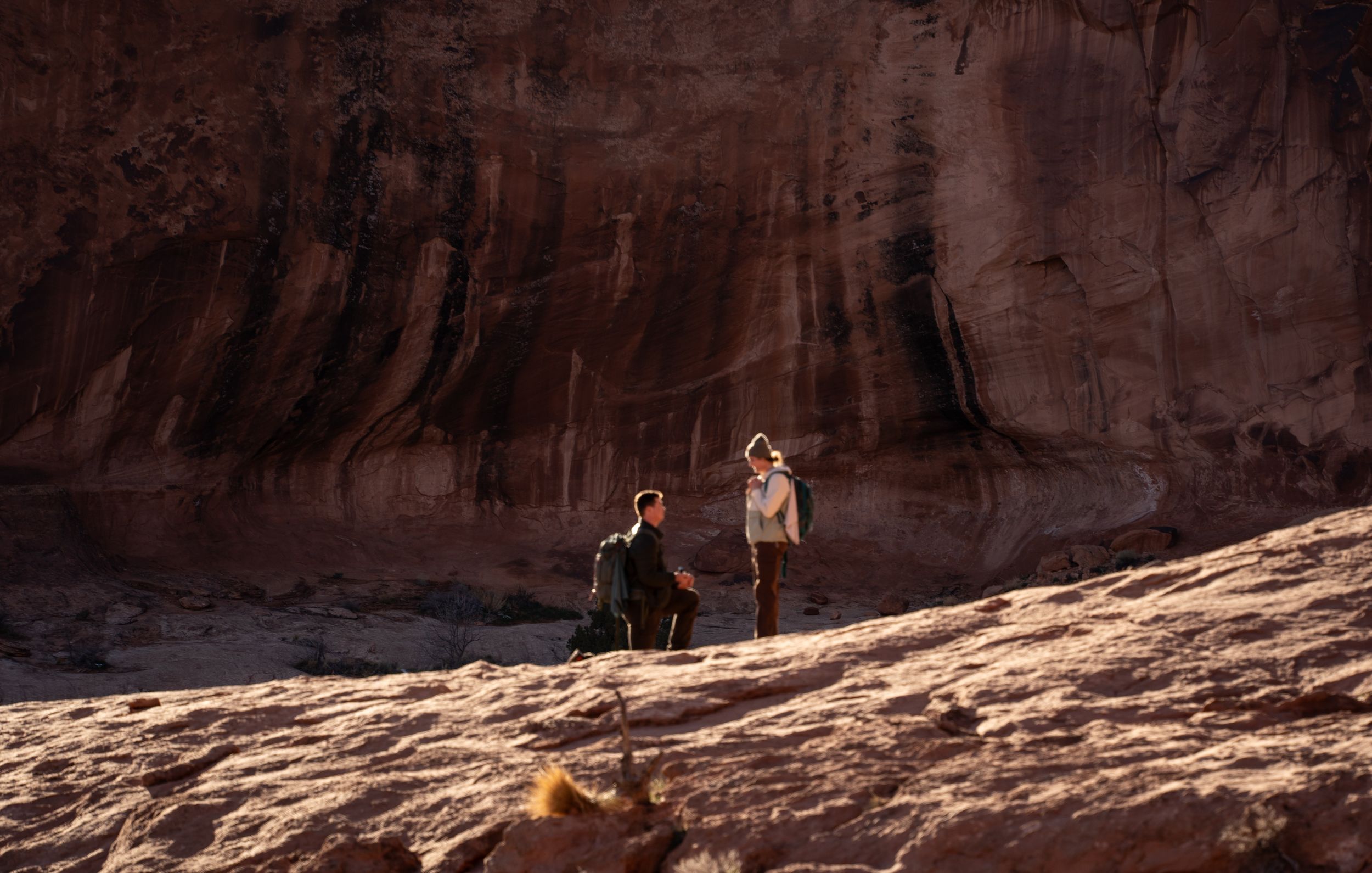
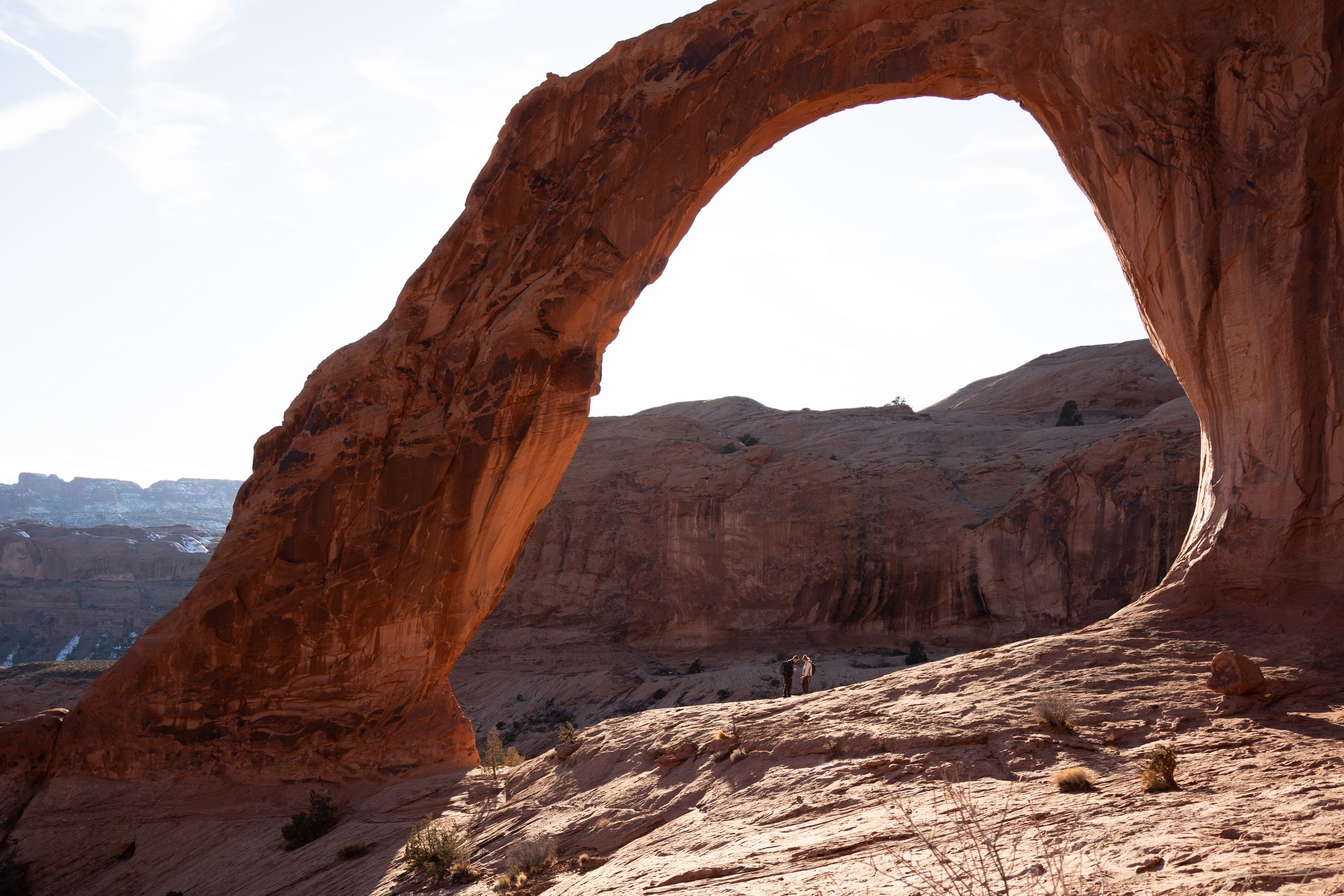
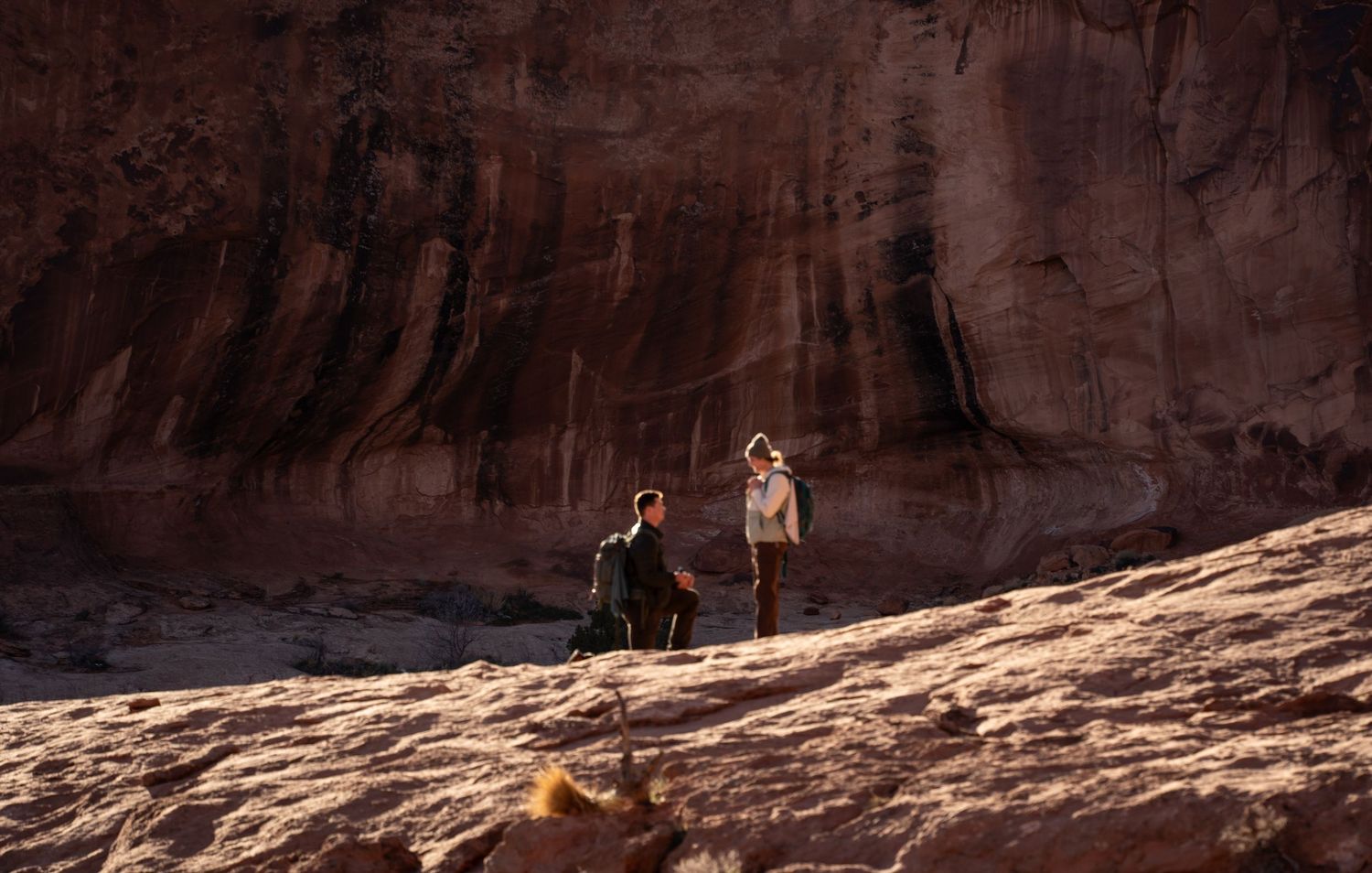
Jacob planned his Corona Arch proposal two weeks out during a trip from the Midwest, and Rae had no idea until they were already on the trail. Read the full story of Jacob and Rae’s Corona Arch proposal, or see the complete breakdown of every angle, timing note, and crowd pattern on the full Moab proposal guide, since Corona Arch's own photos live there rather than in this post's gallery.
Distance: ~3 miles round trip, moderately strenuous, cable and ladder-assisted sections.
Land & permit: BLM/city land off Potash Road; no fee, no Special Use Permit.
Best time: Last two hours before sunset for warm light; early morning for the fewest people.
Drone-friendly: Yes, under standard FAA rules, unlike inside Arches itself.
Dead Horse Point & Canyonlands: The Big Overlook Option
If your partner’s dream shot is a sheer drop into a canyon carved by the Colorado River, not a sandstone arch, this is where you go instead of Arches.
Dead Horse Point State Park sits on a mesa with a nearly 2,000-foot overlook straight down into a gooseneck bend of the Colorado River, with Canyonlands National Park’s Island in the Sky district spread out beyond it. It’s a short, flat walk from the parking area to the main overlook. The park charges a $20 day-use fee per vehicle (up to 8 people); a Special Use Permit is required for a wedding or ceremony there, but not for a proposal, you just need the standard day-use fee.
Canyonlands National Park’s Island in the Sky district sits right next door and runs on national park rules instead: a $30 vehicle entrance fee, no permit needed for a proposal (permits only apply to weddings). Mesa Arch, one of the park’s signature spots, is famous for framing sunrise through the arch itself, though be ready to share that specific view, it draws a dedicated crowd of photographers before dawn.
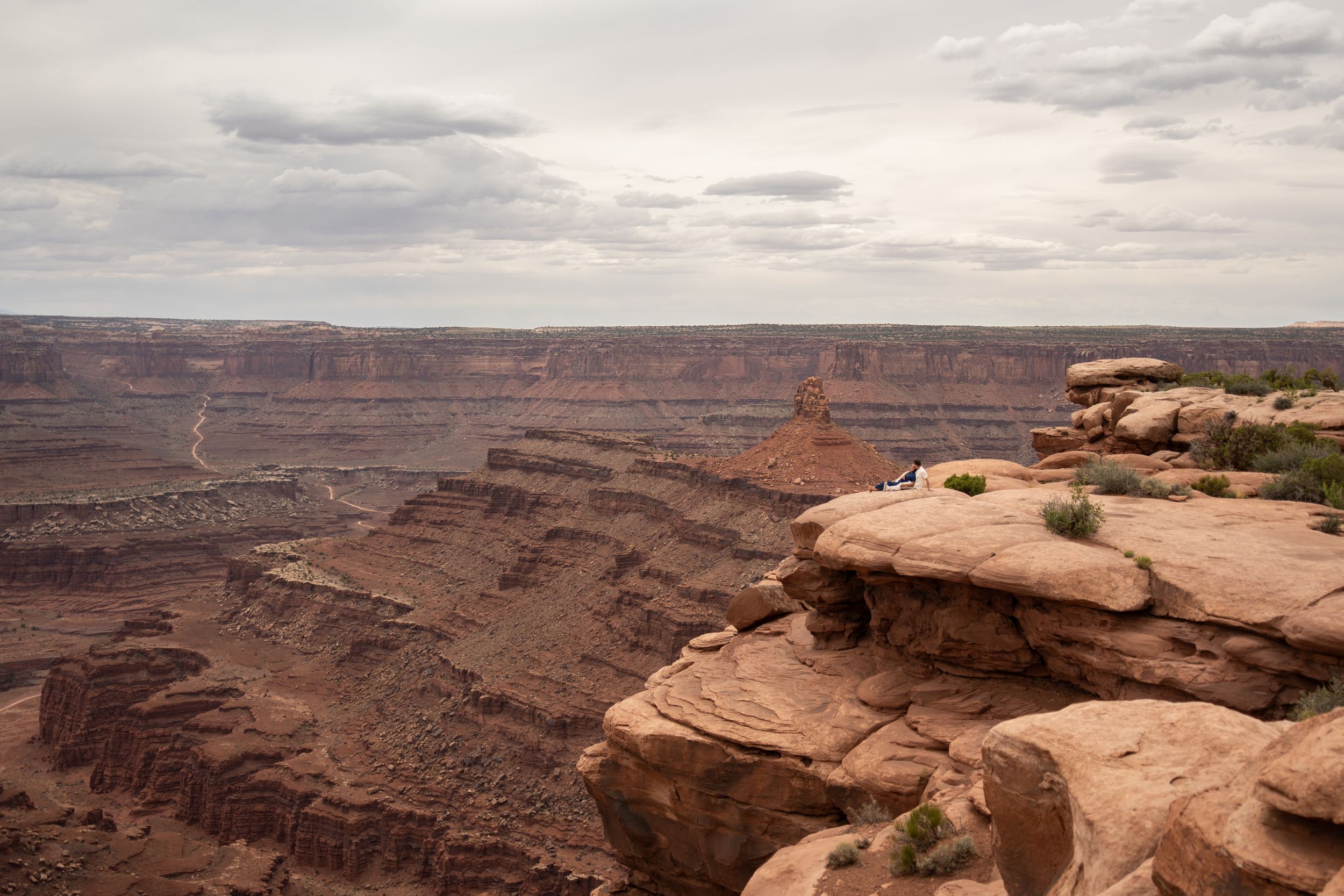
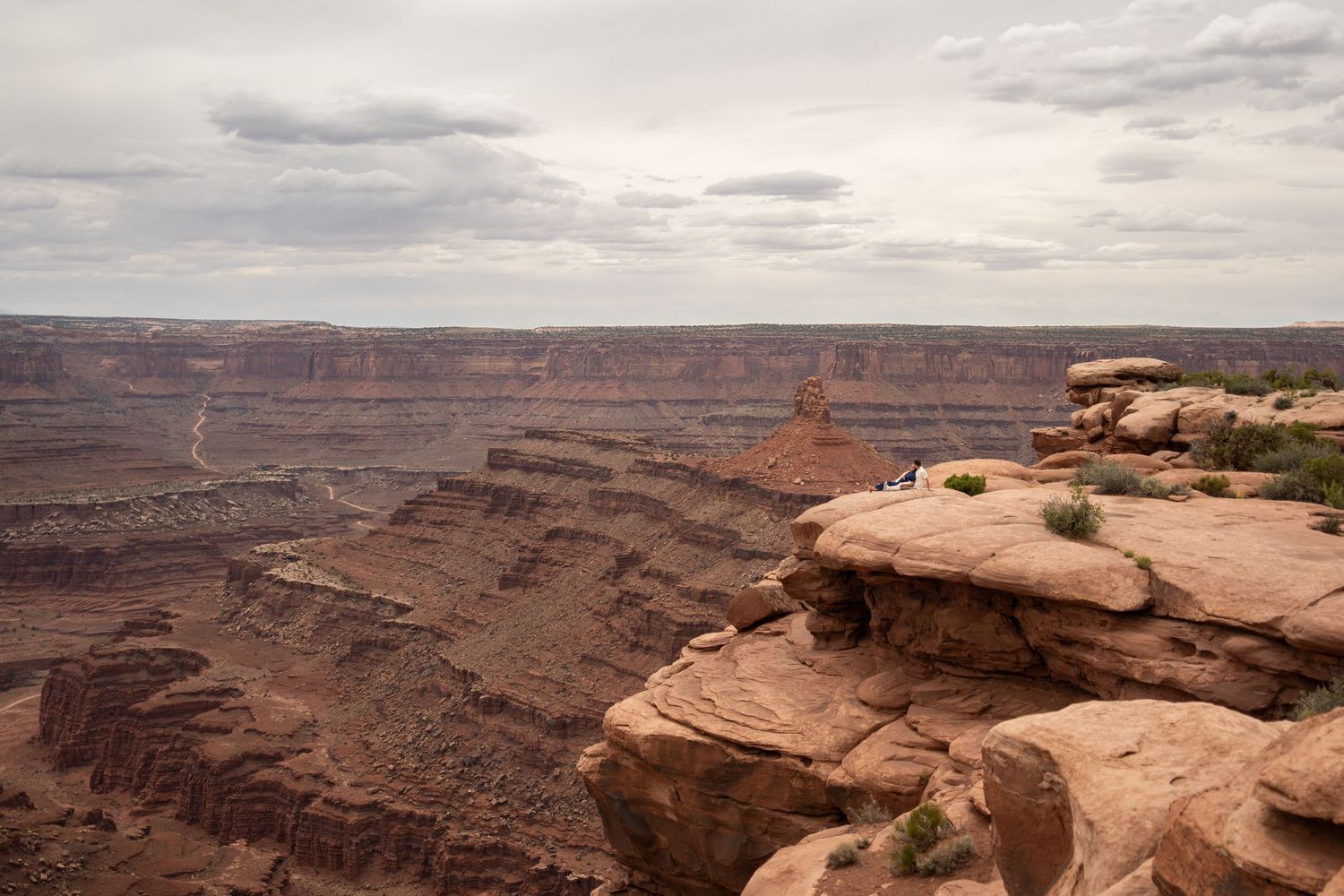
The photo below is authentic, but I want to be upfront about what it shows: it’s from Luke and Karen’s elopement overlooking Canyonlands, not a proposal. Because this option deserves its own deep dive, permits, ceremony sites, every overlook worth considering, I’ve built that out in full on the dedicated Canyonlands proposal photographer page. Start there if this is the option you’re leaning toward.
Dead Horse Point fee: $20/vehicle (up to 8 people); permit only required for a wedding/ceremony.
Canyonlands (Island in the Sky) fee: $30/vehicle; no permit needed for a proposal.
Best known spot: Mesa Arch at sunrise, though expect company.
Distance from Arches: About a 30 to 40-minute drive from the Arches visitor center.
Best Time of Year to Propose in Arches, Month by Month
Arches’ desert heat, and how the timed-entry rules have shifted year to year, are the main planning factors here, more than the label on the season. Here’s how each month plays out, so you can match your travel dates to the experience you want instead of guessing from a generic “spring and fall are best” answer.
January: Cold, quiet, and often beautiful if a light dusting of snow hits the red rock. Daytime highs hover around 41°F, nights drop well below freezing. Trails are close to empty. If privacy matters more than comfort, this is one of the best-kept-secret months in the park, just dress for actual winter and expect icy sections on shaded stretches like the north-facing part of the Windows trail.
February: Similar to January but starting to warm, daytime highs around 50°F. Still quiet, still cold at night. A solid month if you want winter’s privacy without quite as much bite.
March: Highs climb into the low 60s, and the park starts waking up. Easter Jeep Safari, one of the biggest off-road events in the country, typically lands in nearby Moab this month and fills the town with off-roaders, which affects lodging availability more than trail crowds inside the park itself. Book your stay early if your trip overlaps with it.
April: One of the two truly ideal months. Highs around 70°F, comfortable hiking temperatures, and wildflowers starting to show up on some trails. It’s also peak spring-break season, so the popular spots (Delicate Arch, Double Arch, the Windows) get busy midday. Sunrise and sunset timing matters more here than almost any other month.
May: Highs push into the upper 70s, and 100°F days can start showing up by the end of the month. Still comfortable for most of the day if you avoid midday. Crowds are heavy, this is one of the busiest windows of the year, so plan spots and timing carefully if privacy matters.
June: Highs average around 91°F, with plenty of afternoons well past 100°F. This is where sunrise and the last hour before sunset stop being a preference and become a requirement. Trails thin out fast after 10am. If you’re set on a summer trip, build the whole day around avoiding the heat, and lean toward the shorter, shadier walks like Sand Dune Arch or Broken Arch over a long exposed hike.
July: The hottest month, average highs around 97°F, and about half of July’s days regularly hit 100°F or more. This is peak heat, not peak comfort. A pre-dawn start for any hike-in spot, or an easy, mostly-shaded option like Sand Dune Arch, are your best bets.
August: Still brutally hot, highs around 93°F, but starting to ease slightly by the back half of the month. Same rules as July apply: sunrise or the final hour before sunset only. Afternoon monsoon storms become more common, which can make for dramatic sky photos over Park Avenue or the Windows if timed right and safely.
September: The other truly ideal month. Highs drop to a comfortable 86°F early in the month and keep falling, crowds ease off after Labor Day, and the light turns noticeably softer. If your travel dates are flexible, this is one of the two best windows on the calendar.
October: Highs around 70°F, similar comfort to April but with lighter crowds. Widely considered one of the park’s best all-around months, comfortable temperatures, manageable crowds, and excellent light for every spot on this page.
November: Highs drop to around 55°F, and the crowds thin out fast after the first couple weeks. A quiet month if you want the park closer to yourselves, with mild enough weather that a coat handles it.
December: Cold and quiet again, highs around 41°F, similar to January. Holiday week can bring a small crowd bump, but otherwise this is one of the emptiest stretches of the year on the trails, good news if seclusion is the priority and you don’t mind the cold.
One more timing note worth repeating: Arches has run a timed-entry reservation system during the busy season in past years, and dropped it entirely for 2026 as of a February 2026 NPS announcement. That system has come and gone before, so whatever month you land on, confirm the current rule on nps.gov before you lock in your date.
How to Plan Your Arches Proposal: My 3-Step Process
Planning an Arches proposal from out of state doesn’t have to mean months of research. Here’s how it works once you reach out, broken into the three concrete decisions that matter: where, when, and how we keep it a surprise.
Step 1
Tell Me Your Dates and Your Vision
Once you know your travel window, that’s the only piece I need from you to start. Tell me what you’re picturing, big classic arch or a quieter corner, total privacy or you don’t mind company, and your fitness level as a couple. I’ll match that to the spots on this page that fit. If your dates overlap with a busy stretch, I’ll flag it and we’ll adjust timing accordingly.
Step 2
We Build Your Cover Story and Lock In Timing
Every successful surprise needs a believable reason to be at the right spot at the right time. We work that out together, a hike you’d want to do anyway, a “quick stop” at a scenic overlook, whatever fits how you two travel. Then we lock in sunrise or sunset timing around your specific spot, since getting this wrong is the single biggest reason a proposal photo doesn’t turn out the way a couple pictured it.
Step 3
I Scout Ahead, Then Disappear Into the Trail
I’m in position before you arrive, blended in like just another hiker or photographer, well before you get close. I shoot from a distance with a long lens until the moment happens, then move in for the reaction shots right after. You focus on your partner. I handle staying invisible until it’s over.
What to Expect on Proposal Day
Here’s the full timeline of an Arches proposal day, start to finish, so nothing on the actual day catches you off guard.
HOUR −1
Already in Position
I’m at the trailhead before you leave your hotel, set up somewhere with a clean sightline to your spot, camera ready, blending into the scenery like any other hiker with a camera. If the plan calls for a specific angle at Double Arch or a quiet corner of Broken Arch, I’ve already found it and I’m waiting there.
ARRIVAL
You Show Up, Cover Story Intact
You walk up just like you would on any other hike or scenic stop, whatever cover story we built together. I stay far enough back that your partner has zero reason to suspect a photographer nearby is there for you specifically. This is where the groundwork from planning pays off.
THE MOMENT
Down on One Knee
This is the only part I can’t script, and it shouldn’t be scripted. I shoot continuously through the moment itself with a longer lens from a distance, so I capture the unscripted reaction, not a recreated one. Once you’re both up and celebrating, I move in closer for the ring shots and the two of you together.
AFTER
Celebration Photos, Same Session
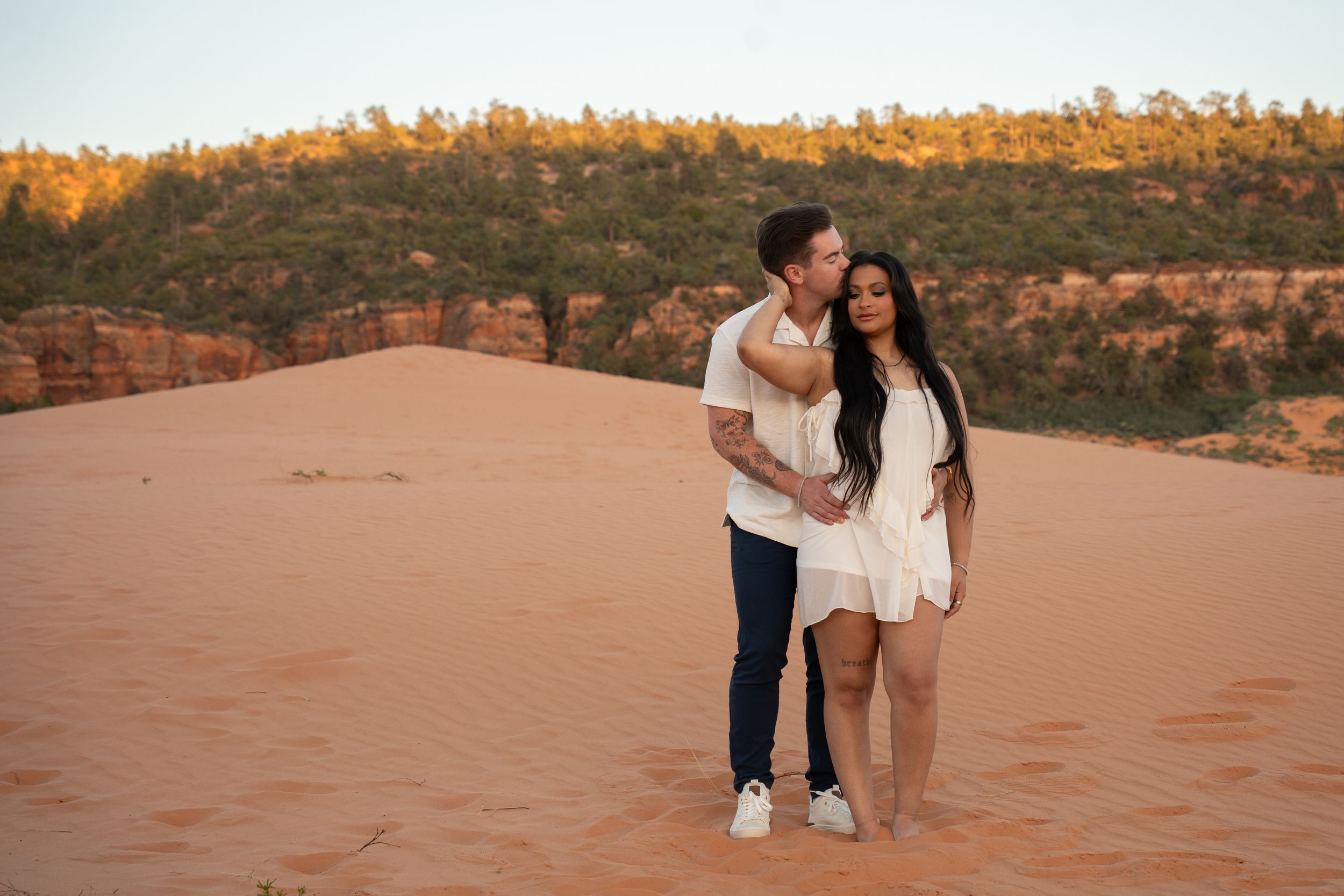
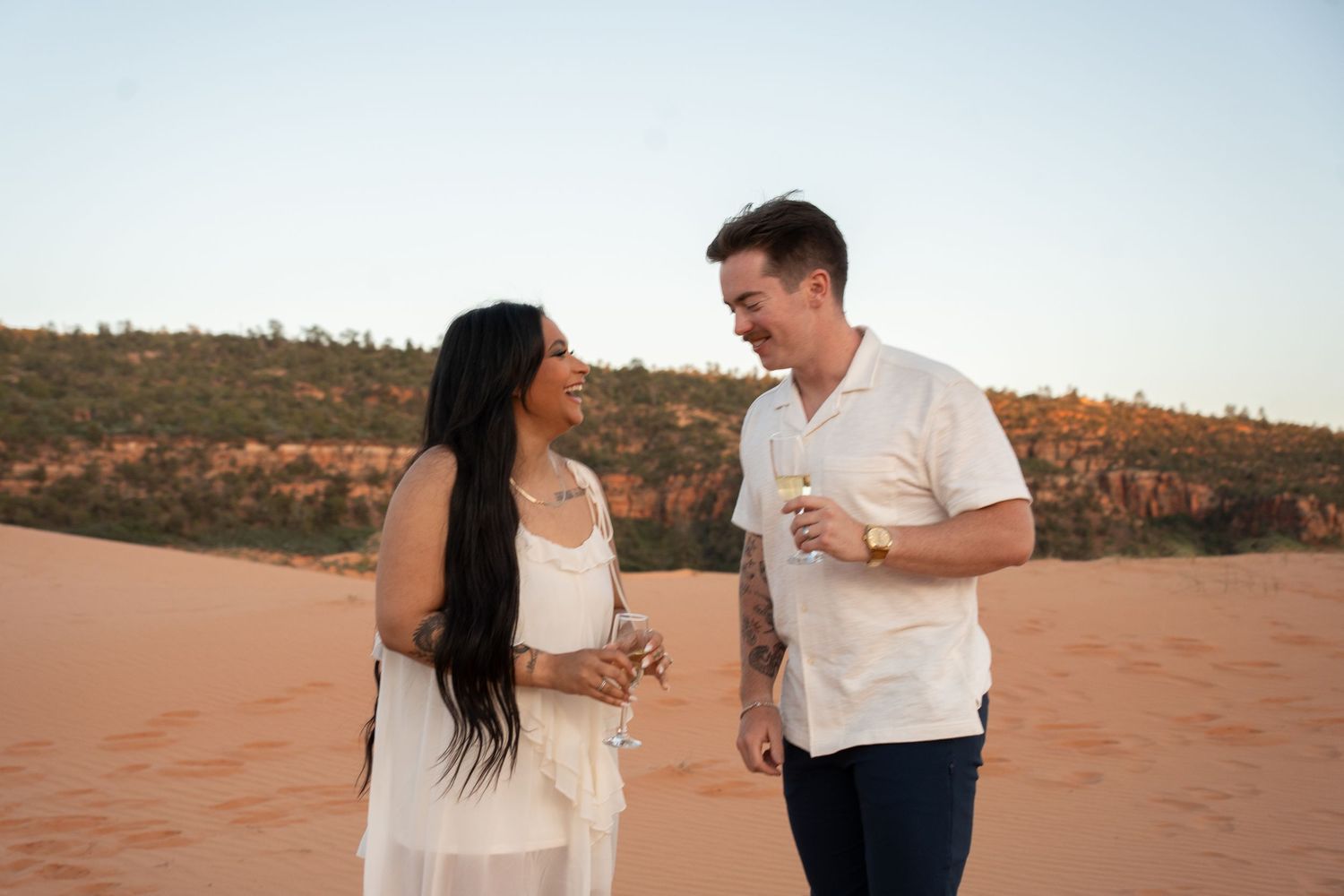
Once the shock wears off, we shoot celebratory portraits: the ring, the two of you against the arch you just got engaged in front of, whatever you want to do next. If you’re popping champagne or planning a bigger moment right after, this is when it happens, and I’m still rolling.
Getting to Arches, Where to Stay & Eat, and What to Budget
Getting There
The Arches visitor center sits about 5 miles north of downtown Moab off Highway 191, so however you get to Moab, you’re minutes from the entrance. Moab itself doesn’t have major commercial air service, so most out-of-state couples drive in. Salt Lake City International Airport is the closest major airport, but it’s a long haul: about 324 miles and 4.5 hours by car. Grand Junction Regional Airport in Colorado is the faster option for a lot of routes, about 100 miles and 2 hours of driving. If you’d rather skip the drive entirely, Canyonlands Field Airport (CNY), about 18 miles north of town, has had direct flights from Salt Lake City and Denver through smaller carriers, worth checking directly since regional flight schedules change often.
However you get here, build in buffer time. This isn’t a spot you fly into the morning of and propose that afternoon; between the drive or the connection, plus needing rest before an early sunrise session, plan at least one full night in Moab before your proposal day.
Where to Stay
Most lodging clusters along Main Street (Highway 191) in Moab. Staying on the north end puts you 5 to 10 minutes from the Arches entrance, the most useful option if your spot is Double Arch, the Windows, or Delicate Arch and you want to beat the day-trip crowd in. Staying downtown puts restaurants, outfitters, and the visitor center within walking distance, which matters more if Corona Arch or Dead Horse Point (both southwest of town) are your spot. Reserve early if your dates land anywhere near Easter Jeep Safari (typically March or April) or a summer holiday weekend; those windows sell out fast.
Where to Eat
Moab’s food scene punches above its weight for a town this size. Milt’s Stop & Eat has been serving burgers and hand-spun shakes from a roadside stand since 1954, a beloved local institution worth the stop before or after a hike. For something more substantial after your proposal, Antica Forma (wood-fired Neapolitan pizza) and Pasta Jay’s (Italian, around for decades) both work well for a celebration dinner. Fiesta Mexicana is the local favorite for Mexican food, and Sabaku Sushi is the surprise standout if you want something completely different from red rock and burgers. If you’re planning a celebratory meal right after the proposal, book ahead, especially in peak season, small-town restaurants fill up fast on a Friday or Saturday night.
Budget Considerations
Beyond the photography itself, plan for: the Arches entrance fee ($30/vehicle, $25/motorcycle, $15/person, covers your whole group for the visit); the Dead Horse Point day-use fee if that’s your spot ($20/vehicle); the Canyonlands entrance fee if that’s your spot (also $30/vehicle); lodging, which swings widely by season (expect summer and Easter Jeep Safari weekend rates well above a quiet November night); gas for driving in, especially from Salt Lake City; and a celebration meal or activity afterward if you’re building that into the day. If your trip includes both Arches and Canyonlands, the America the Beautiful annual pass (around $80, verify the current price) covers entrance to both for a full year, worth it if you think you’ll be back. None of the BLM spots just outside the park, Corona Arch included, add any fee or permit cost on top of your trip. Your biggest actual line item beyond the trip itself is the photography, and that’s the one piece I can give you an exact number on before you book anything.
Your Trip Window Is the Only Deadline That Matters Here
No permit office, no application to wait on, for any spot on this page. The only limiting factor is my calendar, especially for a summer sunrise or sunset slot. Reach out as soon as your dates are set.
Sturdy shoes matter more than a nice outfit here. Every spot on this page crosses loose sand, slickrock, or both, and a flat sandal or a heel will make the walk miserable and the photos worse. A supportive sneaker or a light hiking shoe works for nearly every trail here; save the dressier shoes for the celebration dinner after.
Water matters more than people expect, even for a short walk. Desert air pulls moisture out of you faster than it feels like at the time, especially above 80°F. Bring more than you think you need, and bring extra if your spot is Delicate Arch or Broken Arch, since neither has a water source anywhere on the trail.
Sun protection is non-negotiable for anything outside the shoulder-season months: most of these spots offer little to no shade. A hat, sunscreen, and sunglasses cost you nothing in the photos and save you a bad sunburn.
If you’re timing the shoot around sunrise or sunset, which most of these spots call for, bring a light layer too. Desert temperatures swing hard once the sun’s off the rock, even on a hot day; a 95°F afternoon can drop 30 degrees by an hour after sunset.
For a winter trip, add proper layers: a warm coat, gloves, and traction if you’re headed anywhere with shaded, icy sections. Camera batteries handle cold just fine on my end; it’s usually the couple’s fingers that struggle first, so hand warmers are worth the extra ounce in your bag.
One more note: if a ring is coming with you, decide now who’s carrying it and how. A zipped inner pocket beats a loose one every time.
Which Arches Proposal Spot Fits You?
Eleven options is a lot to compare from your couch. Here’s the short version: match your priority in the left column to the spot that delivers it.
If you want…
Best spot
Effort
Fee/Permit
Massive scale with almost no walking
Double Arch
Easy, 0.6 mi
$30 entrance
Double Arch's drama with a thinner crowd
South Window
Easy, ~1.2 mi loop
$30 entrance
To stand framed inside the arch itself
Turret Arch
Easy, ~1.2 mi loop
$30 entrance
Cinematic canyon walls, minimal hiking
Park Avenue
Easy, ~1.8 mi
$30 entrance
Total privacy, worth the walk
Broken Arch
Easy, ~1.9 mi
$30 entrance
Zero hiking at all
Balanced Rock
Easy, 0.3 mi
$30 entrance
A narrow, enclosed rock corridor look
Sand Dune Arch
Easy, 0.3 mi
$30 entrance
The single most iconic formation in Utah
Delicate Arch
Difficult, ~3 mi
$30 entrance
The classic red-rock-arch photo, no entrance fee
Corona Arch
Moderate, ~3 mi
None
A sheer canyon overlook, little to no hike
Dead Horse Point
Easy
$20 day-use
Sunrise drama and a national park backdrop
Canyonlands (Mesa Arch)
Easy–moderate
$30 entrance
Still not sure? A few patterns from couples I’ve worked with: the couple who wants the photo to look unmistakably like a national park chooses Double Arch or Turret Arch. The couple who wants total privacy and doesn’t mind walking goes for Broken Arch. The couple traveling with an injury, a pregnancy, or just not much time in the day goes for Balanced Rock or Dead Horse Point. And more couples than you’d expect end up choosing Corona Arch specifically because it gives them the iconic red-rock-arch look without paying a park entrance fee or tracking a timed-entry rule at all.
Permits & Fees: The Full Breakdown by Land Manager
Here’s the section most guides bury in fine print halfway down the page. I’m putting it up front and making it simple. The short version: nothing on this page requires a permit for a proposal. Permits only enter the picture for a formal wedding ceremony, and even then, only at a few of these spots.
Spot
Land manager
Entrance fee
Permit for proposal
Permit for ceremony/wedding
Double Arch / Windows region
NPS (Arches)
$30/vehicle
None
Special Use Permit
Park Avenue
NPS (Arches)
$30/vehicle
None
Special Use Permit
Broken Arch
NPS (Arches)
$30/vehicle
None
Special Use Permit
Balanced Rock
NPS (Arches)
$30/vehicle
None
Special Use Permit
Sand Dune Arch
NPS (Arches)
$30/vehicle
None
Special Use Permit
Delicate Arch
NPS (Arches)
$30/vehicle
None
Special Use Permit
Corona Arch
BLM
None
None
None
Dead Horse Point
Utah State Parks
$20/vehicle
None
Special Use Permit
Canyonlands (Island in the Sky)
NPS
$30/vehicle
None
Special Use Permit (~$185)
The pattern here is simple once you see it laid out: every spot inside Arches shares the same $30/vehicle entrance fee and needs no permit for a proposal, only for a formal ceremony. Dead Horse Point and Canyonlands run the same way on their own fee structures. Corona Arch, on BLM land, is the one true exception: no fee, no permit, either way. If your plans do call for an actual wedding ceremony at any of these spots down the road, that’s a more involved process than what this page covers, worth its own conversation once you get there. Fees and permit rules change over time, so double-check current details on the relevant agency’s website before you travel, and I’m always glad to help you sort out the current rules for your exact spot and date.
Why Book Someone Who Already Knows Arches
No permit office to wait on. A proposal needs no permit anywhere on this page, so your booking timeline runs on my calendar and your travel dates, not a government turnaround time.
Scouted, not guessed. I’ve hiked every trail on this page, several more than once, in more than one season, so the spot I recommend is based on what works, not what has the most tagged photos.
A cover story, built together. I help you construct a reason to be at the right spot at the right time that your partner will believe, then I disappear into the trail until you’re ready.
Local knowledge you can’t get from a blog post. Which parking lot fills up by 9am on a Saturday in April, which arch holds golden hour longest, which spot to skip entirely on a given day. That comes from being here, repeatedly, not from a single scouting trip.
One quote, no surprises. Travel is factored into your number upfront, on a planning call before you book anything, not added as a surprise line item afterward.
Arches Proposal Photos
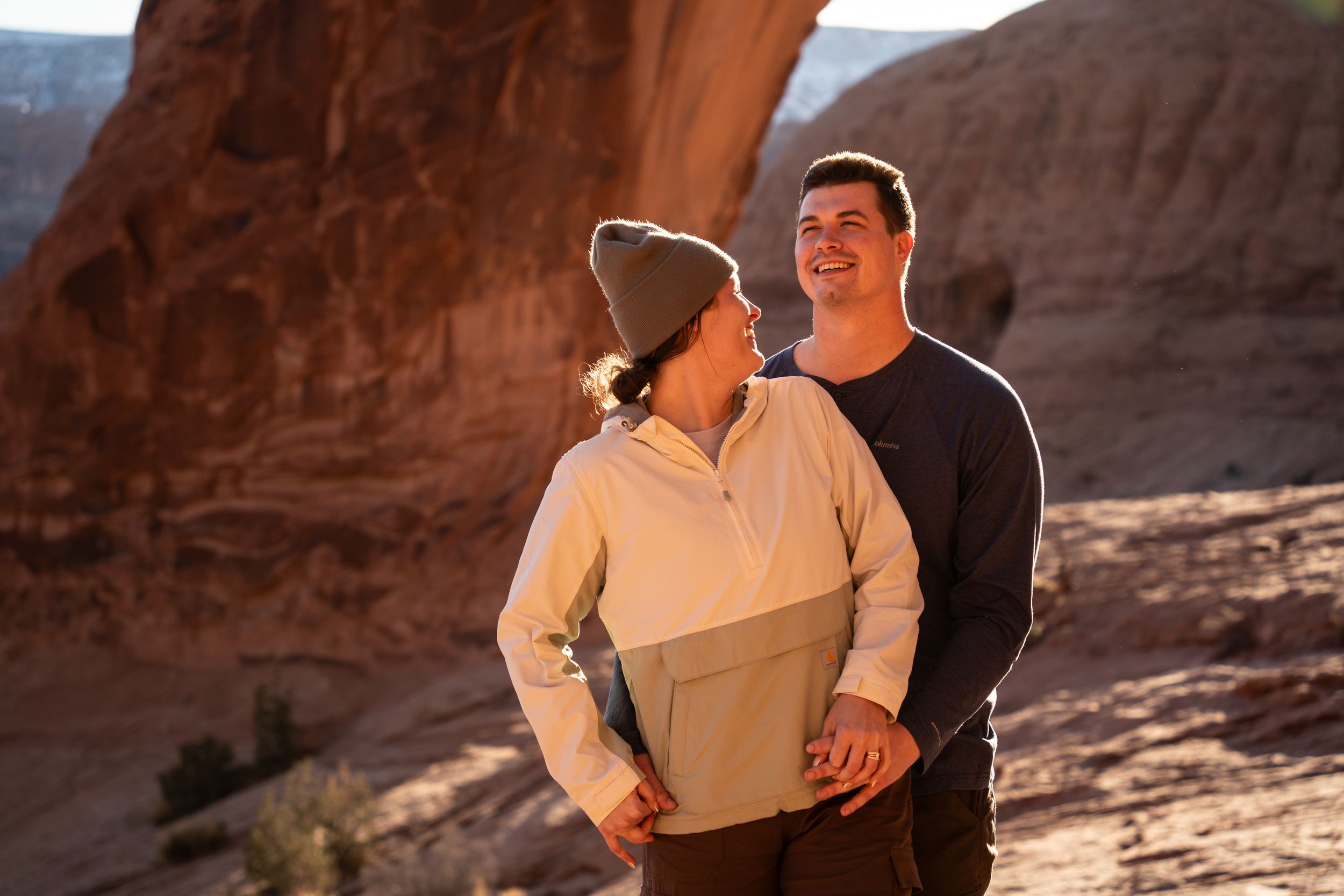
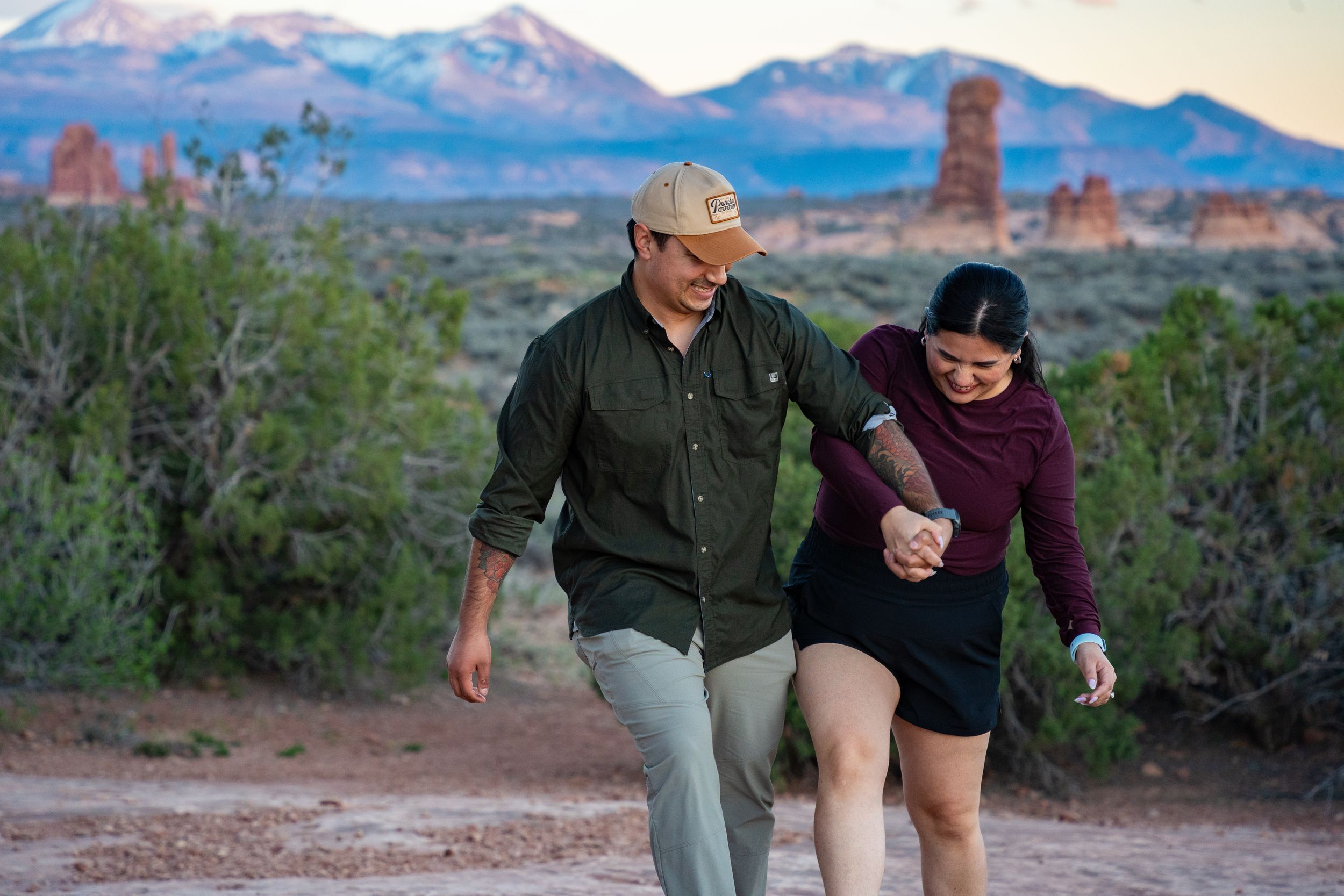
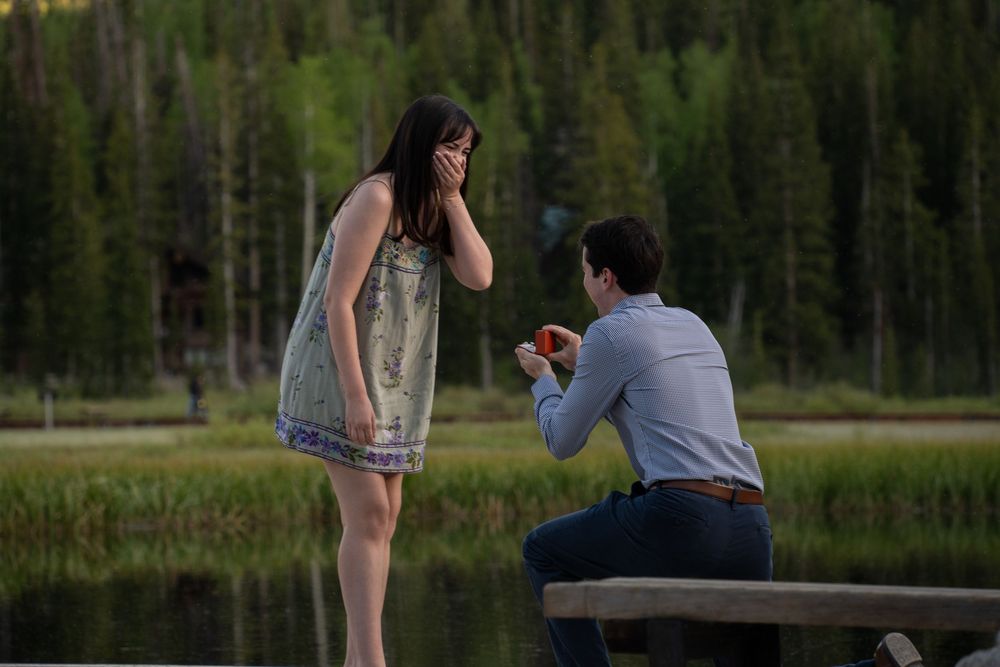
Proposals I’ve photographed in and around Arches, including Aaron and Lyna’s Double Arch proposal, Christian and Bianca’s Balanced Rock proposal, and Jacob and Rae’s Corona Arch proposal, told in full below and in their own dedicated posts.
Aaron & Lyna’s Double Arch Proposal
Aaron wanted Arches to look unmistakably like Arches: big and dramatic. He first considered Turret Arch, but the angles were trickier to shoot, so he switched to Double Arch for the bigger, cleaner frame. His cover story was two film cameras and a few good bird photos on the trail. Lyna had no idea until the very last second. Read the full story of Aaron and Lyna’s Double Arch proposal.
Jacob & Rae’s Corona Arch Proposal, Just Down the Road
Jacob planned his Corona Arch proposal two weeks out, during a trip from the Midwest. Rae had no idea until they were already on the trail. Read the full story of Jacob and Rae’s Corona Arch proposal.
You Pick the Vibe. I’ll Pick the Arch.
Arches is one of the most incredible places on earth to propose, but only if you land on the right spot, at the right time, without a crowd stealing the moment, and without getting blindsided by a rule you didn’t know about.
You don’t have to figure that out from another state. I scout these locations, send you videos of your top picks, handle the timing, the light, and the logistics, and photograph it all in secret, with your photos delivered within 24 hours.
I’m Jade, a Utah-based proposal photographer, and I live and shoot in this park, which is why I talk couples out of Delicate Arch instead of just booking whatever they ask for. I know how to blend into the Windows region crowd with a camera, which angle below Double Arch gives you the full span of both openings, which trail to send you on if privacy matters more than the iconic look, and how the timed-entry rules shift year to year so you’re never caught off guard at the gate.
Proposal photography starts at $845, with travel added for Arches since it sits outside the standard hour-of-Wasatch-Front radius. You’ll have 40+ edited images and video within 24 hours. If your day includes more than one spot, say a sunrise session at the Windows and a celebration dinner reservation I help you plan, that doesn’t add a separate charge, it’s the same session, built around more of your day. I’ll work out your exact number with you on the planning call before you book anything.
Frequently Asked Questions
What are the best proposal spots in Arches for out-of-state couples?
The Windows region is the easiest win: Double Arch, South Window, and Turret Arch sit in the same parking area, so you get three distinct backdrops without much walking. Beyond that: Park Avenue for drama without much of a hike, Broken Arch and Sand Dune Arch for more privacy, Balanced Rock for zero hiking at all, and Corona Arch, Dead Horse Point, or Canyonlands just outside the park if you’d rather skip the entrance fee and crowds entirely.
Should I propose at Delicate Arch?
I usually recommend against it. The hike itself is no joke: 3 miles round trip with about 480 feet of elevation gain, mostly exposed slickrock with a narrow ledge for the final stretch, and the NPS rates it difficult. Add the crowd waiting at the top and a knee-on-rock moment can turn into a show for strangers. Quieter arches nearby give you the same drama without the audience or the workout. If you're still set on Delicate Arch, here's how I'd stage one if you want to anyway.
Do I need a reservation to get into Arches?
Not for 2026. Arches dropped its timed-entry reservation system for the year as of a February 2026 NPS announcement, so you can drive in anytime during operating hours with a standard entrance pass. That’s a change from recent years and it could return, so double-check nps.gov before your trip. Fiery Furnace hikes and Devils Garden Campground still need their own separate reservations either way.
Do I need a permit to propose in Arches?
No, permits are only for ceremonies, not proposals or personal photography. One detail most people miss: drones are banned park-wide in every national park, including Arches. If aerial footage matters to you, that’s a point in favor of a BLM spot like Corona Arch, where drone flight is allowed under standard FAA rules.
How much does an Arches proposal photographer cost?
Utah proposal photography starts at $845 for a proposal within about an hour of the Wasatch Front. Arches is a longer drive than that, so travel time factors into your quote, along with any extras like a bigger celebration afterward. You’ll have 40+ edited images and video within 24 hours. I work out your exact number with you on the planning call before you book anything.
When is the best time to propose in Arches?
Arches regularly hits the upper 90s to over 100°F on summer afternoons, which is reason enough to pick sunrise over a 2pm proposal in July. One detail worth knowing: the entrance station is only staffed part of the day, but the gate itself stays open, so you can drive in before sunrise year-round, which is when the Windows and Balanced Rock are at their emptiest regardless of season. Spring and fall are the most comfortable seasons overall; see the month-by-month breakdown above for the full picture.
What if I want red rock without the park crowds?
Corona Arch is the standout: BLM land off Potash Road, a roughly 3-mile round-trip hike with a couple of cable-assisted sections, and the arch itself spans about 105 feet and stands around 140 feet tall. Because it’s BLM rather than National Park land, it’s also one of the few spots nearby where drone photography is allowed. It sits about a 20-minute drive from the Arches visitor center, so it's easy to pair with a park visit the same trip. Dead Horse Point and Canyonlands are just as good if you’d rather skip the hike altogether.
How far in advance should I book an Arches proposal photographer?
As soon as you know your travel dates. None of the spots on this page come with a permit-office lead time, so the actual deadline is my calendar, not the park’s. A summer Friday or Saturday sunrise slot, or anything overlapping Easter Jeep Safari in spring, is safer booked 2 to 3 months out. A quieter month like November or January usually still has room 2 to 4 weeks ahead.
Can you keep an Arches proposal a surprise?
Yes, that’s one of my specialties. In a popular spot like the Windows or Double Arch, one more person on the trail with a camera never looks out of place, so I blend in and shoot from a distance with a long lens until you’re already down on one knee. At a quieter spot like Broken Arch, we build a specific cover story together first, a trail you’d want to hike anyway, so there’s a believable reason to be out there.
Which Arches spot works best if family or friends want to hide nearby for the reveal?
Balanced Rock and Park Avenue give a hidden group the most room, since both are open, drive-up viewpoints with more than one vantage point to hang back from. The Windows parking area works too, if the group splits up rather than clustering in one spot. A narrower trail like Sand Dune Arch's rock corridor is trickier: a group trying to stay hidden there can end up more conspicuous, not less. Tell me early if a group reveal is part of your plan so we can pick a spot with enough space to pull it off.
What if the weather doesn't cooperate on the one day we have in Arches?
This is where Arches’ lack of a proposal permit works in your favor. If a wedding ceremony required a Special Use Permit tied to one specific date and location, bad weather would be an actual problem. A proposal doesn’t work that way here. If sunrise at the Windows looks rained out, we can shift to a different window the same day, or pivot to a spot that handles overcast light better, without needing anyone’s approval to change plans.
Can we do engagement or celebration photos in the same Arches session as the proposal?
Yes, and most couples end up doing this without planning to. Once the initial shock wears off, we naturally roll into a short set of celebration portraits: the ring, the two of you together, the arch you just got engaged in front of. Since I’m already there and the light’s usually still good, there’s no need to book a second session or plan a separate trip back to Arches just for engagement photos.
Written by
Jade Jarvis
Utah-based wedding, elopement, and proposal photographer since 2025. I've scouted these locations myself, so the advice here comes from firsthand experience, not guesswork.