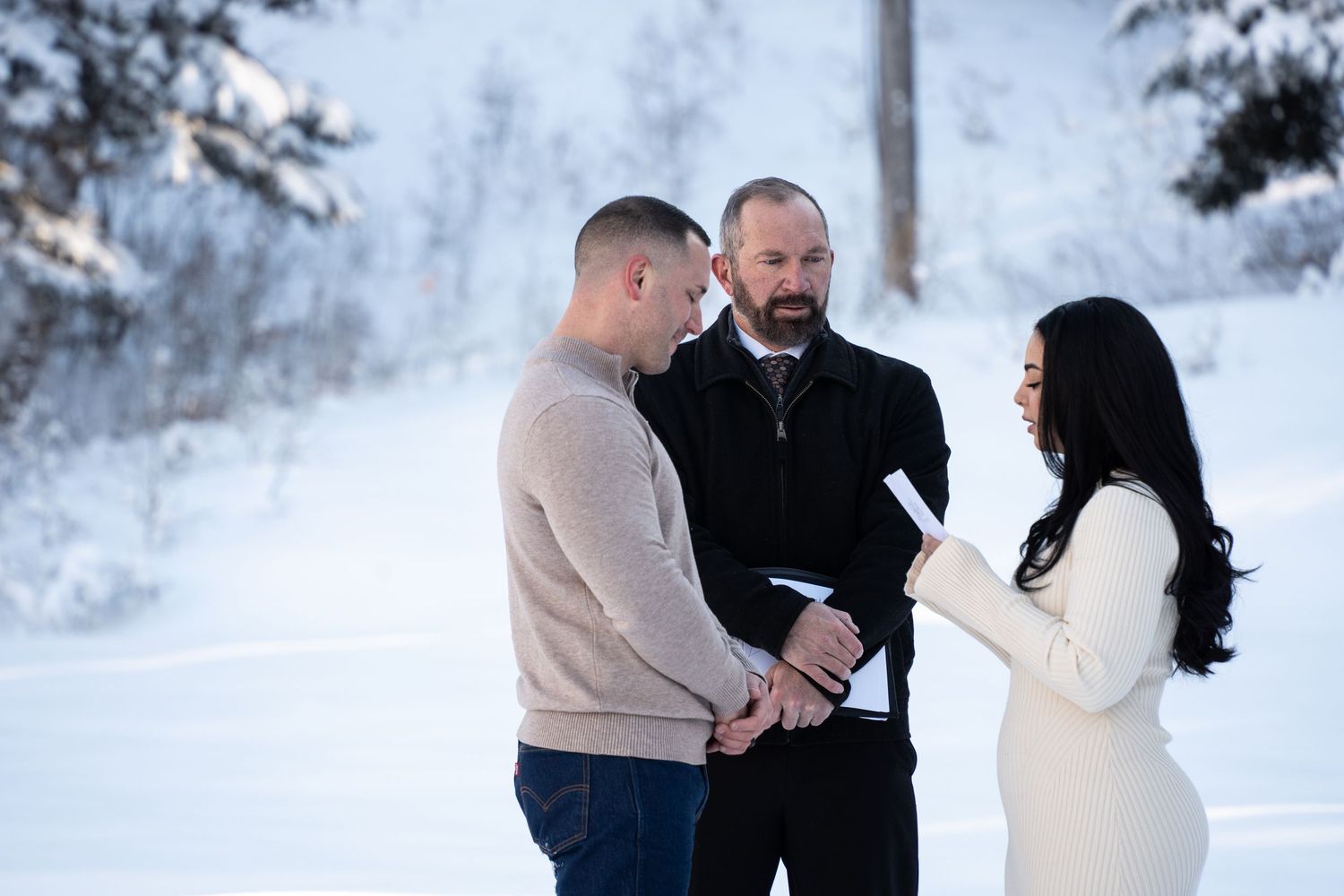
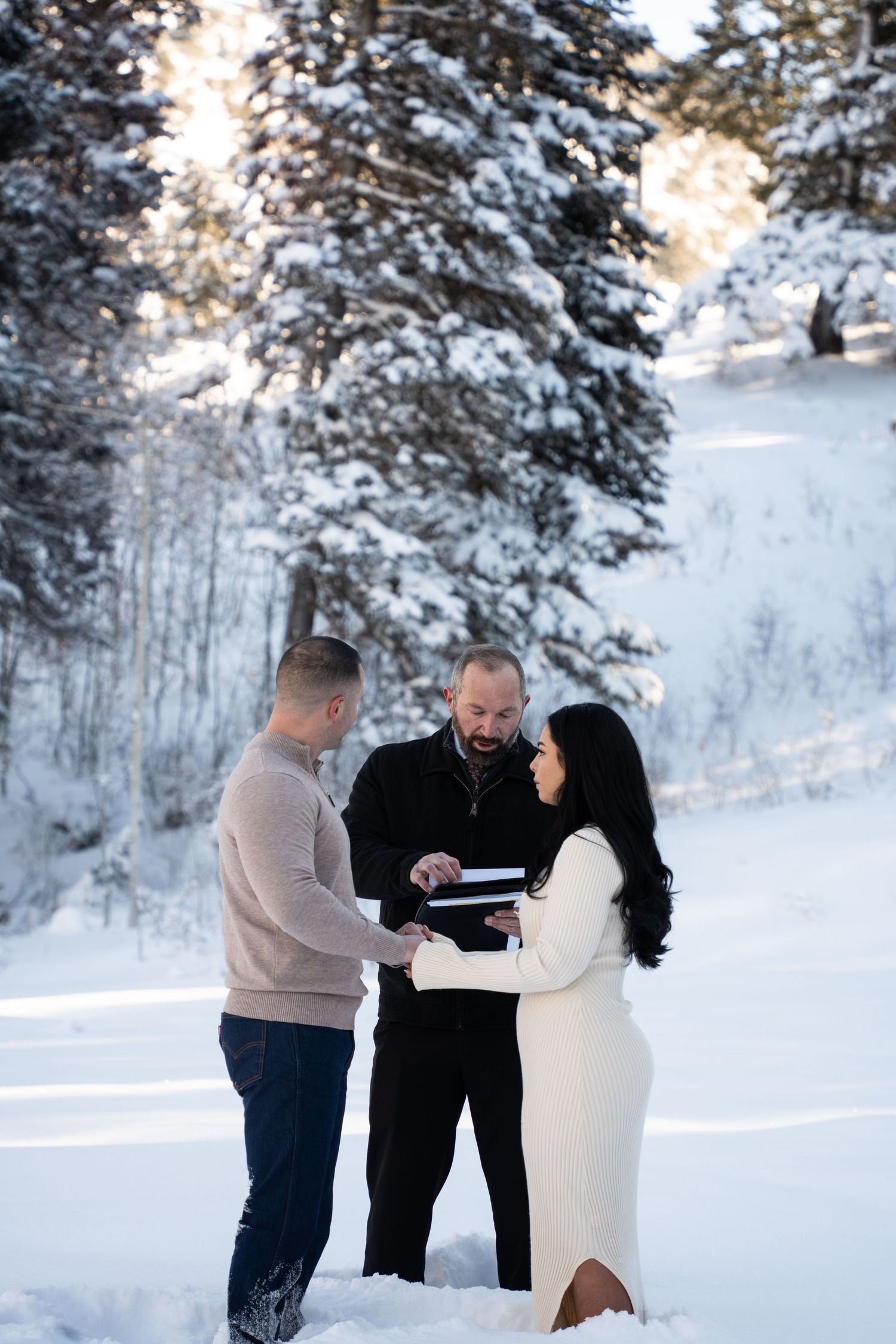
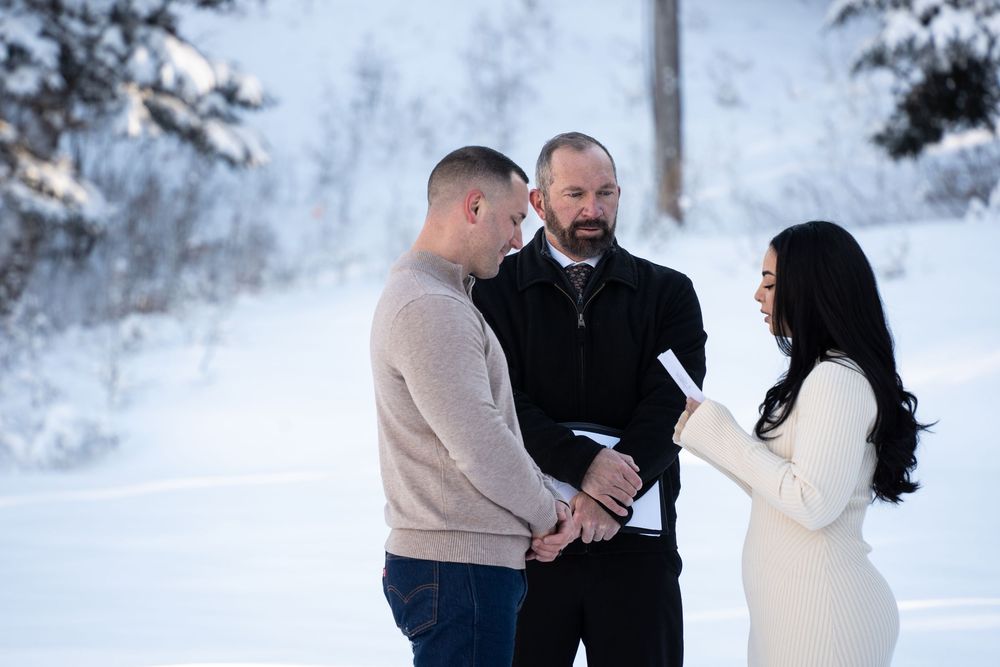
Utah Elopement Officiant Requirements: Can a Family Member Do It?
Yes, a family member can legally officiate your Utah elopement, and the process is more straightforward than most couples expect. Get them ordained online, line up two witnesses who aren’t part of the ceremony party, and have your officiant file the marriage certificate within 30 days of your wedding.
Utah Code doesn’t call out family members specifically. It only asks that whoever performs your ceremony is 18 or older and authorized by a religious denomination, which is what a free online ordination provides. Here’s what the Utah elopement officiant requirements cover, from ordination to paperwork, plus when hiring a professional officiant instead might serve you better.
Who Can Legally Officiate a Wedding in Utah
Utah Code section 81-2-305 lays out who can solemnize a marriage in the state. Top of that list: any individual 18 or older who’s authorized by a religious denomination to perform the ceremony, alongside county clerks, certain elected officials, judges, and Native American spiritual advisors.
That religious-denomination clause is broad by design, and it’s the one that covers your family member. Utah doesn’t require officiants to register with the state or the county first, so there’s no license or certification to apply for beyond getting ordained.
This section of the code got renumbered in 2024 from its old spot at 30-1-6, so if you find an older article citing that section number, the underlying rule hasn’t changed, only where it lives in the code.
How to Get a Family Member Ordained
Two ministries handle almost every online ordination couples use for a Utah ceremony: American Marriage Ministries and the Universal Life Church. Both ordain for free in a few minutes, and both confirm directly on their sites that their ordinations hold up under Utah’s religious-authorization rule.
Your family member signs up, confirms they’re 18 or older, and gets an ordination confirmation right away. No waiting period, no interview, no Utah address required, since the ordination itself doesn’t depend on where they live.
If they want a printed credential or wallet card to carry on the day, most ministries sell one for a small fee, though nothing about it is required by Utah law. The free digital ordination alone meets the state’s requirement.
This is a familiar move in LDS family culture specifically, where a parent, sibling, or close friend getting ordained to handle a civil ceremony, often alongside or instead of a temple sealing, is common enough that plenty of Utah couples already know someone who’s done it. It’s just as available to any couple, whatever their faith or background.
Witness and Paperwork Requirements
Beyond the officiant, Utah requires two witnesses at the ceremony itself, each at least 18, and they can’t be the officiant or either person getting married. Both witnesses need to watch the vows and the pronouncement, then sign the marriage certificate afterward.
Before any of that happens, you still need a Utah marriage license from a county clerk, about $50, valid for 32 days from the day it’s issued, no waiting period. Your officiant doesn’t provide this part, you get it yourselves ahead of the ceremony.
After the ceremony, your officiant finalizes it: confirming the license, the vows, and the pronouncement happened with both witnesses present, then submitting the signed certificate back to the county. Utah County runs this through a digital portal, due within 30 days; other counties mail the physical license back for recording.
Filing late turns into an infraction, and a false statement on that submission counts as perjury, so this isn’t a step to forget once the ceremony wraps. Most ministries walk their newly ordained ministers through what to file and when, but it’s worth confirming with your specific county clerk’s office too. For every term in this section defined more plainly, see the Utah elopement and wedding permit glossary.
Should You Ask a Family Member or Hire an Officiant?
A family member officiating means someone who already knows your story is the one pronouncing you married, and it costs next to nothing beyond the marriage license itself. For couples eloping specifically to keep the day small, that personal touch often matters more than a polished script.
Cost: ordination runs free to a few dollars, versus $200–$550+ for a professional officiant.
Familiarity: a sibling or parent already knows your relationship, no consultation needed to explain your story to a stranger.
Flexibility: no separate vendor to coordinate around your ceremony location or timing.
The tradeoffs are worth weighing too:
Nerves: your family member is holding the ceremony together, memorizing or reading a script, in front of everyone who matters to you, often for the first time.
Paperwork risk: missing the 30-day filing window or fumbling the officiant submission falls on someone who’s never done it before.
No backup plan: a professional officiant does this often and knows how to recover if nerves or weather throw off the moment; a first-time family officiant is figuring it out as they go.
No pressure, just a clear plan before you book anything.
Frequently Asked Questions About Utah Elopement Officiant Requirements
Does our officiant need Utah-specific ordination, or is online ordination enough?
Online ordination is enough. Utah Code lets any individual 18 or older who’s authorized by a religious denomination solemnize a marriage, and the state doesn’t license, register, or certify officiants separately. A family member ordained through American Marriage Ministries or the Universal Life Church meets that bar the same way a pastor would.
Can our officiant also count as one of our two witnesses?
No. Utah County’s marriage division spells this out directly: your two witnesses have to be people other than the officiant and the couple. Bring two separate adults, both 18 or older, and have them ready to sign the certificate.
Does getting ordained cost anything?
Most online ministries, including American Marriage Ministries, ordain for free, though a printed credential or an expedited option usually runs a small fee if your family member wants proof to carry with them. Utah doesn’t charge anything to recognize that ordination, only the marriage license itself carries a fee, about $50 through the county clerk.
Who files the paperwork after the ceremony, and how fast?
Your officiant does. Utah County runs this through a digital Officiant Submission portal, due within 30 days of the ceremony, and other counties have their own version of returning the signed license by mail. That deadline runs separately from the license’s own 32-day window to hold your ceremony after it’s issued, so don’t confuse the two clocks.
Can a family member who lives out of state officiate our Utah elopement?
Yes, the ordination itself works the same no matter where they live. Utah just requires the officiant to be physically present in the state at your ceremony location when they pronounce you married, not registered or resident here beforehand.
A family member can handle your ceremony from start to finish once they’re ordained, and Utah’s requirement doesn’t get any harder because they’re related to you instead of a stranger you hired. Whoever ends up standing at the front, what makes it legal stays short: ordination, two witnesses, and a filed certificate.
Tell me who’s officiating and where you’re eloping, and I’ll build the day around it.