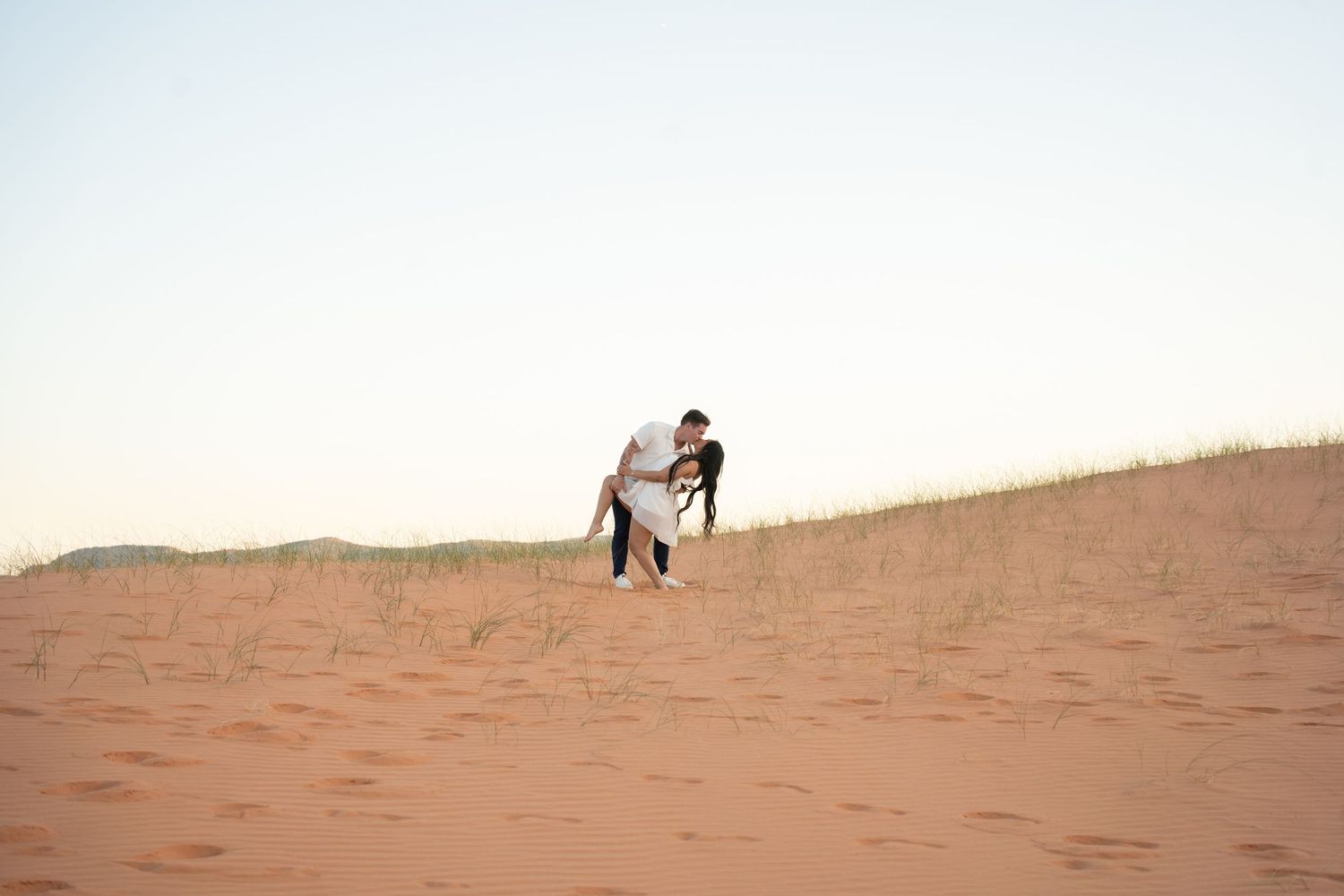
Everyone knows the "Mighty 5" national parks. Almost nobody has much of a handle on the other 46.
Utah's state park system is enormous and strange in the best way: you've got red-rock hoodoo fields, dinosaur trackways, a working 1850s territorial capitol, a hang-gliding launch, reservoirs stocked with tiger trout, an entire off-highway-vehicle motocross park, and a preserved 1858 army fort, all wearing the same "state park" label.
I photograph proposals and elopements all over this state, which means I've spent a lot of time in the ones with the views. But this guide covers all 46: grouped by region, with a straightforward note on what each one is good for, so you're not driving two hours to a fishing reservoir expecting slot canyons.
TL;DR
Utah has 46 state parks; 34 offer camping and 12 are day-use only.
Day-use fees typically run $5-$20 per vehicle; an annual pass pays off after three or four visits.
Dead Horse Point and Snow Canyon are the two most popular parks for weddings and elopements.
Goblin Valley, Rockport, and Goosenecks hold official International Dark Sky designation.
Wedding permits need at least 30 days notice and typically cost $50-$60 plus a processing fee.
Utah State Parks at a Glance
All 46, sorted by region. "Camping" means a developed campground exists on-site: day-use-only parks (mostly the history museums and Flight Park) are marked no.
Park
Region
Best for
Camping?
Antelope Island
Salt Lake Valley
Bison, hiking, biking
Yes
Great Salt Lake
Salt Lake Valley
Marina, sunsets, birding
Yes (limited)
Utah Lake
Salt Lake Valley
Boating, fishing
Yes
Jordan River OHV
Salt Lake Valley
Motocross, ATV
No
This Is The Place Heritage Park
Salt Lake Valley
Pioneer living history
No
Flight Park
Salt Lake Valley
Hang gliding, paragliding
No
Bear Lake
Northern Utah
Turquoise water, beaches
Yes
Hyrum
Northern Utah
Fishing, waterskiing
Yes
Willard Bay
Northern Utah
Boating, walleye fishing
Yes
Lost Creek
Northern Utah
Quiet fishing, boating
No (primitive nearby)
Echo
Northern Utah
Boating, watersports
Yes
Historic Union Pacific Rail Trail
Northern Utah
Biking, hiking, horseback
No
Rockport
Northern Utah
Camping, fishing, dark skies
Yes
East Canyon
Northern Utah
Boating, yurts, cabins
Yes
Jordanelle
Heber Valley
Boating, mountain biking
Yes
Deer Creek
Heber Valley
Sailing, windsurfing
Yes
Wasatch Mountain
Heber Valley
Golf, OHV, camping
Yes
Camp Floyd
Heber Valley
Civil War-era history museum
No
Palisade
Heber Valley
Golf, fishing
Yes
Yuba
Heber Valley
Sandy beaches, boat-in camping
Yes
Fremont Indian
South Central Utah
Petroglyphs, museum, ATV
Yes
Territorial Statehouse
South Central Utah
Utah's first capitol building
No
Otter Creek
South Central Utah
Trophy trout fishing
Yes
Piute
South Central Utah
Primitive fishing, boating
Yes (primitive)
Anasazi State Park Museum
South Central Utah
Ancestral village, museum
No
Kodachrome Basin
South Central Utah
Sand pipes, hiking, horseback
Yes
Escalante Petrified Forest
South Central Utah
Petrified wood, reservoir
Yes
Snow Canyon
Southwest Utah
Slickrock hiking, lava tubes
Yes
Sand Hollow
Southwest Utah
OHV dunes, wakeboarding
Yes
Quail Creek
Southwest Utah
Warm-water boating, swimming
Yes
Gunlock
Southwest Utah
Swimming, seasonal waterfalls
No
Coral Pink Sand Dunes
Southwest Utah
Dune riding, sandboarding
Yes
Frontier Homestead
Southwest Utah
Pioneer & iron-mining museum
No
Steinaker
Uinta Basin
Swimming beach, bass fishing
Yes
Red Fleet
Uinta Basin
Dinosaur trackway hike
Yes
Utah Field House of Natural History
Uinta Basin
Dinosaur fossil museum
No
Fred Hayes State Park at Starvation
Uinta Basin
Boating, OHV, fishing
Yes
Scofield
San Rafael Swell & Canyon Country
High-elevation trout fishing
Yes
Huntington
San Rafael Swell & Canyon Country
Fishing, OHV basecamp
Yes
Millsite
San Rafael Swell & Canyon Country
Fishing, OHV basecamp
Yes
Green River
San Rafael Swell & Canyon Country
Golf, river launches
Yes
Goblin Valley
San Rafael Swell & Canyon Country
Hoodoo scrambling, dark skies
Yes
Dead Horse Point
San Rafael Swell & Canyon Country
Overlook views, mountain biking, elopements
Yes
Goosenecks
San Rafael Swell & Canyon Country
River meander overlook, dark skies
Yes (primitive)
Edge of the Cedars
San Rafael Swell & Canyon Country
Ancestral Puebloan museum & ruin
No
Utahraptor
San Rafael Swell & Canyon Country
OHV, mountain biking, dino quarry
Yes
Salt Lake Valley & the Great Salt Lake
Six parks within roughly 45 minutes of downtown Salt Lake City, ranging from a bison-roaming island to a hang-gliding cliff.
Antelope Island State Park
The largest island in the Great Salt Lake, reached by a 7-mile causeway from Syracuse. Antelope Island is best known for its free-roaming bison herd (several hundred strong, descended from a founding herd brought over in 1893), along with pronghorn, bighorn sheep, and mule deer. Beyond wildlife-watching, there's 40+ miles of hiking and mountain biking trails: Frary Peak is the big one, climbing to the island's 6,596-foot summit with panoramic views over the lake. There's a swimming beach at Bridger Bay (expect brine flies and a salty, buoyant float rather than a typical lake swim), a campground, and the historic 1848 Fielding Garr Ranch house on the island's east side.
Great Salt Lake State Park
Not to be confused with Antelope Island: this is the small marina park near the Salt Lake City airport, at the lake's southeast shore. It's the main public boat launch onto the Great Salt Lake and a great sunset spot, with the Wasatch and Oquirrh Mountains framing the water. Camping is limited to five RV sites and a handful of primitive beach sites, so it's more of a day-use and boating stop than a basecamp. Birders come for the massive shorebird populations that use the lake during migration.
Utah Lake State Park
Utah's largest freshwater lake, with a recently renovated marina in Provo: four boat ramps, boat slips, courtesy docks, and campsites right at the water. Fishing is year-round for channel catfish, walleye, white bass, and panfish. It's also the center of an active native June sucker recovery effort, so you'll see interpretive signage about the lake's ecology alongside the standard boating and swimming amenities.
Jordan River Off-Highway Vehicle State Park
A 350-acre motocross and ATV park in Salt Lake City, built specifically for OHV riding rather than scenery: four separate tracks (two motocross, a novice track, and a grand-prix track) plus a few miles of connecting trail. Riders need a registered machine and a helmet; younger riders need to complete Utah's OHV education course first. No camping here: it's a day-use riding park, open roughly April through mid-October.
This Is The Place Heritage Park
A 450-acre living-history village at the mouth of Emigration Canyon: the spot where Brigham Young and the first Mormon pioneers entered the Salt Lake Valley in 1847. More than 50 historic buildings make up Heritage Village, staffed with costumed interpreters doing blacksmithing, carriage rides, and pioneer-era crafts, plus a Native American Village with Navajo hogans and Shoshone teepees. This is a walk-through history museum, not a hiking or camping park: think family day trip, not backcountry.
Flight Park State Recreation Area
Point of the Mountain, just north of Lehi, is internationally known among hang glider and paraglider pilots for its reliable ridge lift and thermals: you can launch and fly from either side of the point depending on wind direction. Jointly managed with the Utah Hang Gliding and Paragliding Association, it draws around 700 pilots a year, nearly a third from out of state. There's no camping and no OHV use here; it's strictly a flight park, with a model-aircraft field just west of the parking lot for RC planes and helicopters.
Northern Utah: Cache Valley & the Wasatch Back North
Eight parks stretching from the Idaho border down through Ogden and Morgan County to the edge of Park City, mostly reservoirs, plus one long rail trail.
Bear Lake State Park
Utah's "Caribbean of the Rockies": a striking turquoise-blue lake straddling the Utah-Idaho border, the color coming from suspended limestone particles. The park itself has multiple units (Marina, East Beach, Eastside, Rendezvous Beach) offering swimming beaches, boating, camping, and watersports across the lake's 20,000-plus acres. It's a summer destination in the true sense: warm shallow water by Utah standards, raspberry shakes in nearby Garden City, and enough shoreline camping to base a whole week here.
Hyrum State Park
A 450-acre reservoir eight miles southwest of Logan, popular for bass, trout, perch, and bluegill fishing as well as boating and waterskiing. In winter the reservoir commonly freezes over, opening it up for ice fishing and ice skating. The 32-site Lakeview Campground sits right along the water at the north end.
Willard Bay State Park
An unusual setup: Willard Bay is a freshwater reservoir separated from the briny Great Salt Lake by an earthen dike, giving you freshwater boating, waterskiing, and fishing (walleye especially) with lake views, minus the salt and brine flies. There are two developed areas (North Marina and South Marina), each with its own campground and boat ramp.
Lost Creek State Park
One of Utah's newest and least-developed parks (designated in 2021), centered on the narrow, 365-acre Lost Creek Reservoir in Morgan County. Fishing (rainbow and cutthroat trout) and wakeless boating are the draw; the lake is narrow enough that motorized boats are restricted to no-wake speeds. Development is still catching up: there's a boat ramp and pit toilets, but no developed campground yet, though primitive camping is available nearby. Worth a stop if you want a quiet, uncrowded reservoir rather than a full-amenity park.
Echo State Park
A 1,394-acre reservoir just off I-80 near Coalville, easy to reach from Salt Lake, Ogden, or Park City. Echo supports a solid warm/cold-water fishery: rainbow and brown trout, walleye, smallmouth bass, and perch, plus kayaking, paddleboarding, and wakeboarding across its open water. The park offers RV sites with hookups, cottages, and a group campsite, and it's one of Utah's newer state parks, having come under state management in 2018.
Historic Union Pacific Rail Trail State Park
A nearly 30-mile non-motorized trail following an abandoned 1870s narrow-gauge coal railroad corridor from the Wasatch Mountains near Park City, through Wanship and Coalville, and along the Weber River to Echo Reservoir. It's Utah's first non-motorized rail trail (dedicated in 1992) and works for biking, hiking, horseback riding, and cross-country skiing in winter. No entrance fee, no camping: just a long, scenic, mostly-flat corridor for anyone who wants miles rather than elevation.
Rockport State Park
A 500-plus-acre park around Rockport Reservoir near Wanship, about 45 minutes from Salt Lake City. Eight separate campgrounds (developed and primitive) give you well over a hundred campsites, and the reservoir itself is good for rainbow and brown trout, smallmouth bass, and yellow perch, plus boating, paddling, and waterskiing in summer. Rockport earned International Dark Sky Place certification in 2021, so it's also a legitimate stargazing stop, not just a fishing lake.
East Canyon State Park
A 685-acre reservoir at 5,700 feet in a mountain canyon near Morgan, about 45 minutes from Salt Lake and noticeably cooler than the valley in summer. Beyond the standard fishing and boating, East Canyon stands out for lodging variety: Conestoga wagons, yurts, cabins, and a lake cottage are all bookable alongside standard RV and tent sites, making it one of the more glamping-friendly reservoir parks on this list.
Heber Valley & Central Utah County
Six parks clustered around Heber Valley's reservoirs and the farmland stretching south through Utah County toward Nephi, plus one Civil War-era outpost in the middle of nowhere.
Jordanelle State Park
A large reservoir near Park City with two distinct areas: Hailstone, on the west shore, is the boating and watersports hub with marinas, campgrounds, and beaches; Rock Cliff, on the east shore, is quieter, geared toward wetland walking trails and low-impact recreation. The Mid-Mountain Trail and other singletrack connect Jordanelle into the broader Park City trail network, so it draws mountain bikers as much as boaters.
Deer Creek State Park
A nearly 3,000-acre reservoir near Midway known for predictable, strong afternoon winds, which makes it one of Utah's best sailing and windsurfing lakes rather than just another fishing reservoir. Three campgrounds (Chokecherry, Fox Den, Great Horned Owl) sit around the shoreline, with Chokecherry offering full hookups. It's also stocked with five species of sport fish and sits close enough to Provo (about 30 minutes) to work as an easy day trip.
Wasatch Mountain State Park
One of the biggest and most amenity-rich parks on this list, wrapping around Midway and Heber City. It's built around two golf courses (Lake and Mountain, both public), an extensive OHV and mountain biking trail network into the surrounding mountains, and multiple campgrounds plus yurts. In winter it shifts to snowmobiling and groomed nordic skiing. If you only have time for one park near Park City and want variety rather than a single activity, this is the one.
Camp Floyd State Park Museum
An odd little pocket of Civil War history in Fairfield, about 22 miles southwest of Lehi. In 1858, roughly a third of the entire U.S. Army (3,500 troops) was stationed here to suppress a rumored Utah rebellion that never materialized; they were recalled in 1861 when the Civil War broke out. The museum sits in the original commissary building, and the site also preserves the 1858 Stagecoach Inn (which operated until 1947) and the 1898 Fairfield District Schoolhouse. This is a history stop, not a hiking or camping destination.
Palisade State Park
Utah's most centrally-located state park, near the small town of Sterling. The 70-acre reservoir is good for trout fishing (electric trolling motors only; no gas engines), swimming, and boating, but the standout feature is the on-site Palisade Golf Course, whose fourth hole has drawn comparisons to Augusta National's famous 12th. Camping, hiking, and off-roading round out the options.
Yuba State Park
A big reservoir off I-15 between Nephi and Scipio, known for sandy beaches you can drive right up to and warm water all summer. Yuba is one of the few Utah state parks with boat-in camping, alongside North Beach's primitive drive-up sites, and it's popular for wakeboarding, personal watercraft, and paddleboarding. Anglers fish for walleye, northern pike, catfish, and rainbow trout.
South Central Utah: Sevier, Piute, Garfield & Wayne Counties
Seven parks through the high desert and canyon country between Richfield and Bryce Canyon: a mix of reservoirs, archaeology, and geology, with dramatic scenery once you get south of Fremont Indian.
Fremont Indian State Park and Museum
Protects the largest known Fremont culture village site in Utah, discovered in 1983 during I-70 construction, along with more than 500 rock art panels scattered across the surrounding canyons. The Parade of Rock Art Trail is a paved, barrier-free loop that puts you right up against petroglyphs and pictographs left by the Fremont people between roughly A.D. 400 and 1300; nine more short trails branch out from there. There's a museum with pottery, baskets, and arrowheads, an extensive ATV trail system for OHV riders, and the 31-site Castle Rock Campground if you want to make it an overnight stop.
Territorial Statehouse State Park Museum
Utah's oldest surviving government building, in Fillmore. Brigham Young ordered it built in 1852 to serve as the territorial capitol, but funding ran out before the full structure was finished: only the south wing was completed in time for a single legislative session in December 1855, after which the capital moved to Salt Lake City. Today it's a small museum of 19th- and early-20th-century artifacts, with two restored pioneer cabins and a stone schoolhouse on the grounds. No camping or trails: a quick, worthwhile history stop just off I-15.
Otter Creek State Park
Regarded as one of Utah's best trout fisheries: rainbow, cutthroat, and brown trout plus smallmouth bass on a 3,120-acre reservoir near Antimony, with a strong reputation for ice fishing in winter too. The 53-site campground handles both tents and RVs with partial hookups, and three ATV trails (including the Paiute Trail) run directly from the park, so it works for OHV riders as well as anglers.
Piute State Park
A no-frills, back-to-basics counterpart to Otter Creek just up the road: Piute Reservoir draws serious trophy anglers after rainbow, cutthroat, and brown trout (16 to 20 inches isn't unusual) and smallmouth bass, with a boat ramp and dock. Camping is primitive: pit toilets, no hookups, first-come first-served, and famously cheap. It's a park for people who want the fishing without the resort trappings.
Anasazi State Park Museum
In Boulder, at the edge of 11,000-foot Boulder Mountain, this museum sits on the partially excavated Coombs Site: one of the largest Ancestral Puebloan communities west of the Colorado River, occupied roughly A.D. 1050 to 1200. Interactive exhibits let you grind corn and make pottery-design rubbings, and a short trail leads past a full-size replica six-room dwelling and pit house. No lodging or camping on-site, but it pairs naturally with a stop in Boulder or Escalante.
Kodachrome Basin State Park
Named by a 1948 National Geographic expedition for its saturated colors, Kodachrome Basin is known for dozens of tall sandstone "sand pipes" (sedimentary rock spires) scattered across the basin floor, unlike anything else in the state. Hiking trails wind among the formations, the Panorama Trail and Grand Parade are highlights, and horseback rides are available seasonally through a park concessionaire. It's a photogenic, less-crowded alternative base for exploring the Bryce/Escalante corridor, with a developed campground on-site.
Escalante Petrified Forest State Park
Just west of the town of Escalante, 44 miles east of Bryce Canyon. The Petrified Forest Trail is a one-mile loop through ancient lava flows scattered with petrified wood, with the steeper three-quarter-mile Sleeping Rainbow Trail branching off for those who want more of a scramble. The park is built around Wide Hollow Reservoir, where you can swim, kayak, or paddleboard, and the visitor center displays fossilized plants, marine life, and dinosaur bone fragments over 100 million years old.
Southwest Utah: Greater Zion & Cedar City
Six parks around St. George, Hurricane, and Cedar City: Utah's warmest corner, and the region where red rock, reservoirs, and desert recreation overlap most.
Snow Canyon State Park
A striking mix of red and white Navajo sandstone cliffs, black lava rock, and ancient cinder cones just north of St. George. Snow Canyon has an excellent trail network for its size: slot canyons, slickrock scrambles, and even a couple of collapsed lava tubes you can climb down into, plus a paved multi-use path for biking. It's a true year-round hiking destination (though summer afternoons run hot) and a developed campground makes it easy to base here. Snow Canyon is also a favorite backdrop for St. George elopements and proposals: the light on that red-and-white rock at golden hour is hard to beat.
Sand Hollow State Park
Pairs a warm-water reservoir (wakeboarding, wakesurfing, tubing, jet skiing) with an adjacent sand dune field open to OHV riding: Sand Mountain is one of the most popular dune-riding destinations in the region. It's one of the more crowded parks on this list in summer, since it offers both water sports and off-roading in one place, with a large developed campground to match.
Quail Creek State Park
A reservoir near Hurricane known for some of the warmest swimming water among Utah's state parks, plus solid bass and catfish fishing. It's quieter and less developed than nearby Sand Hollow, making it the better pick if you want reservoir recreation without the crowds, and its red-rock surroundings make for a nicer backdrop than a typical flat-shore lake.
Gunlock State Park
Best known for a rare phenomenon: when Gunlock Reservoir fills past 105% capacity (not an annual occurrence), water spills over the dam and cascades down red sandstone in a series of seasonal waterfalls, usually visible in late spring during high-runoff years. Outside of waterfall season, it's simply a warm, calm reservoir good for swimming, kayaking, and paddleboarding, with a section of shoreline reserved specifically for swimmers. No developed campground.
Coral Pink Sand Dunes State Park
Near Kanab, this is one of the largest dune fields of its kind in the country, made of eroded Navajo sandstone that's been ground down to fine coral-colored sand. Off-highway vehicles are allowed on most of the dunes (there's a separate area set aside as non-motorized for sandboarding, sledding, and quieter exploring), and the park has a developed campground for an overnight stay. We've used this stretch of desert for proposal sessions before: read the Coral Pink Sand Dunes proposal story for a look at the light out here at sunset.
Frontier Homestead State Park Museum
In Cedar City, this museum covers the pioneer and early industrial history of Iron County, centered on the 1850s iron mining industry that Brigham Young sent missionaries here to establish. The grounds hold an extensive horse-drawn wagon collection, Cedar City's oldest surviving home (Hunter House), a 250,000-pound steam shovel visitors can climb into, and hands-on programs like Sheep-to-Shawl and Iron Mission Days. A history and family-activity stop, not a hiking or camping destination.
Uinta Basin: Northeastern Utah
Four parks around Vernal, in the heart of "Dinosaurland": two reservoirs, a fossil museum, and a bigger lake to the west near Duchesne.
Steinaker State Park
A reservoir seven miles north of Vernal with sandy beaches, swimming, and good year-round fishing: rainbow trout especially, with largemouth bass picking up in summer and an annual ice fishing tournament in winter. The campground overlooks the water and has some full-hookup RV sites, making it a solid, low-key basecamp for exploring the rest of Dinosaurland.
Red Fleet State Park
Home to a rare attraction: a 1.5-mile trail along the reservoir's slickrock shoreline leads to roughly 200-million-year-old dinosaur tracks: three-toed theropod prints, likely left by Dilophosaurus, preserved right in the red sandstone at the water's edge. (Please don't touch or move them: the tracks have been damaged by visitors before, and it's a felony under Utah law.) Beyond the trackway, Red Fleet offers standard reservoir recreation: boating, fishing, swimming, and camping.
Utah Field House of Natural History State Park Museum
A 22,000-square-foot fossil museum in downtown Vernal, built around the exceptional dinosaur and prehistoric fossil record of the surrounding Uinta Basin: within an 80-mile radius of here, you can find evidence of nearly the entire span of Earth's geologic history. Full-size fossil replicas fill the indoor galleries, and the outdoor Dinosaur Garden has life-size prehistoric animal sculptures spanning from the Pennsylvanian period through the Pleistocene. A museum stop, not a hiking or camping park.
Fred Hayes State Park at Starvation
A 3,495-acre reservoir four miles northwest of Duchesne, with two campgrounds: Beach Campground right on the shoreline with full hookups, and Mountain View up on a hill with wider lake views. Boating, fishing, kayaking, paddleboarding, hiking, biking, and OHV trails are all available here, making it one of the more well-rounded parks in the Uinta Basin rather than a single-activity reservoir.
San Rafael Swell & Southeastern Canyon Country
Nine parks spanning Carbon and Emery counties' reservoirs and OHV trails down through the red-rock icons of San Juan and Grand counties: the region with the most dramatic scenery on this whole list.
Scofield State Park
A high-elevation (7,616 feet) reservoir about 120 miles southeast of Salt Lake City, considered one of Utah's best rainbow and cutthroat trout fisheries, especially for ice fishing in winter. Two campgrounds, Mountain View near the dam and the recently renovated Madsen Bay with electric and water hookups, serve as bases for fishing, swimming, and watersports like wakeboarding and jet skiing.
Huntington State Park
Sits between the Wasatch Plateau and the San Rafael Swell desert, with a reservoir stocked for bluegill, catfish, largemouth bass, and rainbow trout. It's a natural launch point for exploring the San Rafael Swell and Manti-La Sal National Forest on foot, bike, or OHV, with 25 campsites and a large covered group pavilion for bigger gatherings.
Millsite State Park
On Millsite Reservoir at the mouth of Ferron Canyon, near the town of Ferron. Fishing turns up bluehead suckers, brown, cutthroat, rainbow, splake, and tiger trout, and the park is a popular launch point for OHV trips into both the Manti-La Sal National Forest and the San Rafael Swell desert. Ferron Canyon itself has hiking trails, and Millsite Golf Course sits right next door with views of a waterfall off the dam causeway.
Green River State Park
Built around a traditional boat-launching spot on the Green River in the town of Green River, this is the put-in point for river trips through Labyrinth and Stillwater Canyons. It also has a nine-hole riverside golf course lined with mature cottonwoods, doubling as an 18-basket disc golf course, plus a modern campground with full hookups: an unusual but pleasant combination for a desert town stopover.
Goblin Valley State Park
Thousands of mushroom-shaped sandstone hoodoos ("goblins") fill this valley, and unlike most state parks, you're actively encouraged to wander off-trail and scramble among them. Hiking trails lead into the surrounding badlands, including access to the slot canyons of Wild Horse Canyon nearby, and Goblin Valley is an International Dark Sky Park: a legitimately excellent stargazing stop given how little light pollution reaches this part of the state. A developed campground sits at the edge of the goblin field.
Dead Horse Point State Park
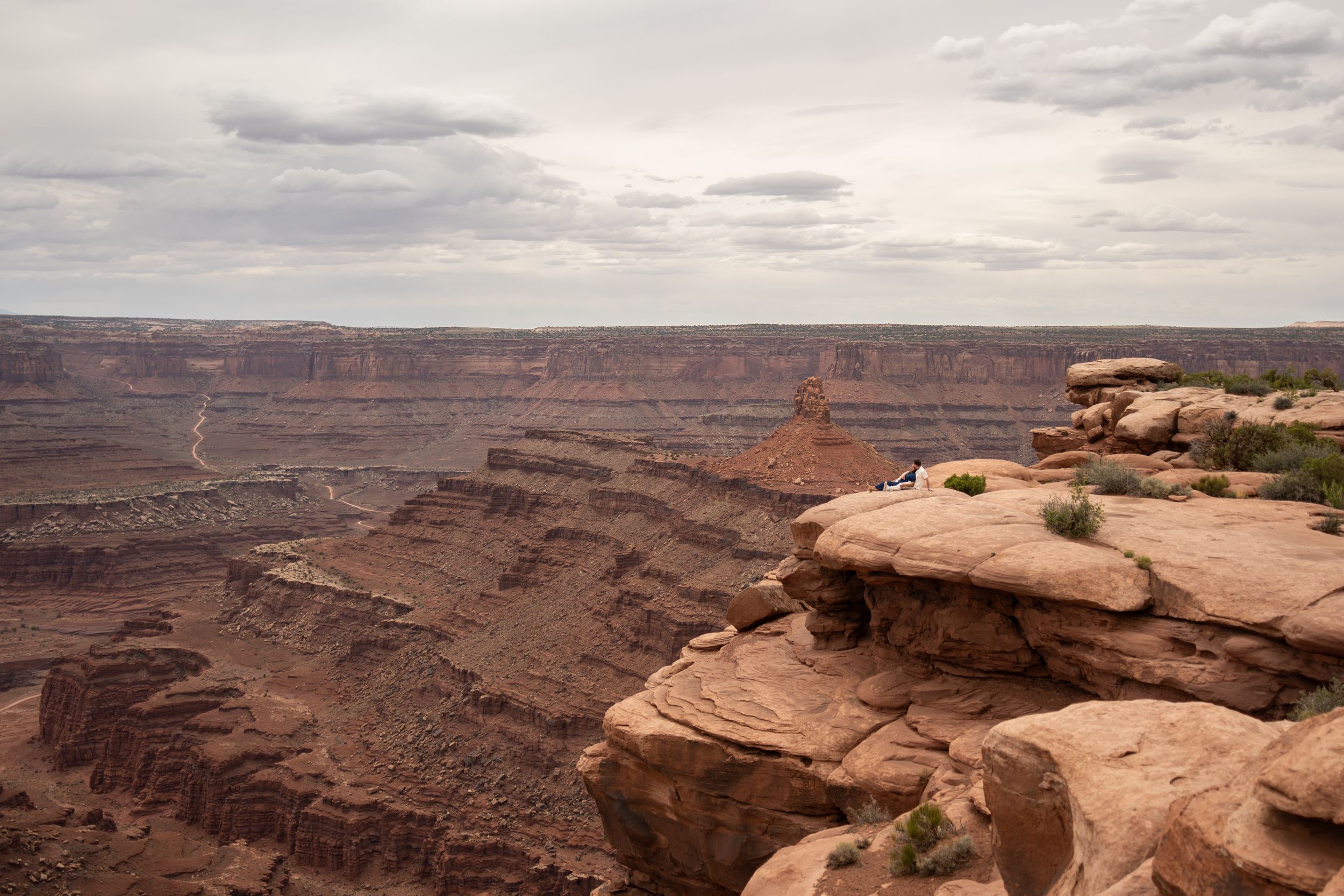
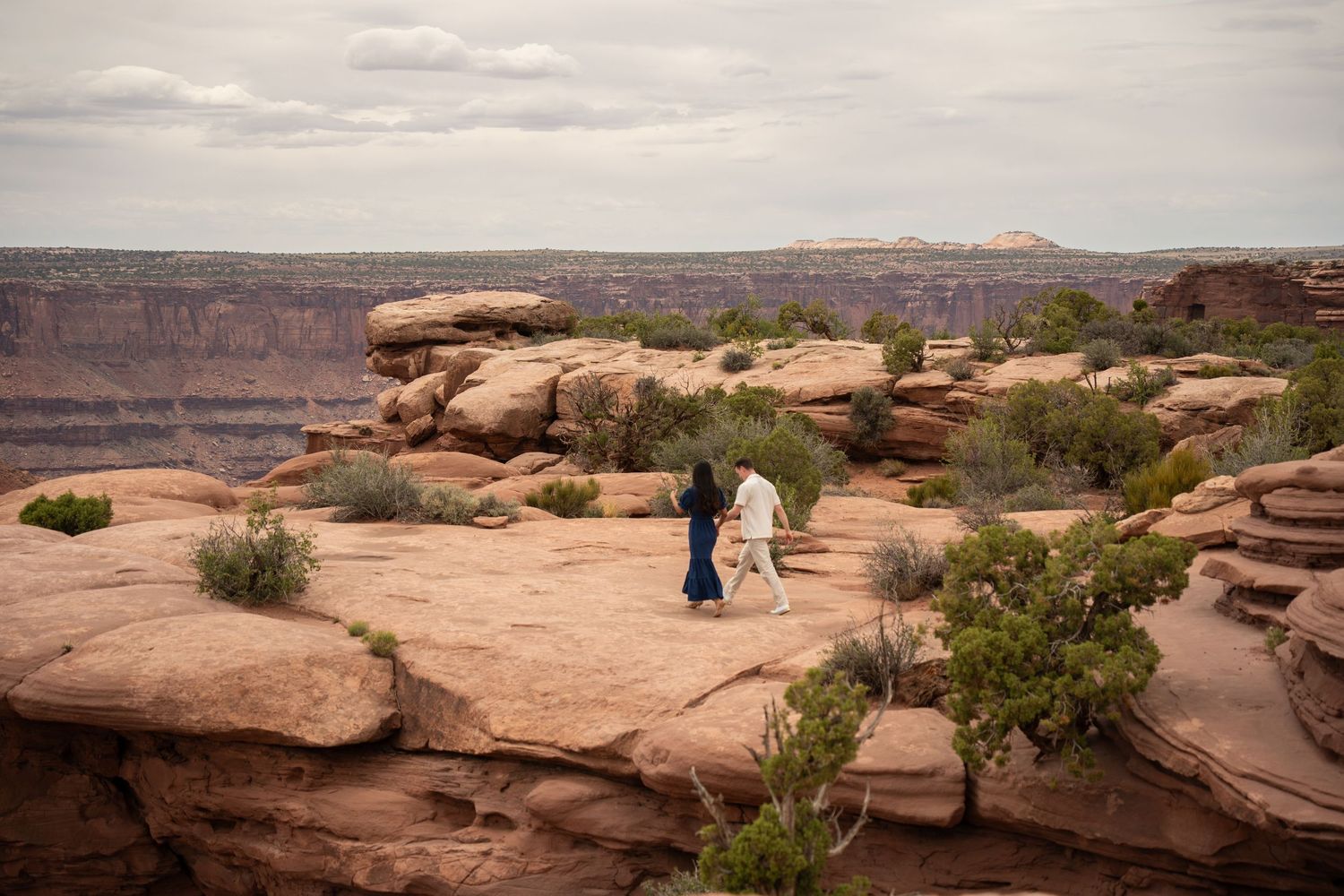
One of the most photographed overlooks in the country: a sheer 2,000-foot drop to a gooseneck bend of the Colorado River, with Canyonlands National Park's Island in the Sky stretching out beyond it. Beyond the main overlook, the Intrepid Trail System offers mountain biking and hiking loops along the rim, and the campground (with reservable yurts) puts you right at the edge of that view for sunrise or sunset. Dead Horse Point is also one of the most popular spots in the state for Canyonlands-area elopements: we've written a full guide on how to elope at Dead Horse Point if you're considering it.
Goosenecks State Park
A stark, minimal overlook near Mexican Hat where the San Juan River has carved a series of tight, entrenched meanders 1,000 feet below the rim: the river travels more than six miles to cover a mile and a half of straight-line distance. There's little here beyond the overlook, picnic areas, vault toilets, and free primitive camping (no water available), and that bareness is deliberate: it's remote enough to have earned International Dark Sky Park status in 2021, and the geology exposes roughly 300 million years of rock layers in one view.
Edge of the Cedars State Park Museum
In Blanding, this museum holds the largest collection of Ancestral Puebloan artifacts in the Four Corners region: pottery, basketry, tools, and a macaw feather sash among the highlights, alongside an actual excavated Chacoan-era great house pueblo just behind the building, inhabited roughly A.D. 825 to 1125. Visitors can climb down into a restored, excavated kiva. It's as much an archaeological site as a museum, with an interpretive nature trail connecting the two, but no camping on-site.
Utahraptor State Park
Utah's newest state park, established in 2021 north of Moab at the old Dalton Wells site, and named for the raptor species discovered nearby. It's built around a working dinosaur quarry and a historic site with a visitor center, but it's also trail-heavy: extensive OHV and mountain biking singletrack (with the Sovereign, Klonzo, and Bar M trail systems all nearby), 67 modern campsites with hookups at Gastonia Campground, and 20 more primitive sites at Fossil Flats. Development is ongoing, so expect more amenities here in the coming years.
Frequently Asked Questions About Utah State Parks
How many state parks does Utah have?
46, but they're not all the same kind of park. Twelve of them, mostly the history museums, Flight Park, and the Jordan River OHV park, are day-use only with no campground on-site; the other 34 have some form of camping, from full-hookup RV sites down to primitive walk-in spots. If overnight is part of your plan, that's worth checking before you build an itinerary around a park that turns out to be a day trip only.
Which Utah state parks are best for camping?
It depends on the kind of camping you want: red-rock scrambling (Kodachrome Basin, Goblin Valley, Dead Horse Point) versus reservoir camping with hookups (Jordanelle, Deer Creek, Rockport, Sand Hollow, Steinaker) are pretty different trips. Whichever you pick, know the reservation timing before you plan around it: Utah State Parks campsites open on a rolling window rather than all at once for the year, Goblin Valley's is four months out, for example, so mark your calendar for the exact date your target campground opens instead of assuming you can book anytime in advance.
Are Utah state parks free?
Most charge a modest day-use fee per vehicle, typically $5 to $20, and museum parks like Territorial Statehouse or Frontier Homestead charge a small per-person admission instead. A handful, like sections of the Historic Union Pacific Rail Trail, are free to use. An annual Utah State Parks pass is worth it if you plan to visit more than three or four parks in a year.
Which Utah state parks are good for weddings or elopements?
Dead Horse Point and Snow Canyon are the two most requested, and part of why is the permitting: Utah State Parks handles weddings through a Special Use Permit application, submitted at least 30 days ahead through the specific park's office, with fees that typically run in the $50-$60 range depending on the park, plus a small processing fee. That's a notably lighter lift than the national parks nearby, which is why these two are such popular alternatives for elopements. If you're planning one, see our full guides to eloping in Canyonlands country and around St. George, or reach out directly and I'll help you plan the day.
Which Utah state parks are best for hiking?
Depends who's hiking. For families with young kids, or anyone who wants a big payoff without much elevation gain, Red Fleet's 1.5-mile trail to actual dinosaur tracks, Fremont Indian's paved and barrier-free Parade of Rock Art loop, and Escalante Petrified Forest's one-mile petrified-wood loop are all short and low-effort. For a bigger day out, Snow Canyon and Goblin Valley have the most varied trail systems for their size. Antelope Island's Frary Peak is the one to save for when you're after a summit.
Which Utah state parks allow OHVs?
Jordan River OHV, Utahraptor, Sand Hollow, Green River, Millsite, Huntington, and Fremont Indian all sit next to major trail systems and allow riding directly from the park. Two statewide rules apply no matter which one you pick: every OHV needs to be registered (Utah residents register the machine itself; out-of-state visitors typically need a temporary OHV decal unless their home state has a reciprocal agreement with Utah), and every rider under 18 must wear a DOT-rated helmet, passenger or operator. Check the specific park's trail map before you go, since not every system suits every skill level.
Which Utah state parks are best for stargazing?
Three of the 46 carry official International Dark Sky designation: Goblin Valley (certified 2016), Rockport (2021), and Goosenecks (2021). All three sit far enough from city light pollution that the Milky Way is clearly visible on a clear night, not just a hazy smudge, which makes them worth a stop even if stargazing wasn't the original plan.
Wrapping Up
46 parks is a lot to take in at once, so don't try to hit them all in one trip. Pick a region, pick two or three that match what you want to do: a reservoir weekend, a red-rock hiking loop, a couple of quick museum stops, and build outward from there.
And if your trip includes a proposal, elopement, or wedding at any of these, state park or otherwise, reach out whenever you're ready. I plan sessions all over Utah's public lands and I'm happy to help you figure out permits, timing, and the best light for wherever you land.
Planning a Proposal or Elopement at One of These?
A handful of these parks, Dead Horse Point and Snow Canyon especially, are some of the most-requested state park locations I photograph. If a state park is part of your Utah trip and there's a proposal or elopement hiding in there too, that's what I do: I scout the exact spot, plan around the light and the permits, and get your photos back fast so you're not waiting weeks to share the news.
Utah-based wedding, elopement, and proposal photographer since 2025. I've scouted these locations myself, so the advice here comes from firsthand experience, not guesswork.