The short version: eloping in Salt Lake City means canyon meadows instead of a rented hall, alpine lakes fifteen minutes from a downtown high-rise, and a timeline that moves as fast as your flight schedule needs it to. A city or private-venue ceremony doesn't need a permit at all: just an officiant, two witnesses, and a Utah marriage license. Big and Little Cottonwood Canyon, the Wasatch foothills, Antelope Island, and downtown itself all sit inside a 45-minute drive of the airport, which is a rarity for a Utah elopement location.
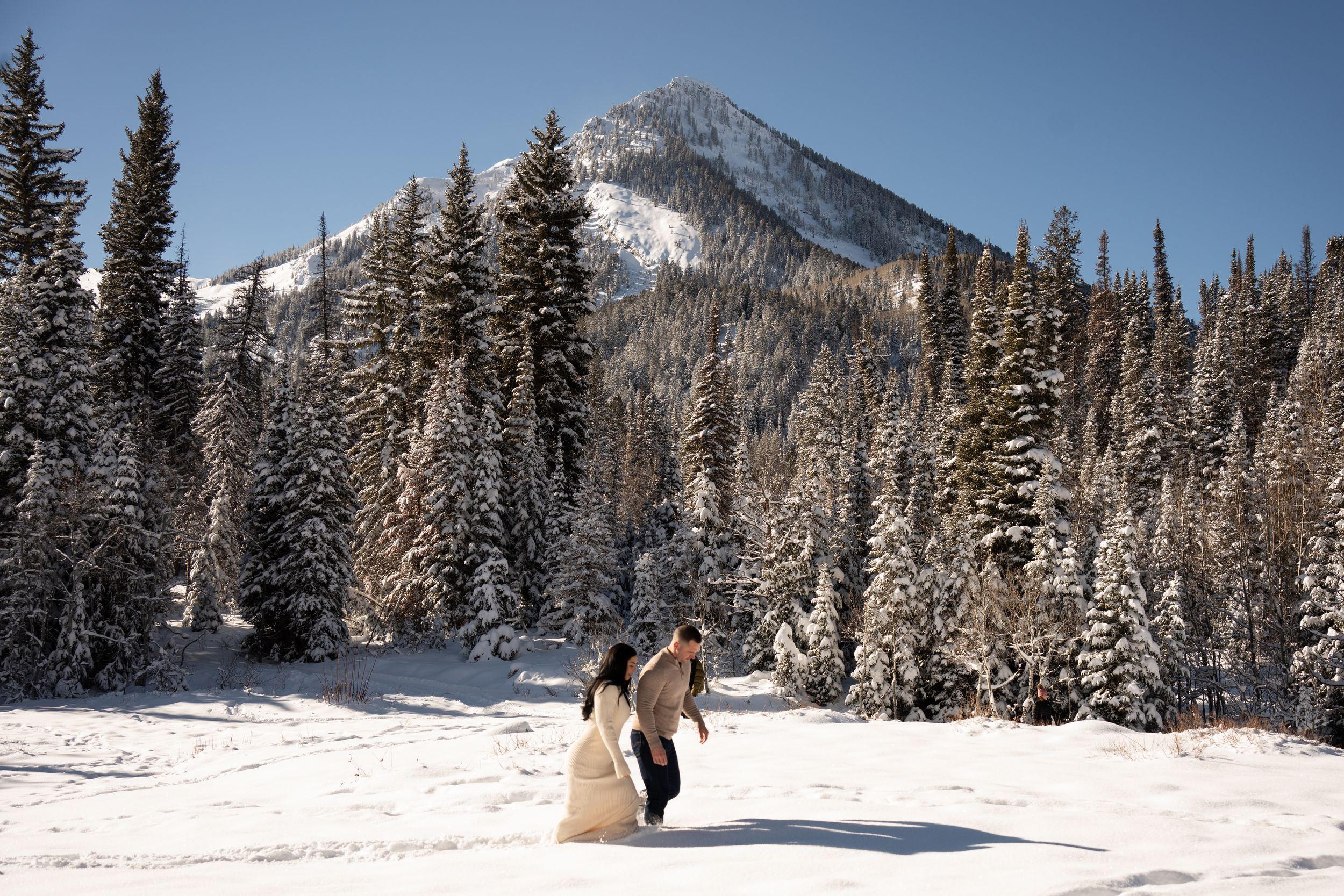
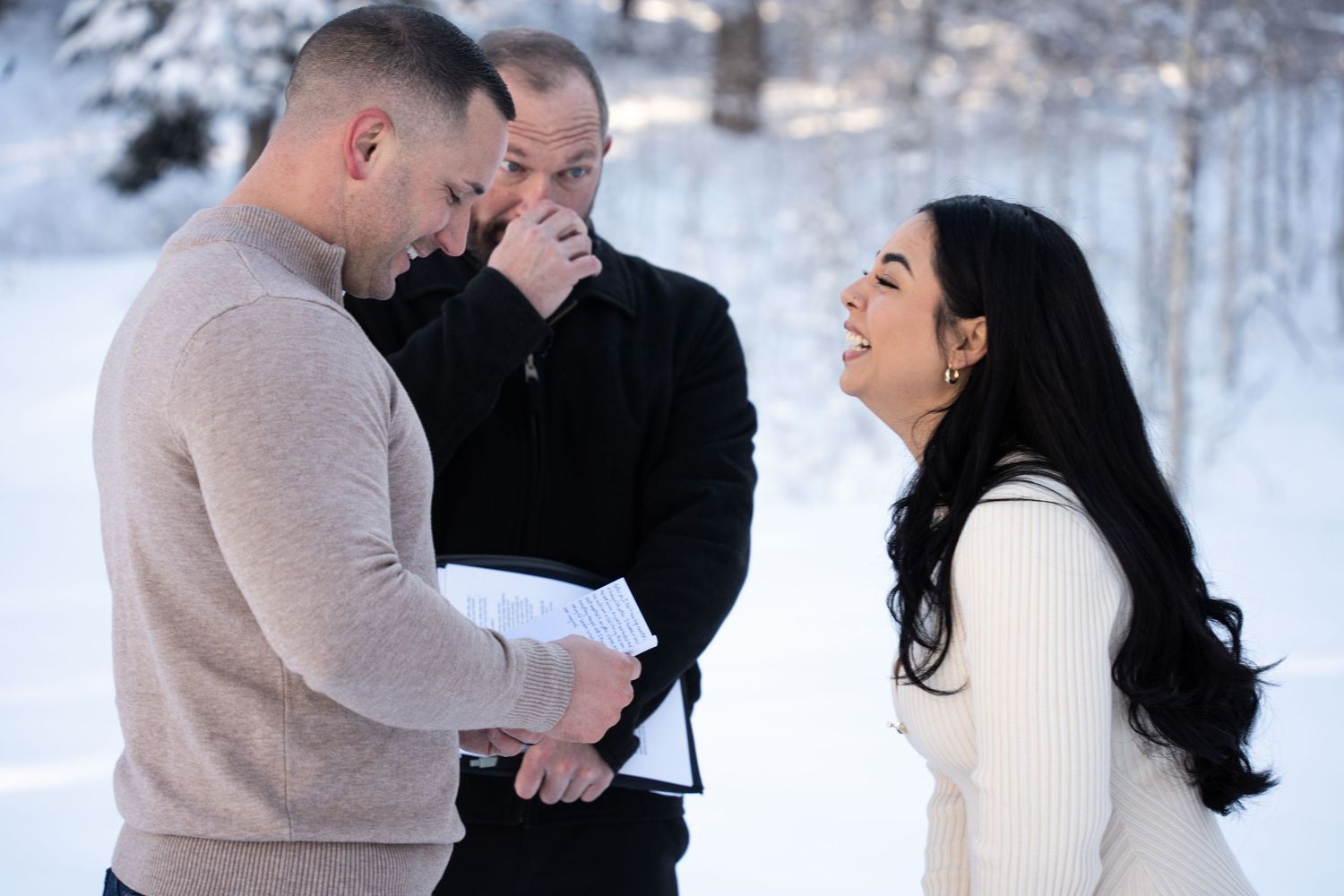
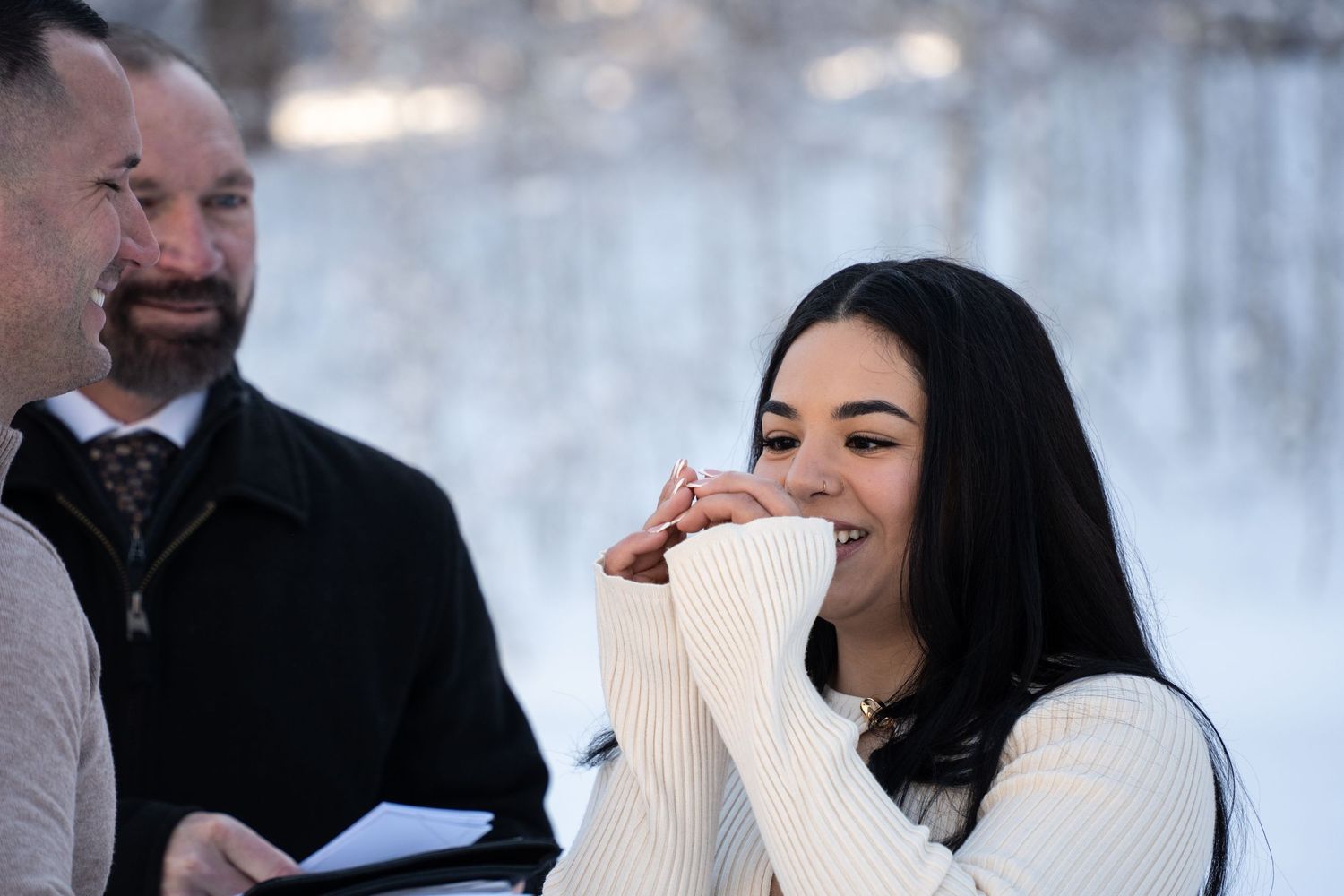
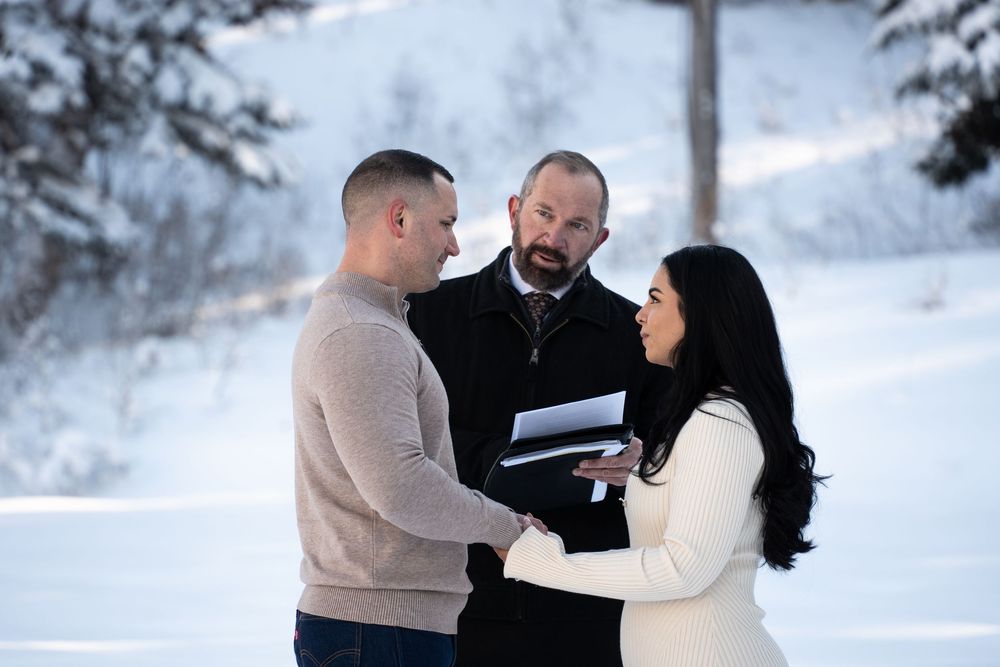
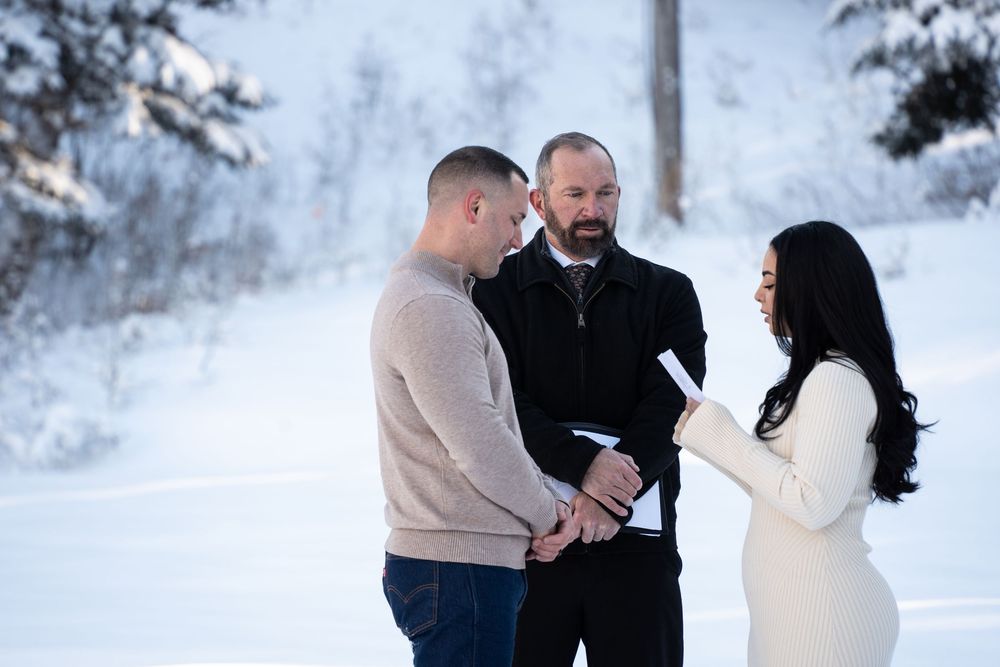
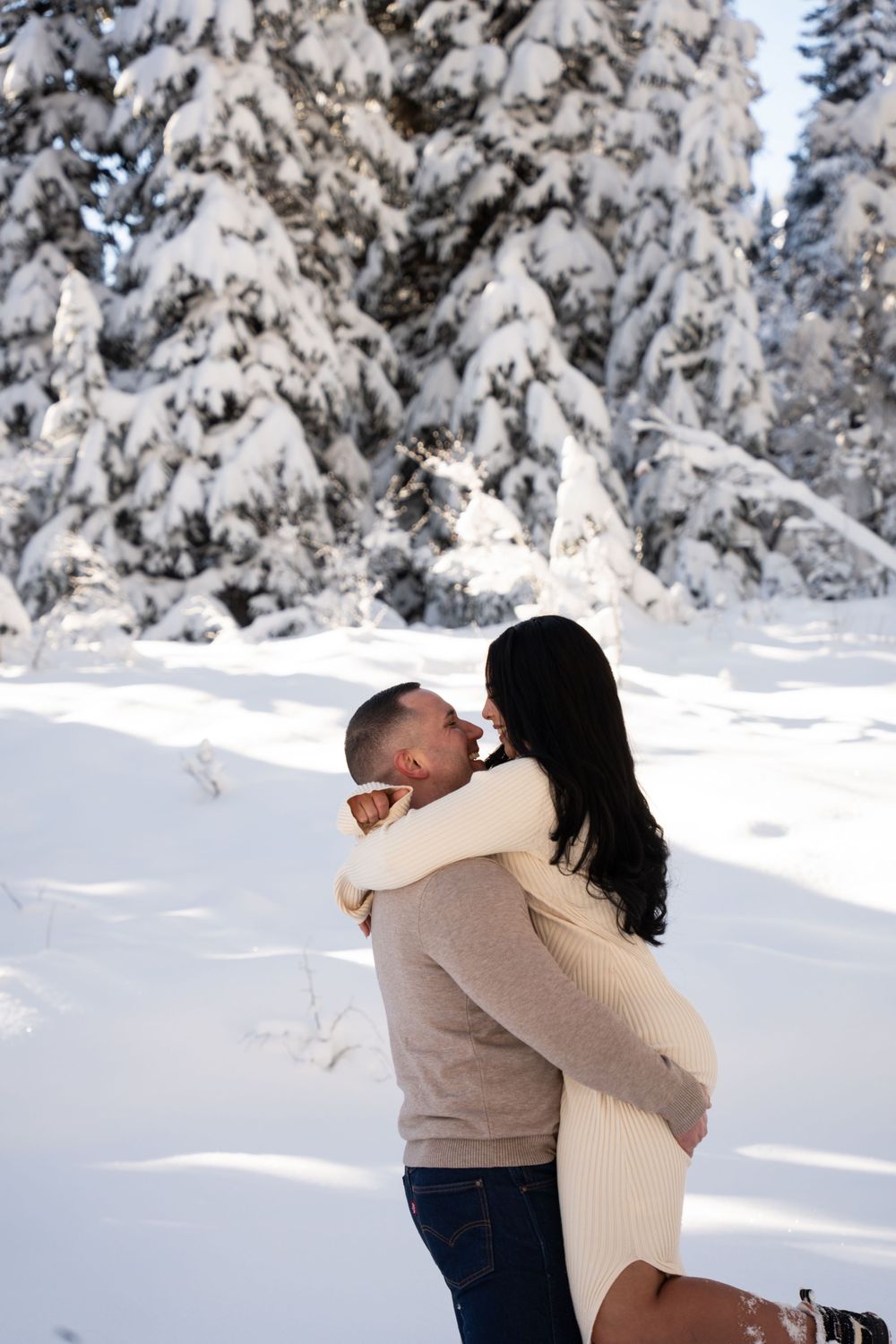
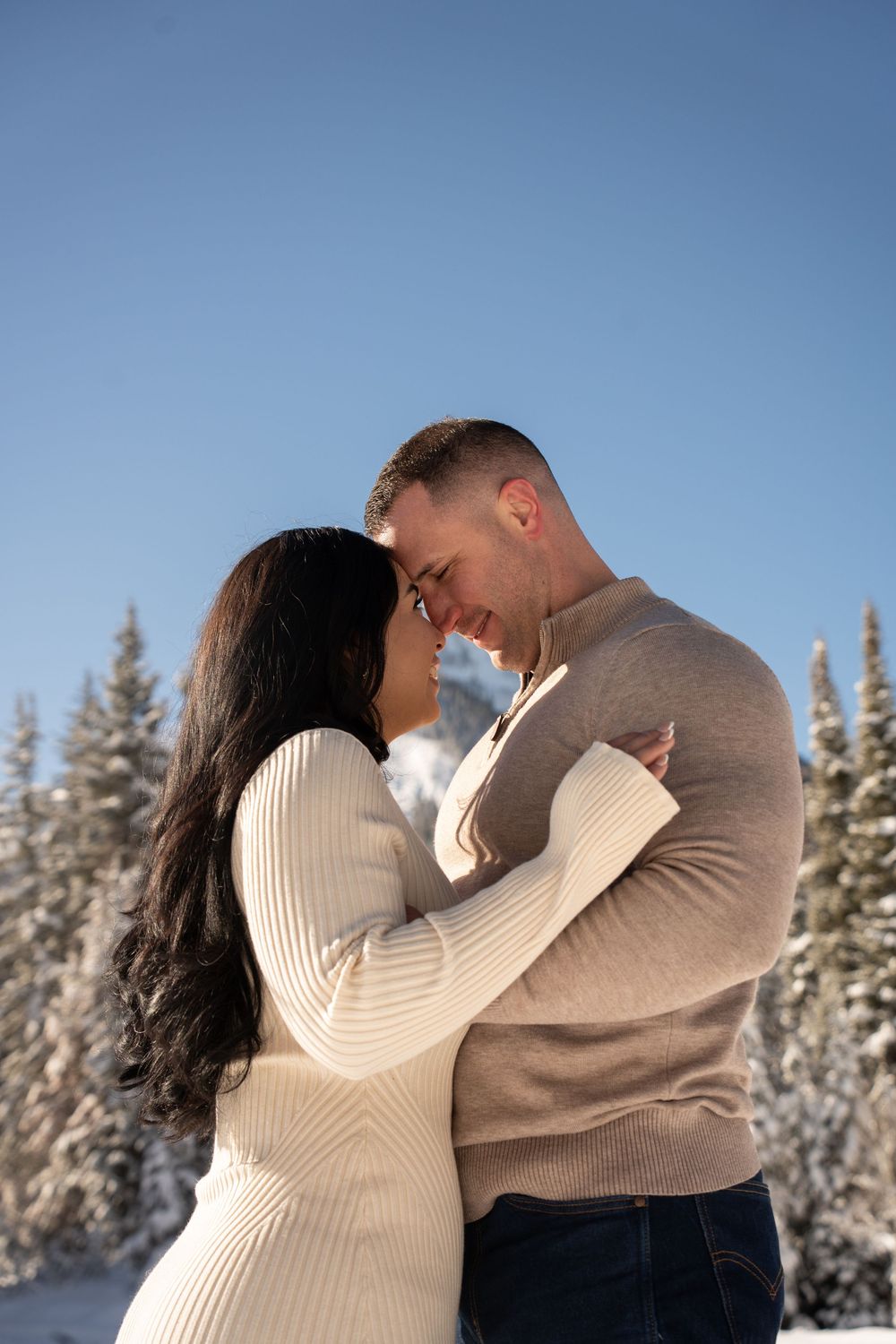
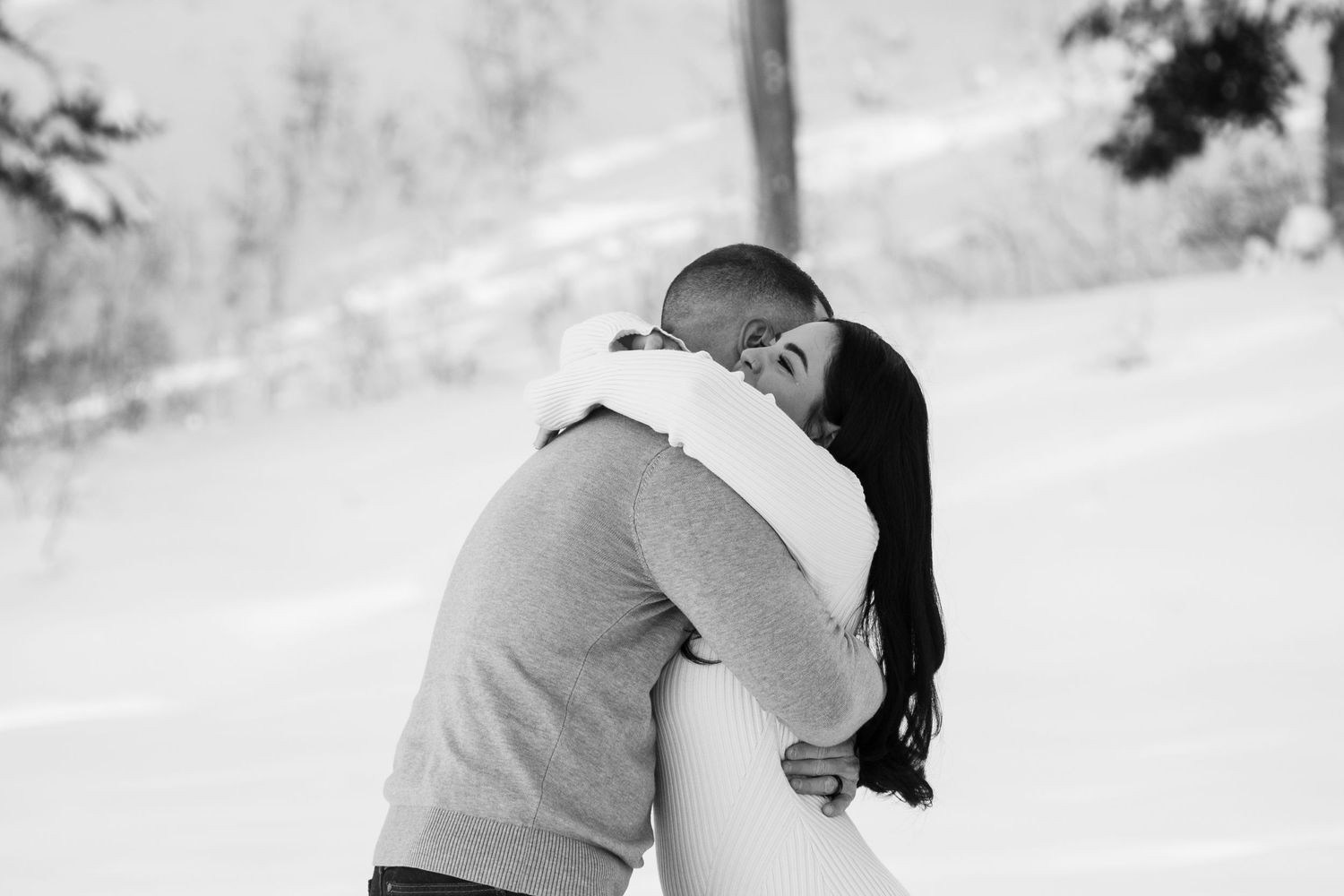
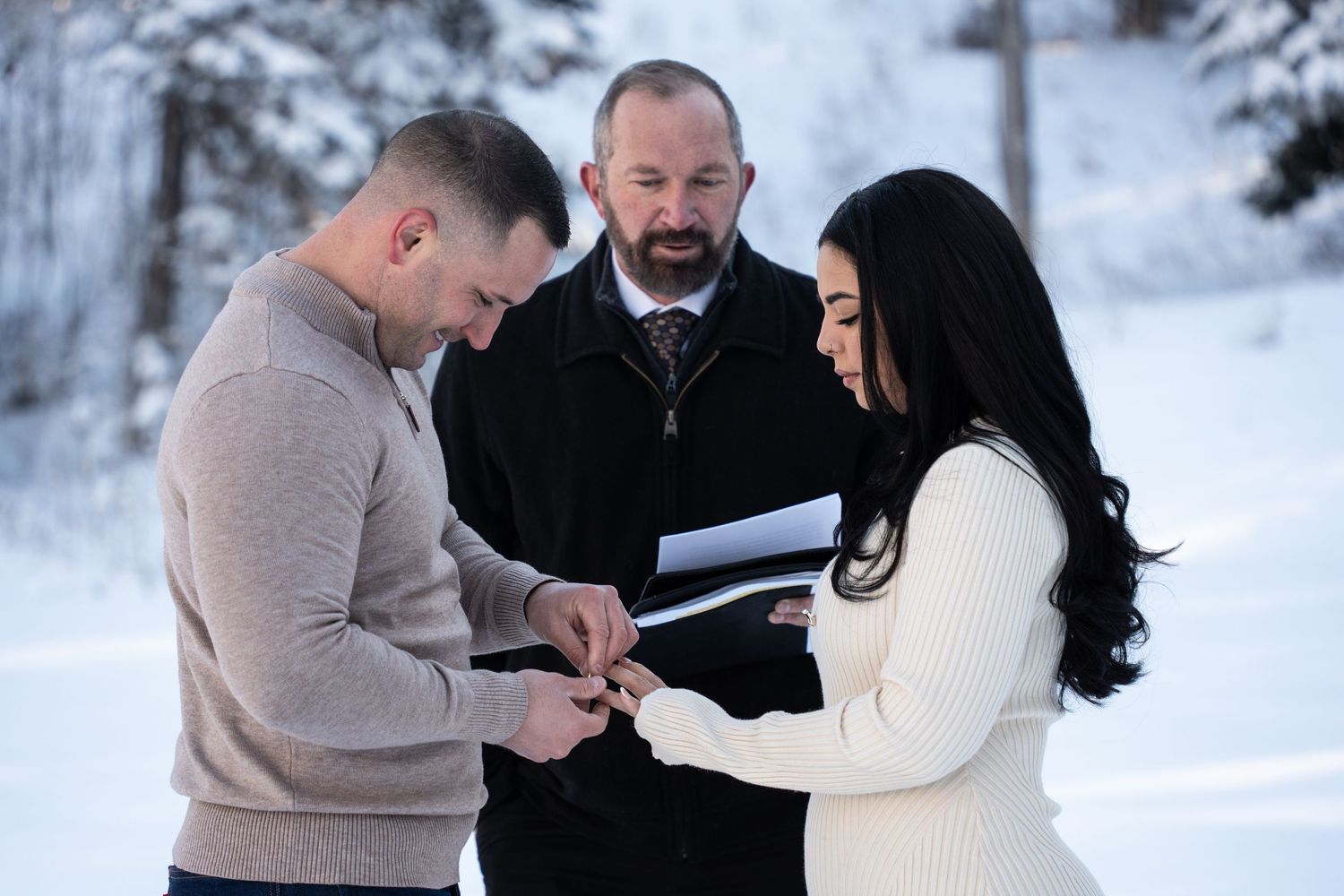
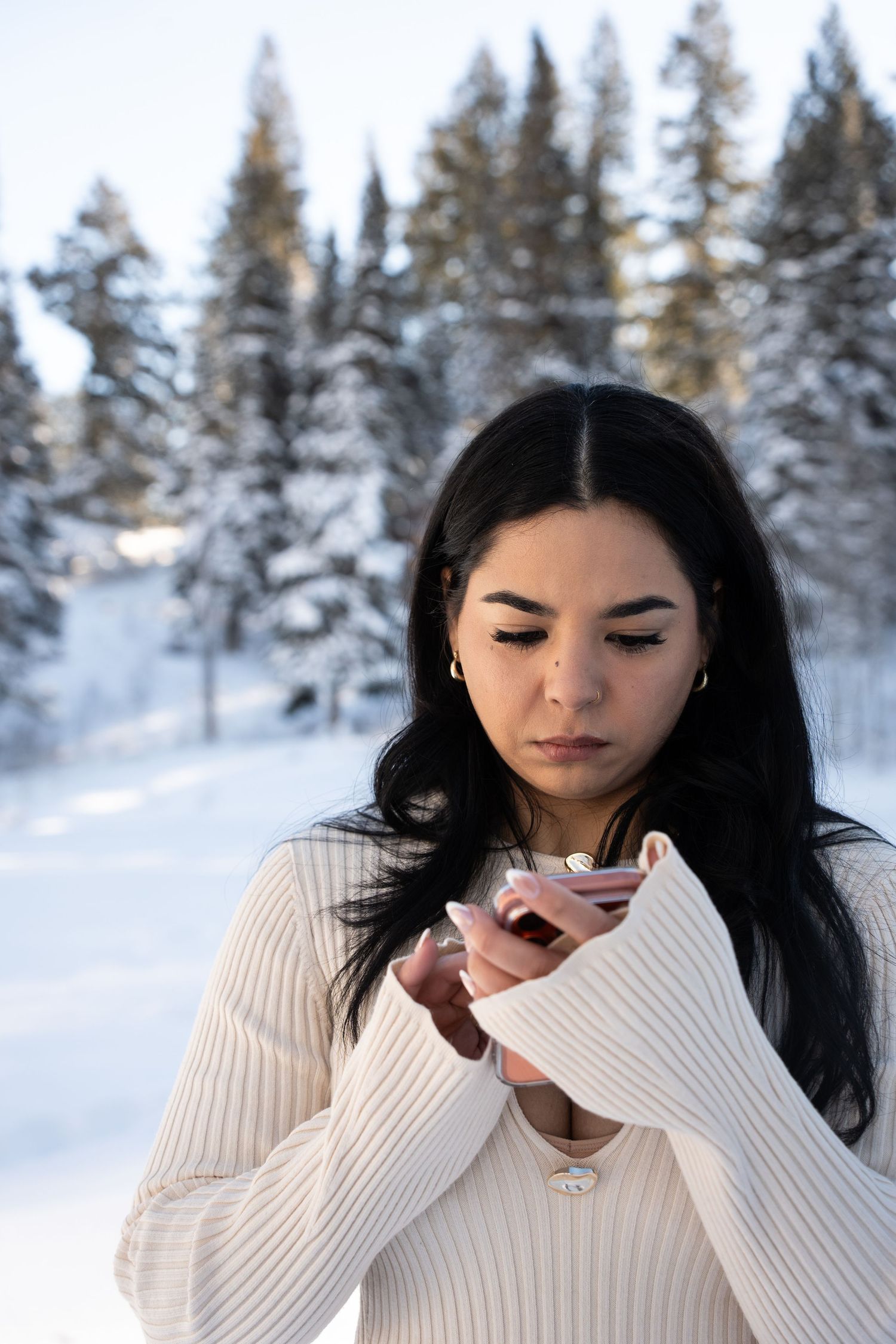
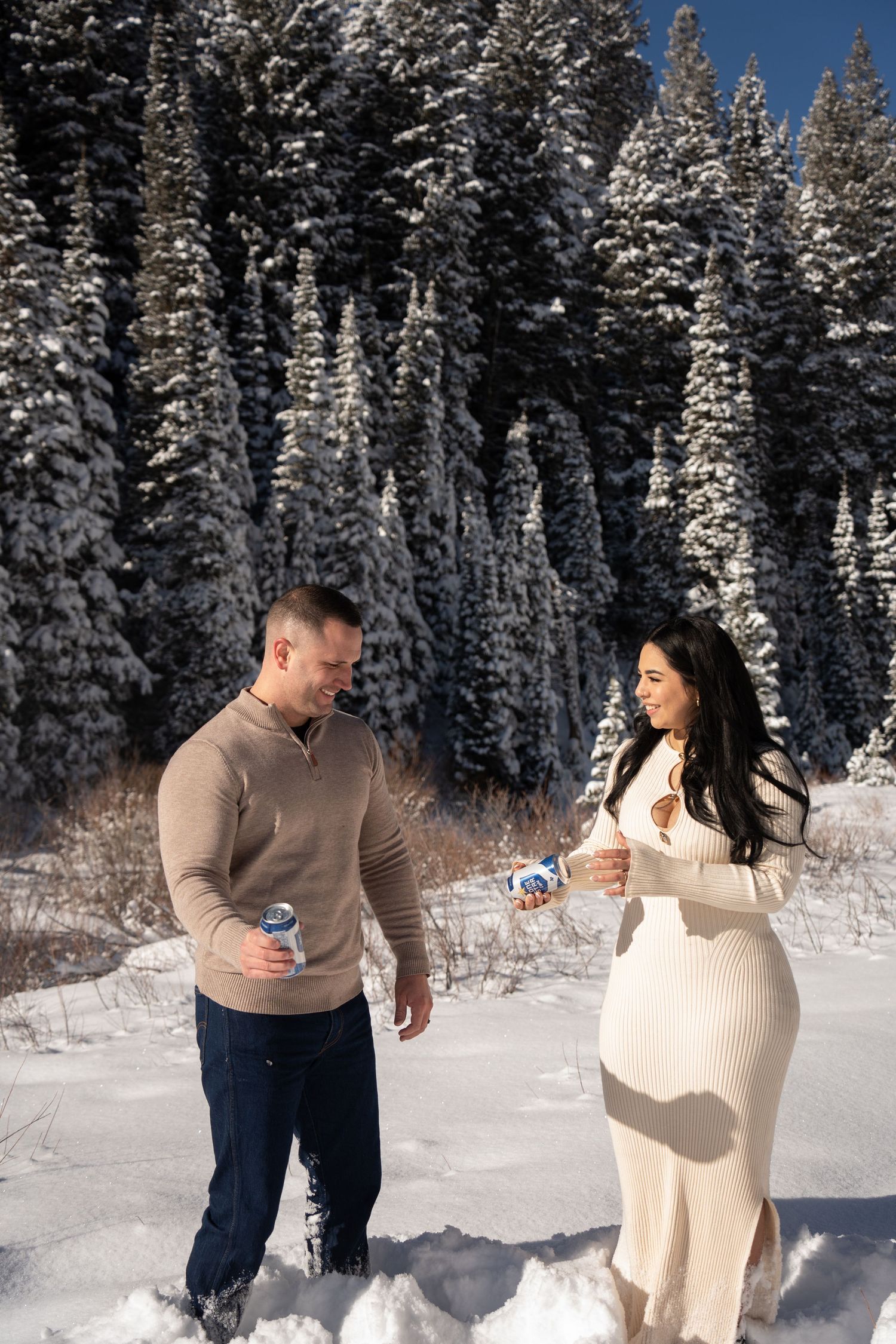
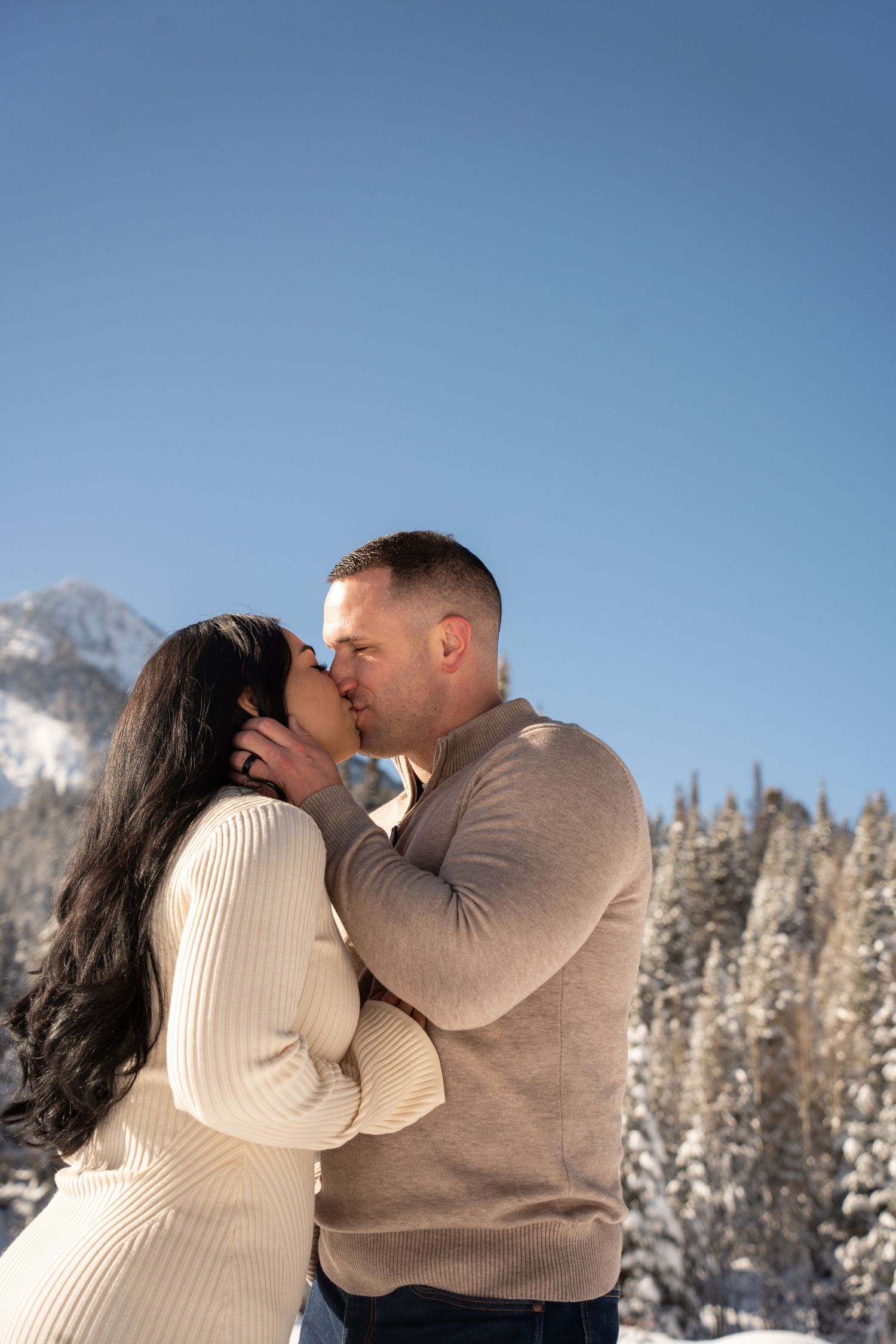
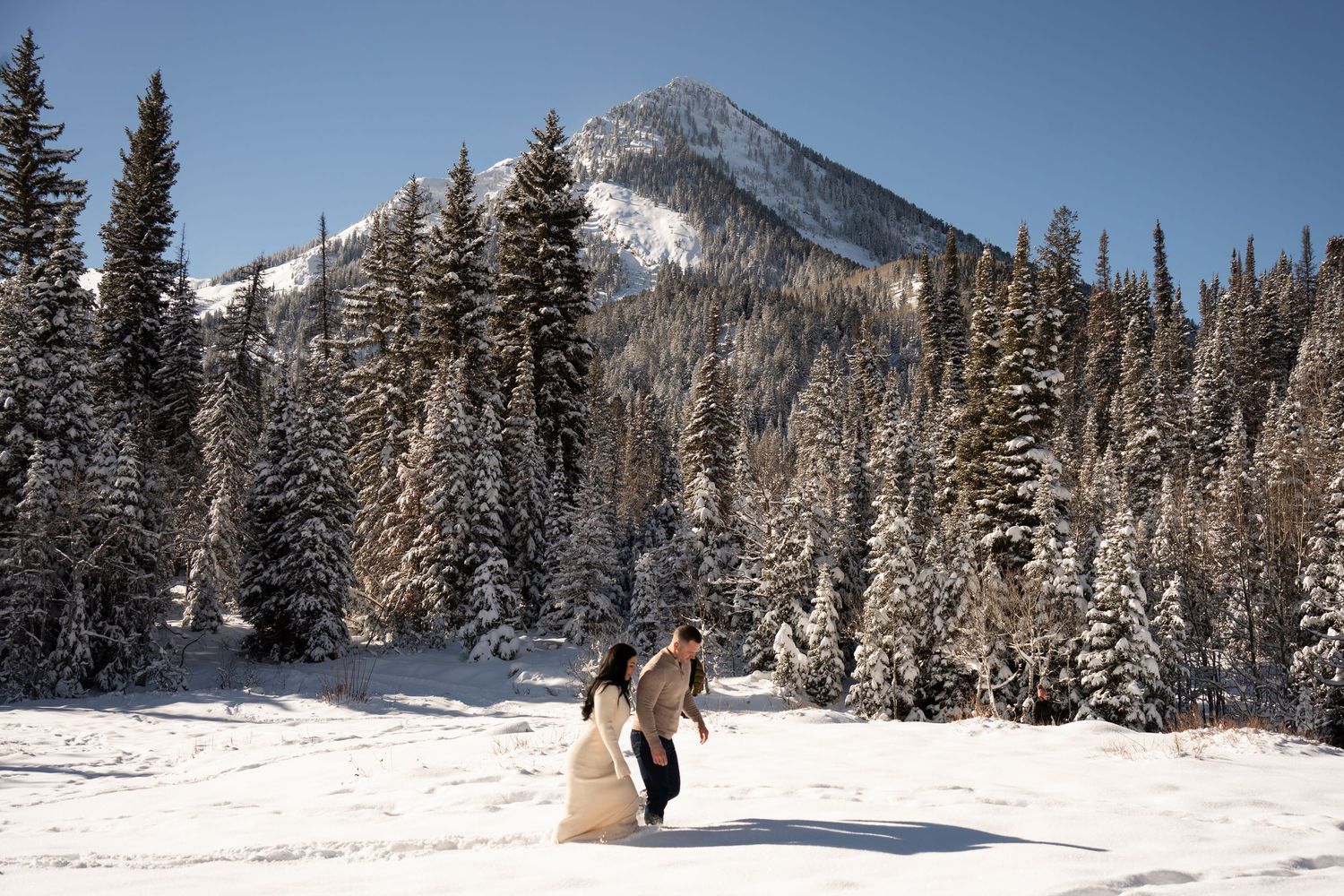
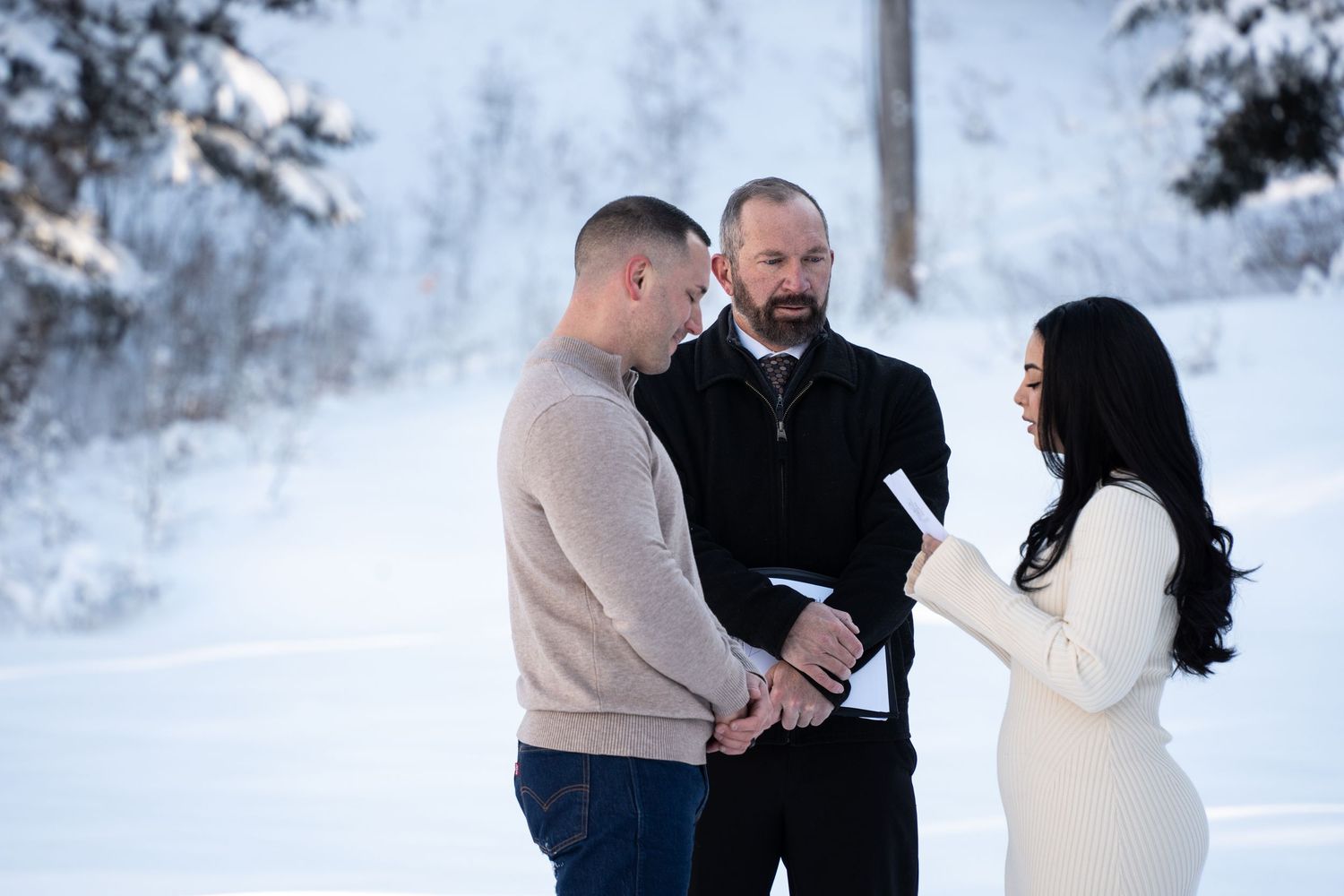
Mavely and Tyler flew in from Texas and put that speed to work: married at Jordan Pines Campground in Big Cottonwood Canyon in a fresh coat of snow, signed their marriage certificate on a phone in the middle of the field, and popped cans of Lone Star beer they'd brought from home to celebrate. No venue coordinator, no seating chart, no permit office standing between them and saying “I do.”
TL;DR
No permit is needed for a city or private-venue ceremony; the Forest Service only steps in past 75 guests in Big or Little Cottonwood Canyon.
Five distinct spot categories covered here: Big Cottonwood Canyon (lower and upper), Little Cottonwood Canyon, the Wasatch foothills, Antelope Island, and downtown or a private venue.
A Utah marriage license comes from any county clerk, with no waiting period and 32 days of validity.
An officiant and two witnesses over 18 are required by Utah law.
The mouth of Big Cottonwood Canyon sits about 25 minutes from Salt Lake City International Airport, so a fly-in, elope, fly-out day is realistic.
Dogs aren't allowed inside Big or Little Cottonwood Canyon (protected watershed); plan a foothills or private-venue ceremony instead if your dog is part of the day.
Salt Lake City elopement packages start at $3,100, and the Half Day package fits a short, in-town ceremony.
Why Salt Lake City Is a Great Place to Elope
Salt Lake City solves a problem almost no other Utah elopement location can: it puts an international airport, a downtown, and alpine mountains inside the same 45-minute radius.
A ceremony in the city itself or on private property doesn't need a special use permit at all. Even Big and Little Cottonwood Canyon, both on Uinta-Wasatch-Cache National Forest land, only require a Forest Service permit once your group passes about 75 people, well above the size of almost every elopement I shoot. That leaves you with a snow-covered meadow, an alpine lake, a downtown rooftop, or a private backyard, all reachable without a single application form standing between your travel dates and your ceremony.
That combination is what let Mavely and Tyler put a whole elopement together on a short timeline. They flew in from Texas, married at Jordan Pines Campground during a fresh snowfall, and signed their marriage certificate on a phone screen in the middle of the field before popping cans of Lone Star beer they'd brought from home. Read the full story in their Jordan Pines winter elopement.
Tell Me Your Travel Dates
Give me your dates and what you’re picturing, canyon meadow or city rooftop, snow or summer light, and I’ll send back the spots and the timeline that fit before you spend another weekend guessing.
Every other location on this site has one clear research problem: a park, a permit office, a single trailhead to figure out. Salt Lake City has the opposite problem, and it trips up just as many couples.
There's no single park boundary to research here. Ask ten people in Salt Lake City where to elope and you'll get ten different answers: a canyon, a rooftop, a lake, a mountain bench, an island out in the Great Salt Lake most visitors never think to check. None of them is wrong, and that's what makes the decision harder, not easier. Without a photographer who already knows the ground, you're left scrolling geotagged photos with no way to tell which spot is a fifteen-minute drive from downtown and which one eats half your day.
Add up what that costs a couple planning from out of state: hours cross-referencing which canyon has which resort, whether a spot allows dogs, whether the road you're picturing is even open in the season you're flying in. A group chat debating Big Cottonwood versus Little Cottonwood versus “isn't there an island somewhere?” That's planning time spent on geography instead of on each other.
I live and work in this valley year-round. When you tell me your travel dates, your flight times, and what you're picturing, snow or summer, mountains or skyline, I can tell you in one conversation which spot fits your day, not which one has the most tagged photos on a map app.
You don't need to become a Wasatch Front expert before your trip. You need one conversation with someone who already is.
Best Spots for a Salt Lake City Elopement
Five options, each with a distinctly different feel, drive time, and permit situation. Here's the full depth on each one, not just a highlight reel.
Big Cottonwood Canyon: Lower & Mid-Canyon (Jordan Pines and Nearby Meadows)
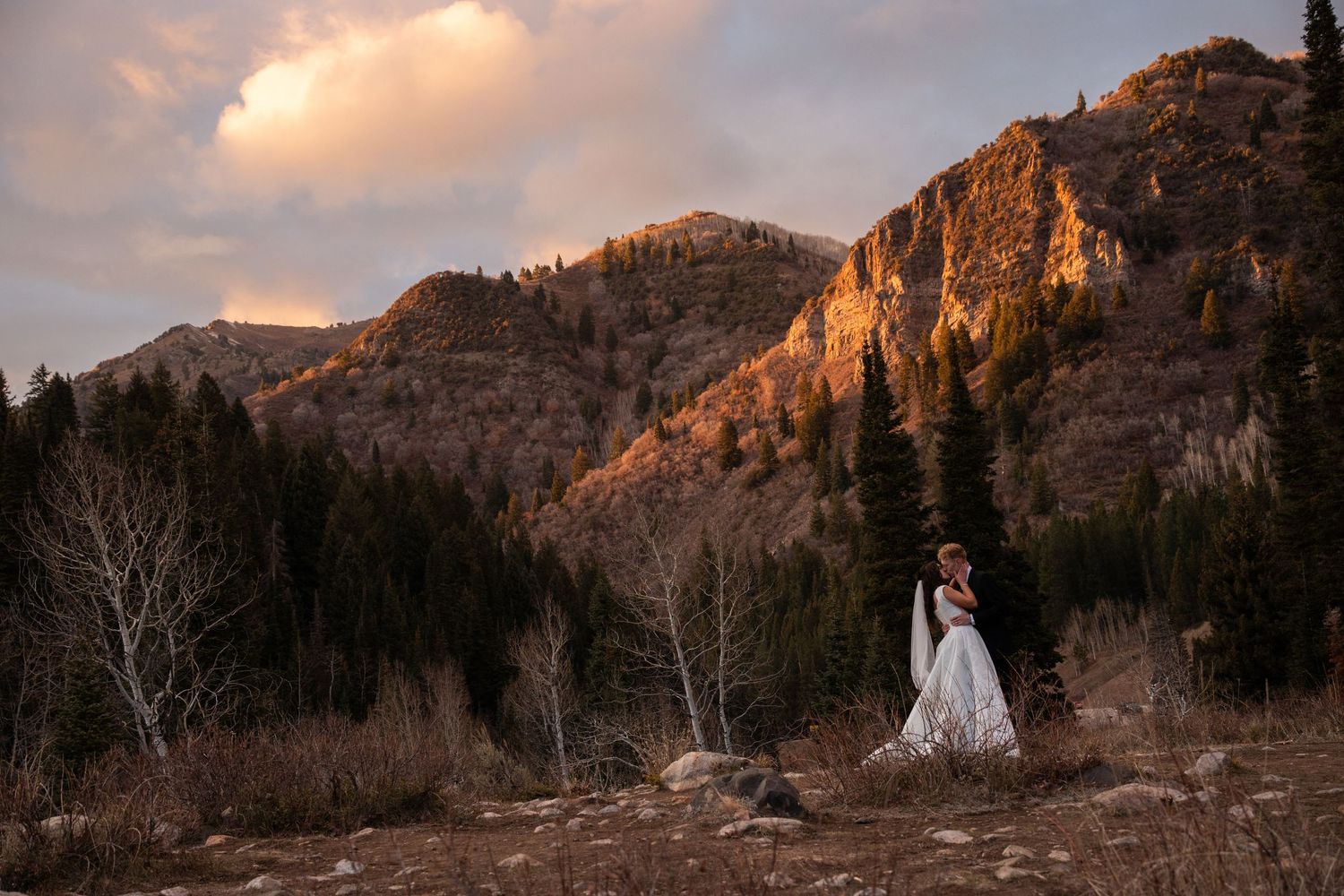
This is the spot most couples ask me about first, and it's where Mavely and Tyler married. Big Cottonwood Canyon sits about 12 miles southeast of Salt Lake City and runs roughly 15 miles east to west along SR-190, the Big Cottonwood Canyon Scenic Byway, climbing steadily from the canyon mouth up toward Guardsman Pass at the top. Lower and mid-canyon, closer to the mouth, is where most couples land: it's the shortest drive from the airport, the lowest elevation gain, and it still delivers a full evergreen forest and Wasatch peaks rising overhead.
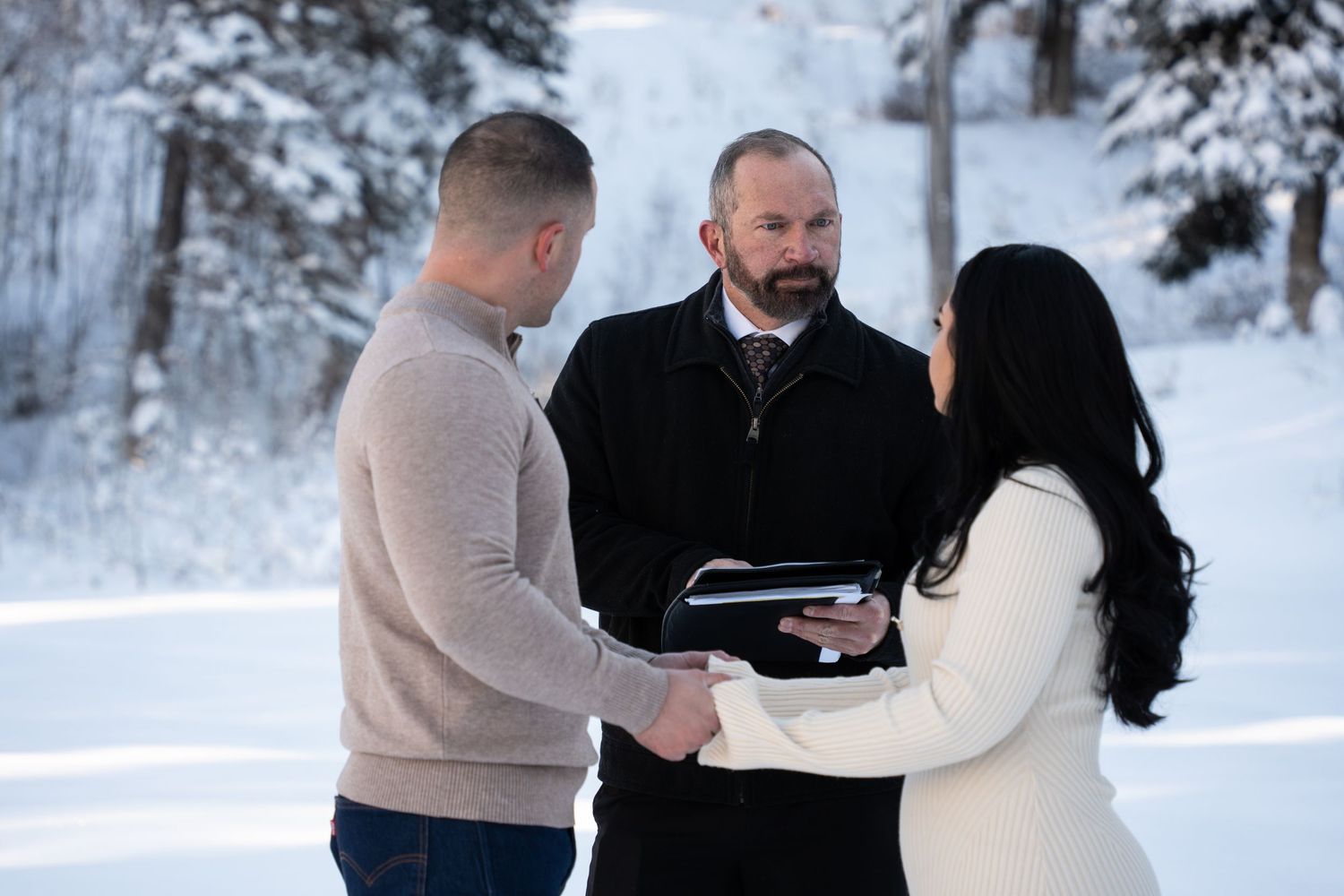
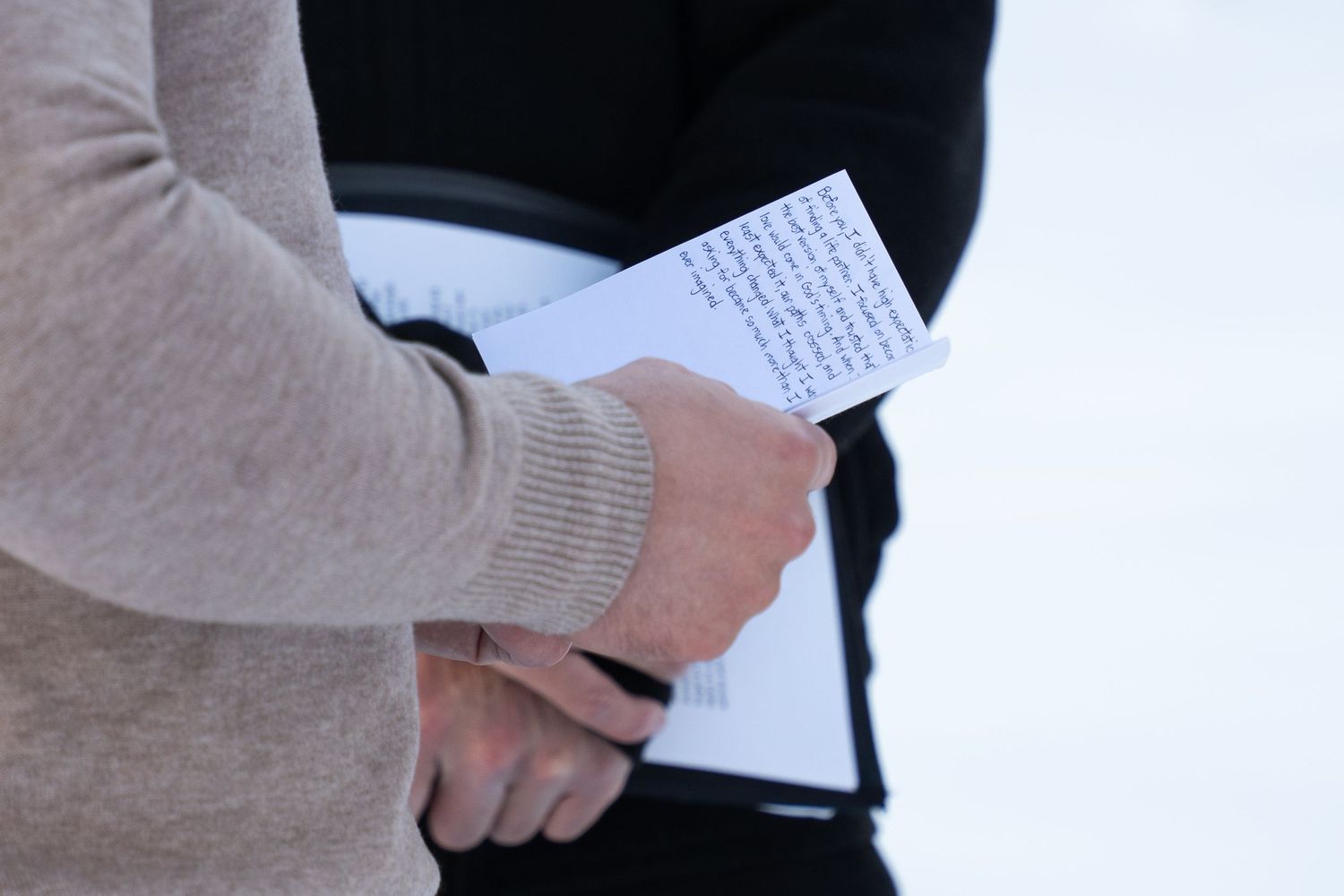
Jordan Pines Campground, tucked into the canyon a stretch up from the mouth, is a wide, tree-lined meadow with the mountains stacking up behind it. It's where Mavely and Tyler married during a fresh snowfall: a hushed, snow-muted field that felt private even though it sits minutes off the main canyon road. The photos below are from their actual ceremony there, not a stand-in.
Big Cottonwood is a protected drinking-water watershed for the Salt Lake Valley, which means two facts worth knowing before you plan around it: pets aren't allowed anywhere inside the canyon, and the land itself stays undeveloped and quiet compared to a resort town. If your dog is part of your elopement vision, this isn't the spot; the Wasatch foothills or a private venue further down this page will fit better.
Because Jordan Pines and the other lower-canyon meadows sit close to the road, this is also the easiest spot on this page for a same-day fly-in, elope, fly-out trip. No long approach hike, no permit application, just a short drive up-canyon and a meadow that looks nothing like the airport you landed at an hour earlier.
Distance from airport: About 25 minutes to the canyon mouth, plus a few more minutes to Jordan Pines specifically.
Land & permit: Uinta-Wasatch-Cache National Forest; no permit needed under 75 guests.
Pets: Not allowed anywhere in the canyon (protected watershed).
Ceremony photo on this page: Yes, Mavely and Tyler's winter ceremony at Jordan Pines.
Upper Big Cottonwood Canyon: Brighton and Solitude
Keep driving past Jordan Pines and the canyon changes character. The road climbs toward Brighton and Solitude, the two ski resorts that operate inside Big Cottonwood, and the scenery shifts from forest meadow to true alpine bowl: exposed granite, higher lakes, and views that open up the higher you go, all the way to Guardsman Pass at 9,717 ft, the canyon's summit connection toward Park City on the other side. That pass typically closes to through traffic from around November to May depending on snowpack, so it's a summer and fall route, not a year-round one.
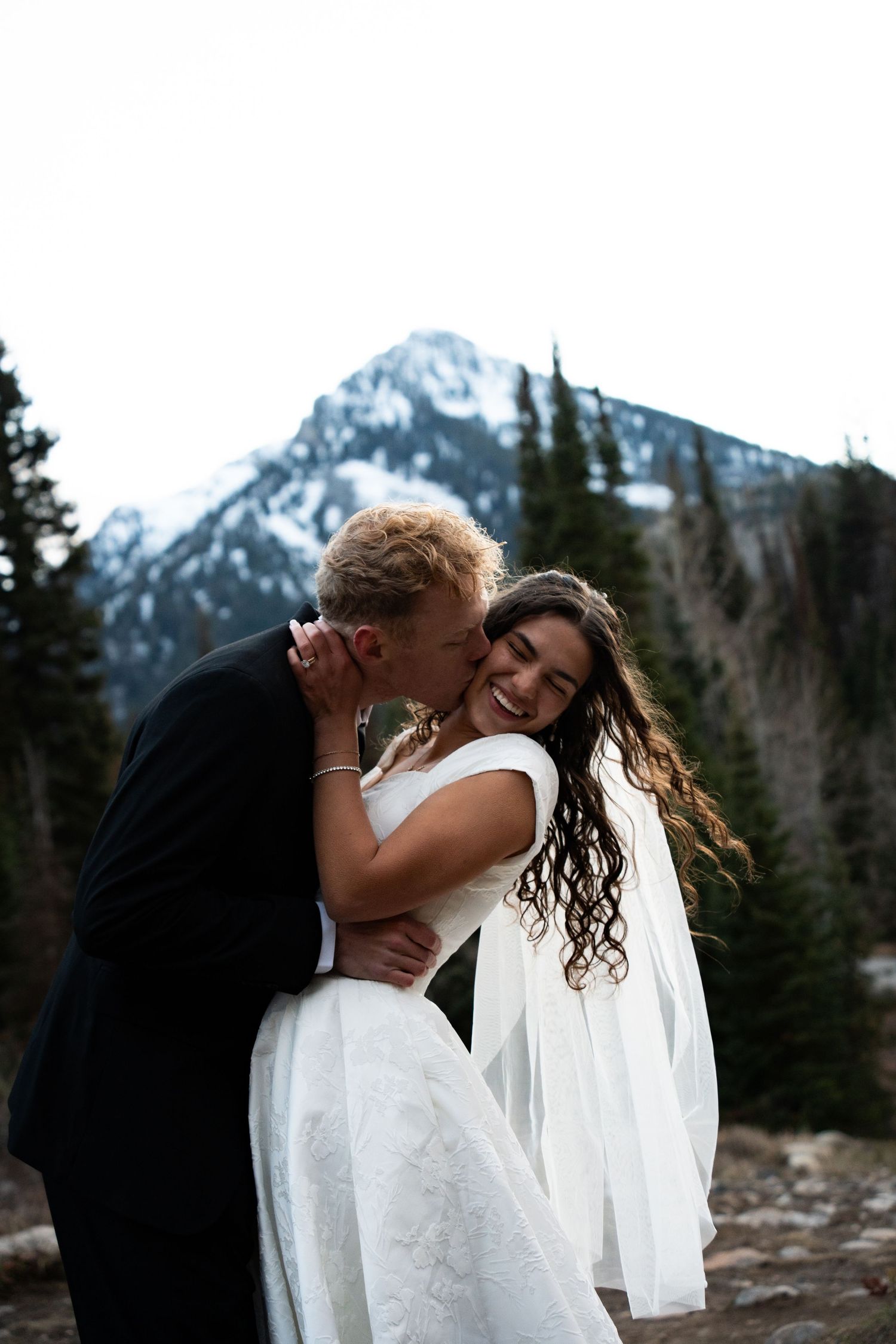
This upper stretch is where I've shot actual bridal portrait sessions for couples living in the Salt Lake Valley, both a snow-covered winter session and a summer one with wildflowers and green meadow behind them. Neither was a documented elopement ceremony, so I want to be upfront about that: what's shown here is Brighton scenery from actual sessions, not a staged stand-in for an elopement that didn't happen.
Silver Lake, right at Brighton, is one specific spot within this upper stretch worth knowing by name: an easy boardwalk loop around a proper alpine lake with peaks on every side. I've photographed a proposal there, not yet an elopement; if that's the specific spot you're picturing and a proposal rather than a wedding day is what's ahead of you, my guide to proposing at Silver Lake Brighton covers it in full. For an elopement at the same lake, the logistics carry over almost the same way, just with an officiant and witnesses added to the day.
The tradeoff for that alpine payoff is time and elevation. Brighton adds roughly 10 to 15 minutes of driving each way over the lower canyon, plus a meaningful elevation gain that can affect guests flying in from sea level (more on that in the FAQ below). If your day has a tight same-day-flight window, I'll usually steer you toward the lower canyon instead; if you have a full day or an overnight built in, upper Big Cottonwood is worth the extra drive.
Distance from airport: Roughly 35-45 minutes to Brighton, depending on the exact pull-off.
Land & permit: Uinta-Wasatch-Cache National Forest; same 75-guest permit threshold as lower canyon.
Season: Year-round for the resorts themselves; Guardsman Pass beyond them closes roughly November through May.
Photos on this page: Actual Brighton bridal-portrait sessions, not a documented elopement ceremony yet.
Little Cottonwood Canyon: Snowbird and Alta
Little Cottonwood Canyon sits about 15 miles east of Salt Lake City and reads completely differently from its sister canyon next door. It's a glacially carved, U-shaped trough with a base elevation around 5,400 ft, walled in by sheer granite instead of Big Cottonwood's evergreen forest. Alta and Snowbird, the two resorts inside it, average roughly 550 inches of snow a year at Alta alone, among the highest snowfall totals in the country, which is part of why this canyon has a steeper, more dramatic feel than Big Cottonwood even though they start just a few miles apart.
Like Big Cottonwood, Little Cottonwood is a protected watershed, so the same no-pets rule applies here too. And like its neighbor, there's no Special Use Permit needed for a small elopement, only past the 75-guest Forest Service threshold.
I don't have a documented elopement from Little Cottonwood Canyon on this page yet. The Snowbird tram itself is a well-known, popular proposal spot I've covered separately, since it's a shared public ride with its own timing and privacy tradeoffs that a proposal and an elopement handle differently: read my full guide to a Snowbird tram proposal for what that ride is like. If a granite-walled, high-alpine ceremony at Snowbird or Alta is what you're picturing for your wedding day rather than a proposal, tell me your dates and let's be among the first to document it properly.
Distance from airport: Roughly 30-40 minutes to the canyon mouth.
Land & permit: Uinta-Wasatch-Cache National Forest; no permit needed under 75 guests.
Snowfall: Alta averages about 550 inches a year, some of the heaviest in the country.
Photos on this page: None yet; I know the canyon well, I just haven't documented an elopement here.
The Wasatch Foothills and Ensign Peak
If a canyon drive isn't what you're picturing at all, the Wasatch foothills sit right above downtown and give you mountain scenery without leaving the city limits. Ensign Peak, a dome-shaped hill just north of downtown, is the best-known option: a summit at 5,417 ft, about 1,080 ft above the valley floor, reached by a trail that's roughly a half mile from the trailhead. Short enough that it doesn't eat your whole timeline, and the payoff is a clear, elevated view over the entire Salt Lake Valley and the Great Salt Lake beyond it.
The Ensign Peak trail connects into the Bonneville Shoreline Trail, a longer trail system that traces the old shoreline of prehistoric Lake Bonneville along the base of the Wasatch Range, which means there's more than one foothills trailhead to consider if Ensign Peak's summit itself feels too exposed or too popular for your ceremony.
This is also your best pet-friendly option if a canyon ceremony is off the table because of the no-dogs rule. The foothills aren't a protected watershed the way Big and Little Cottonwood are, so a leashed dog can be part of your day here in a way it can't be up either canyon.
I don't have a documented elopement from Ensign Peak or the foothills on this page yet. What I do know, from living here, is which trailheads catch the evening light best and which ones get crowded with joggers on a weekday morning versus a weekend sunset. If a skyline-over-the-valley ceremony close to downtown is what you're picturing, this is worth a proper conversation before you default to a canyon just because it's the more obvious choice.
Distance from airport: About 20-25 minutes to most foothills trailheads.
Ensign Peak summit: 5,417 ft, roughly 1,080 ft above the valley floor, about a half-mile trail.
Pets: Allowed on leash; not a protected watershed like Big or Little Cottonwood.
Photos on this page: None yet; I haven't documented an elopement here, so I'm not passing off a stand-in as if it were.
Antelope Island: The One Most Couples Never Think to Check
Out in the Great Salt Lake, connected to the mainland by a 7-mile causeway, Antelope Island looks like nowhere else on this page: open water, a free-roaming bison herd, and the entire Wasatch Range visible across the lake behind you. It's under an hour from Salt Lake City and doesn't require the drive south into canyon country most people assume a Utah elopement needs.
Antelope Island runs on a different system than the canyons: it's a Utah state park, so every visitor pays a day-use entrance fee, and whether your ceremony also needs a Special Use Permit gets decided through the park's own wedding application, not a flat group-size rule. There's also a permit blackout between September 15 and November 15 each year for the Annual Bison Roundup, worth knowing if you're eyeing a fall date.
Because Antelope Island deserves its own full depth, permit fees, the specific named ceremony spots, bison safety rules, I've built that out completely in a dedicated guide rather than duplicating it here: see the complete guide to eloping at Antelope Island State Park for the full breakdown before you rule it out in favor of the more obvious canyon spots.
Distance from airport: Under an hour, no canyon driving required.
Land & permit: Utah State Park; day-use fee for everyone, Special Use Permit only if your plans require one.
Watch for: No new wedding permits September 15-November 15 (Bison Roundup prep).
Full guide: See the dedicated Antelope Island elopement guide linked above.
Downtown or a Private Venue: No Canyon Required
Not every couple wants a canyon in the background, and that's a completely valid call. A rooftop with a skyline view, a historic downtown building, or a private backyard all work the same way, legally speaking, as a canyon meadow: no special use permit, just your marriage license, your officiant, and two witnesses.
This is often the right call for a couple with limited mobility, a tight weather window, or simply a preference for city energy over wilderness. It's also the most flexible option on this page for a same-day fly-in, elope, fly-out trip, since you're not adding canyon driving time at all, just a short trip from the airport to wherever downtown you've chosen.
I don't have a documented elopement from a downtown Salt Lake City venue on this page yet. If a rooftop or a private space is what you're picturing instead of a mountain backdrop, tell me the vibe you're after and I'll help you find a spot that fits it.
Distance from airport: Typically under 20 minutes, closest option on this page.
Land & permit: Private property or city land; no special use permit for a private-venue ceremony.
Pets: Depends on the specific venue, generally the most pet-friendly option here.
Photos on this page: None yet; I'd love for your day to be the one that fills this gap.
Found Your Spot? Let’s Lock In the Timing
Once you know which of these five fits you, the next call is timing: season, elevation, and how it all lines up with your flight schedule. I’ll help you work out all three.
Best Time of Year to Elope in Salt Lake City, Month by Month
The Wasatch mountain climate is nothing like the red-rock desert further south. Elevation, not just the calendar, drives what a given month feels like here, and Big Cottonwood Canyon alone spans thousands of feet of elevation change from mouth to summit. Here's how each month plays out.
January: Deep winter. Snow blankets the canyons, and Big Cottonwood in particular gets the hushed, muted look Mavely and Tyler's ceremony captured: a quiet field that feels private even a short drive off the main road. Brighton and Solitude are in full ski-resort operation, so the road up-canyon stays reliably plowed, though a big storm can still slow you down.
February: Similar to January, still deep in ski season, still snow-covered up both canyons. A strong month if a snow-covered ceremony is the look you want and you don't mind dressing for true winter.
March: Snow starts to soften at lower elevations while the upper canyon and the resorts stay in full winter mode. This is a transitional month: lower Big Cottonwood can be muddy and inconsistent, while Brighton and Alta are often still at peak snow depth.
April: Mud season in the lower canyons and foothills as snow melts, with runoff picking up noticeably. Not the most reliable month for a clean, snow-covered or bare-ground look; if you're set on April, a downtown or private-venue ceremony sidesteps the mud entirely.
May: Improving fast. Lower canyon trails and meadows dry out, foothills green up, and Guardsman Pass typically starts to reopen toward the end of the month depending on that year's snowpack. Upper canyon spots like Brighton can still hold snow into early May some years.
June: A strong month across the board. Lower canyon meadows are green and accessible, the foothills are comfortable for a morning or evening hike, and the alpine lakes up-canyon are opening up as the last snow clears.
July: Peak summer. Long evening light stretches a golden-hour ceremony later into the day, alpine lakes at Brighton and Silver Lake are fully accessible, and this is prime wildflower season in the upper meadows. Warm at lower elevations, noticeably cooler up-canyon.
August: Similar to July, still warm and reliable, still excellent evening light. Afternoon thunderstorms become more common in the mountains, which can make for dramatic sky photos if the timing and safety both work out.
September: One of the best all-around months. Crowds thin after Labor Day, temperatures ease from summer's peak, and aspen color starts showing up at the higher elevations near Brighton by the end of the month. This is also when the Antelope Island Bison Roundup permit blackout begins (September 15), worth checking if that's your spot.
October: Fall color is the headline. Late September into early-to-mid October is usually the window for peak aspen color, starting near the top of the canyon and working down over a couple of weeks, which means you often get flexibility on timing that a single-elevation location wouldn't give you. Comfortable temperatures, manageable crowds.
November: A true transition month. Guardsman Pass typically closes to through traffic sometime this month depending on snowpack, and the first heavy snow usually arrives up-canyon while lower elevations and downtown stay milder longer. A quieter month if you want fewer other visitors around.
December: Winter returns in force up-canyon, with Brighton and Solitude opening for the ski season and snow accumulating steadily. Holiday week can bring a small crowd bump to the resorts themselves, but the meadows and quieter pull-offs stay peaceful.
How to Plan Your Salt Lake City Elopement: My Process
Planning a Salt Lake City elopement from out of state doesn't have to mean weeks of untangling which canyon is which. Here's how it works once you reach out, broken into the concrete decisions that matter.
Step 1
Share Your Dates and Flight Times
I build your ceremony spot and timeline around the airport from the start, not as an afterthought. Tell me your arrival and departure windows, whether you're picturing snow or summer, canyon or skyline, and I'll match that to the spot on this page that fits your trip.
Step 2
Pick Your Canyon or City Spot
There's no permit application to wait on for a ceremony this size, so you can lock in a location much faster than you would inside a national park. We settle on Big Cottonwood, Little Cottonwood, the foothills, Antelope Island, or a downtown venue based on your priorities, not a permit office's calendar.
Step 3
Line Up Your Officiant and License
I can point you toward officiants who work often with small, low-key elopements rather than full wedding-day formality, and walk you through the marriage license process at the county clerk so it's one less unknown on your day.
Step 4
Marry, Sign, and Celebrate
Vows in the canyon or the city, the license signed on the spot if you want it that way (Mavely and Tyler did theirs on a phone in the middle of the meadow), and time built in to celebrate before you're back on the road to the airport.
What to Expect on Elopement Day
Here's the full timeline of a Salt Lake City elopement day, start to finish, so nothing on the actual day catches you off guard.
MORNING
Arrival and Getting Ready
If you're flying in the same day, this is where your buffer time matters most. Land, collect bags, get to your hotel or straight to your ceremony spot to get ready, with room built in for a delayed flight or slower-than-expected traffic out of the airport.
MIDDAY
Drive to Your Spot
Whether it's 20 minutes to a downtown venue or 45 minutes up-canyon to Brighton, this is a short leg by Utah elopement standards. I meet you there, already scouted on the light and the exact spot for your ceremony within the location.
THE CEREMONY
Vows, Rings, and the License
Your officiant leads the ceremony, your two witnesses stand with you, and if you're signing your marriage certificate on the spot the way Mavely and Tyler did, this is when it happens. I'm shooting the whole time, close enough to catch unscripted expressions, not staged ones.
AFTER
Celebration Photos
Once the ceremony itself wraps, we shoot portraits: the two of you against the view, the ring, whatever small celebration you've planned, champagne, a favorite drink from home, a quiet walk together before you head back down.
DEPARTURE
Back to the Airport
If your flight leaves after 6pm, as I usually recommend for a same-day trip, you've got a comfortable margin to get back through security without racing the clock, even if winter roads or holiday traffic add a few extra minutes.
Getting to Salt Lake City, Where to Stay & Eat, and What to Budget
Getting There
This is Salt Lake City's single biggest advantage over almost every other Utah elopement location: Salt Lake City International Airport sits inside the city itself, not hours away. The mouth of Big Cottonwood Canyon is about 25 minutes from the terminal, with another 10-20 minutes up-canyon depending on which spot you choose, so call it 30-45 minutes door to ceremony site for most of the spots on this page. Downtown and the foothills are even closer, often under 20 minutes.
That proximity makes a same-day, fly-in-elope-fly-out trip realistic here in a way it isn't in Moab, Zion, or most of Southern Utah. I usually recommend booking your return flight for after 6pm so you're not racing the clock between vows, photos, and airport security, especially if winter roads or a summer thunderstorm adds unplanned minutes to your drive back down.
Where to Stay
Couples doing a true same-day trip often skip lodging entirely and fly straight in and out. If you're staying overnight, your choice generally comes down to three areas: near the airport, if an early flight the next morning matters more than proximity to your ceremony spot; downtown, if you want walkable restaurants and easy access to a city ceremony or the foothills; or near the mouth of whichever canyon you've chosen, which shaves meaningful time off your morning-of drive if your spot is up Big or Little Cottonwood. Salt Lake City has lodging options across every price point in all three areas, so this comes down to trip logistics more than availability.
Where to Eat
Salt Lake City has a wide-ranging food scene for a Western capital city, but I'd rather keep this general than name specific restaurants I haven't personally verified are still open and fit the moment. If a celebration meal after your ceremony is part of the day, tell me your neighborhood and your style, downtown fine dining, a casual brewery, something close to the canyon mouth, and I can help you narrow it down as part of planning your day.
Budget Considerations
Beyond the photography itself, plan for: your Utah marriage license fee at the county clerk's office; a Forest Service Non-Commercial Group Use permit fee only if your canyon ceremony crosses 75 guests; an Antelope Island day-use entrance fee and possible Special Use Permit if that's your spot (covered in full on the dedicated Antelope Island guide); lodging, if you're staying overnight; and a celebration meal or activity afterward if you're building that into the day. None of the canyon or foothills spots on this page add a fee or permit cost for a small elopement. Your biggest actual line item beyond the trip itself is the photography, and that's the one piece I can give you an exact number on before you book anything.
A Short Timeline Isn’t a Problem Here
No permit office to wait on for almost every spot on this page, and an airport twenty-five minutes from the canyon mouth. The only limiting factor is my calendar. Reach out as soon as your dates are set.
If you're eloping in Big Cottonwood Canyon during winter, dress for standing still in the snow, not just walking through it. A long coat over your ceremony outfit works for the walk to your spot, and hand warmers tucked in a pocket help a lot once you're posed for portraits. Camera batteries handle cold just fine on my end; it's usually a couple's fingers that struggle first.
Summer and fall ceremonies are more forgiving at lower elevations, but the canyon sits well above the valley floor, so evenings cool off fast even after a warm afternoon. A light jacket for after the ceremony keeps you comfortable through photos and your toast, especially if you're headed up toward Brighton where the elevation change is bigger.
Whatever the season, trade heels for a boot or a sturdy flat if your spot is past a paved pull-off. Canyon meadows and campground clearings are uneven ground, not a dance floor, and Jordan Pines in particular sits on packed dirt and snow, not pavement.
If you're flying in for a same-day ceremony, pack your ceremony outfit and any rings in your carry-on, not checked luggage. A delayed bag is a minor inconvenience on a normal trip; on a trip built around a same-day ceremony, it can reshape your whole timeline.
For an upper-canyon or Ensign Peak ceremony specifically, bring more water than you'd think you need. Elevation dries you out faster than it feels like in the moment, and guests flying in from sea level often underestimate it.
Which Salt Lake City Spot Fits You?
Five options is still a lot to compare from your couch. Here's the short version: match your priority in the left column to the spot that delivers it.
If you want…
Best spot
Drive from airport
Permit
The classic snowy-meadow look, closest canyon option
Big Cottonwood, Lower & Mid-Canyon
~30 min
None under 75 guests
True alpine lakes and mountain drama
Big Cottonwood, Upper (Brighton)
~40 min
None under 75 guests
Steeper granite walls and heavy snowfall scenery
Little Cottonwood (Snowbird/Alta)
~35 min
None under 75 guests
A city skyline view without leaving the valley
Wasatch Foothills / Ensign Peak
~20 min
None
Bison, open water, and a look unlike anywhere else
Antelope Island
~55 min
Fee always; permit case-by-case
The shortest possible timeline, no canyon at all
Downtown / Private Venue
~15-20 min
None
Still not sure? A few patterns from couples I've worked with: the same-day fly-in-fly-out couple almost always ends up at lower Big Cottonwood or downtown, since both keep the drive short in both directions. The couple chasing a specific look, alpine lake, granite walls, open water, usually picks Brighton, Little Cottonwood, or Antelope Island and builds a fuller day or an overnight around it. And more couples than you'd expect choose the Wasatch foothills specifically because it's close, it's free of permit questions, and it still delivers a full mountain-over-city view without a long drive.
Permits & Legal Requirements for a Salt Lake City Elopement
No permit for city or private-venue elopements. A ceremony in Salt Lake City itself or on private property doesn't require any special use permit at all.
Big and Little Cottonwood Canyon: both sit on Uinta-Wasatch-Cache National Forest land. A Non-Commercial Group Use permit is only required once your group passes 75 people, well above the size of almost every elopement I shoot. If you do cross that threshold, plan on submitting the application to the district office at least 45 days ahead of your date.
Antelope Island: a different system entirely, since it's a Utah state park rather than National Forest land. Every visitor pays a day-use entrance fee regardless of whether a permit applies, and the park decides whether your ceremony needs a Special Use Permit through its own wedding application. See the dedicated Antelope Island elopement guide for the full fee and permit breakdown.
Marriage license: issued by the Salt Lake County Clerk, or any Utah county clerk since it's valid statewide, with no waiting period. It's good for 32 days once issued. Bring a valid government-issued photo ID for each of you, and a divorce decree if either of you has been married before.
Officiant and witnesses: Utah law requires an officiant to perform your ceremony, plus at least two witnesses over 18 physically present. I can recommend officiants who are comfortable with small, informal elopements rather than traditional wedding-day formality. My guide to Utah elopement officiant requirements covers who legally qualifies to officiate, including whether a family member can do it.
Fees and permit rules can change year to year, so confirm current details directly with the relevant office before you travel. If you book with me, I'll walk this whole process with you rather than leave you to piece it together alone.
Why Book a Photographer Based Right Here
No permit office to wait on for most spots. Nearly every location on this page needs nothing more than your marriage license, so your booking timeline runs on my calendar and your travel dates, not a government turnaround time.
Local, year-round knowledge. Which canyon pull-offs get plowed first after a storm, when the aspens are turning versus when the calendar says they should, which weekends fill up with hikers and cyclists before you've even picked a ceremony time.
An airport-first timeline. I build your day around your flight schedule from the first conversation, not as an afterthought, so a same-day trip is an actual plan, not a hopeful guess.
Five distinct spot categories, not one default answer. Big Cottonwood, Little Cottonwood, the foothills, Antelope Island, downtown: I'll tell you plainly which one fits your priorities instead of steering every couple to the same canyon meadow.
Upfront about what's documented and what isn't. Where I have a ceremony photo from a specific spot, you'll see it. Where I don't yet, I'll say so plainly instead of passing off a stand-in.
Salt Lake City Elopement Photos
Ready to Plan Your Salt Lake City Elopement?
Tell me your travel dates, and I’ll help you pick a canyon or city spot, an officiant, and a timeline that gets you married without eating your whole trip.
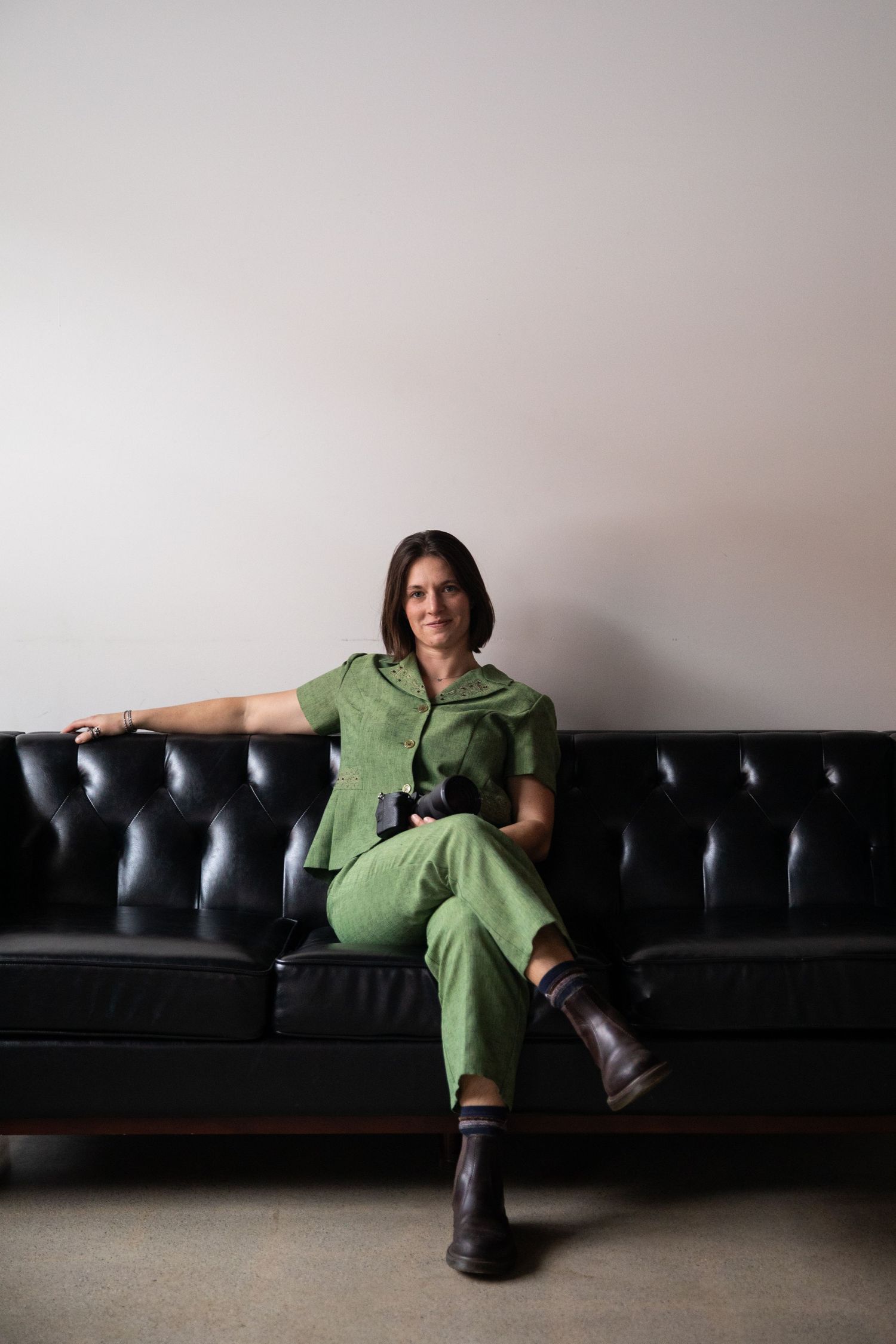
I'm Jade, and I'm based right here in the Salt Lake area, not flying in from somewhere else to guess at your day. I know the canyons, the trailheads, and the quieter foothills overlooks that don't show up on a first search for wedding venues, and I photographed Mavely and Tyler's snow-covered elopement at Jordan Pines myself.
Because I live and work in this valley year-round, I'm also the one keeping an eye on the details that shift season to season: which canyon pull-offs get plowed first after a storm, when the aspens are turning versus when the calendar says they should, and which weekends in Big or Little Cottonwood fill up with hikers and cyclists before you've even picked a ceremony time.
Salt Lake City elopement packages start at $3,100 with the Half Day package: 4 hours of shooting time and a custom ceremony anywhere in Utah, which covers every spot on this page many times over. The Full Day ($4,100) gives you 8 hours and includes both National Forest and National Park permit handling if your plans grow beyond the Salt Lake Valley. See elopement packages and pricing for the complete breakdown of what's included in each tier.
Frequently Asked Questions About Salt Lake City Elopements
Do we need a permit to elope in Salt Lake City or Big Cottonwood Canyon?
For a city location or a private venue, there's no permit process to worry about. Big and Little Cottonwood Canyon sit on Uinta-Wasatch-Cache National Forest land, but the Forest Service only steps in once your group passes 75 people. If your elopement crosses that number, plan on getting a Non-Commercial Group Use application in at least 45 days ahead. That's the one scenario on this page where you'd need any lead time at all.
How do we get a Utah marriage license in Salt Lake City?
Head to the county clerk's office with a valid government-issued photo ID for each of you. If either of you has been married before, bring your divorce decree along; a photo on your phone works fine. It's valid statewide, so pick it up in Salt Lake City or wherever's convenient before your date.
Do we need an officiant, and can a family member do it?
Utah law requires an officiant for every marriage ceremony, plus two witnesses over 18 physically present. Family members can serve as witnesses, and depending on their ordination status can sometimes officiate too. My guide to Utah elopement officiant requirements covers who qualifies and how to find someone if you don't already have a person in mind.
Can we elope in the mountains and still fly out the same day?
Often, yes. The mouth of Big Cottonwood Canyon is about 25 minutes from Salt Lake City International Airport, with another 10-20 minutes up-canyon depending on which spot you pick, so call it 30-45 minutes door to ceremony site. I usually recommend booking a flight home after 6pm so you're not racing the clock between vows, photos, and airport security, especially if winter roads add a few extra minutes.
Can we bring a small group of guests?
Most of the locations I recommend around Salt Lake City work well for just the two of you or a handful of close family and friends. There's no fixed guest cap the way there is at a permitted park ceremony site, though very large groups may need a private venue rather than a public canyon spot, or a Forest Service permit if you cross 75 people in one of the canyons.
Which canyon spot fits best if we're flying in and out the same day?
Lower and mid Big Cottonwood Canyon, the Jordan Pines area where Mavely and Tyler married, sits closest to the mouth of the canyon and the shortest total drive from the airport. Upper canyon spots near Brighton add another 10 to 15 minutes each way and a bigger elevation change, which is worth it for the alpine scenery but tightens a same-day window. If your flight leaves before 6pm, I'll usually steer you toward the lower canyon or a foothills spot closer to downtown instead of the top of the canyon.
Can we bring our dog to the ceremony?
Not in Big or Little Cottonwood Canyon. Both canyons are protected drinking-water watersheds for the Salt Lake Valley, and pets, service animals and avalanche rescue dogs aside, aren't allowed anywhere inside either one, on trail or off. If your dog is part of the day, the Wasatch foothills, a downtown ceremony, or a private venue are your options instead.
How reliable is winter road plowing up Big Cottonwood Canyon?
Better than most Utah canyons, since Brighton and Solitude both operate as ski resorts through the winter and depend on that road staying open for daily traffic. UDOT prioritizes it accordingly. That said, a single heavy storm can still bring a short closure or require chains, so I always build a weather buffer into a winter elopement day and keep a backup timing window in mind rather than pinning everything to one exact hour.
Can we combine our legal marriage license paperwork with an outdoor ceremony?
Yes, and most couples do this. The marriage license itself is a piece of paper from the county clerk, not tied to any particular location, so you can pick it up beforehand and still have your actual ceremony, vows, rings, the officiant pronouncing you married, wherever you want. Mavely and Tyler signed their certificate on a phone screen in the middle of the Jordan Pines meadow right after their vows, which is a common way to fold the paperwork into the moment instead of treating it as a separate errand.
Does the elevation up-canyon affect out-of-state guests?
It can, more than people expect from a short drive. Salt Lake City sits around 4,300 ft, but the top of Big Cottonwood Canyon at Guardsman Pass climbs to nearly 9,700 ft, and Little Cottonwood's resorts sit even higher. Guests flying in from sea level can feel short of breath or tire faster on even an easy walk at those elevations. I plan extra water and a slower pace into any ceremony above about 8,000 ft, and I'll flag it ahead of time if your chosen spot sits that high.
When is the best month for aspen color in Big Cottonwood Canyon?
Late September into early-to-mid October is usually the window, with color starting at the higher elevations near Brighton first and working its way down the canyon over a couple of weeks. Because the canyon covers such a wide elevation range, mouth to Guardsman Pass, you often get a stretch where the top is already golden and the bottom is still green, which gives you more flexibility on exact timing than a single-elevation location would.
Written by
Jade Jarvis
Utah-based wedding, elopement, and proposal photographer since 2025, living in the Salt Lake area year-round. The advice here comes from working these canyons and trailheads myself, not from guesswork.