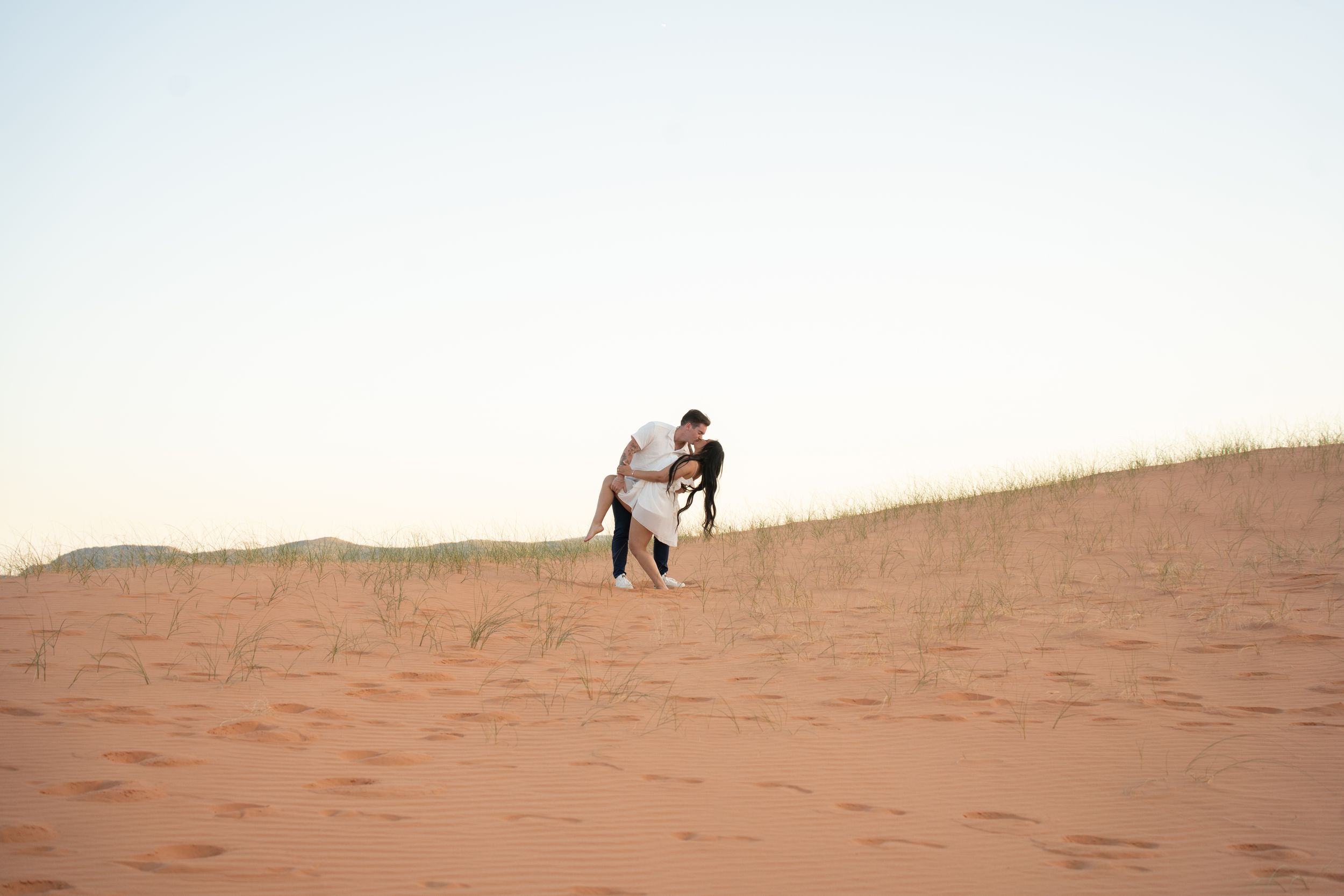
Antelope Island sits out in the Great Salt Lake, connected to the mainland by a 7-mile causeway, and it doesn’t look like anywhere else in Utah. Wide open water, a free-roaming bison herd, and the Wasatch Range across the lake, all under an hour from Salt Lake City without the drive south to canyon country.
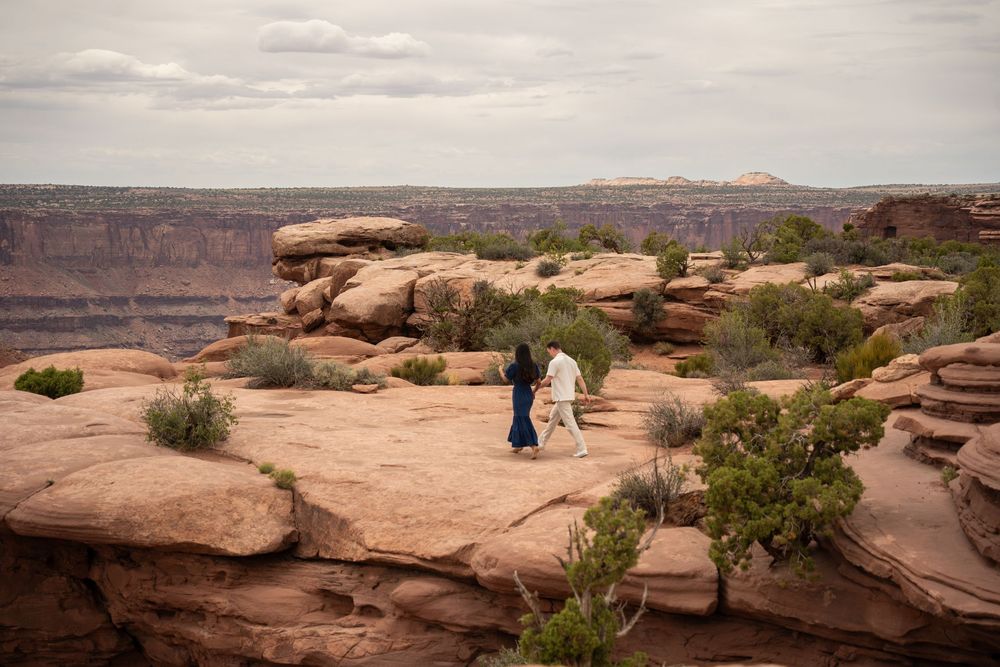
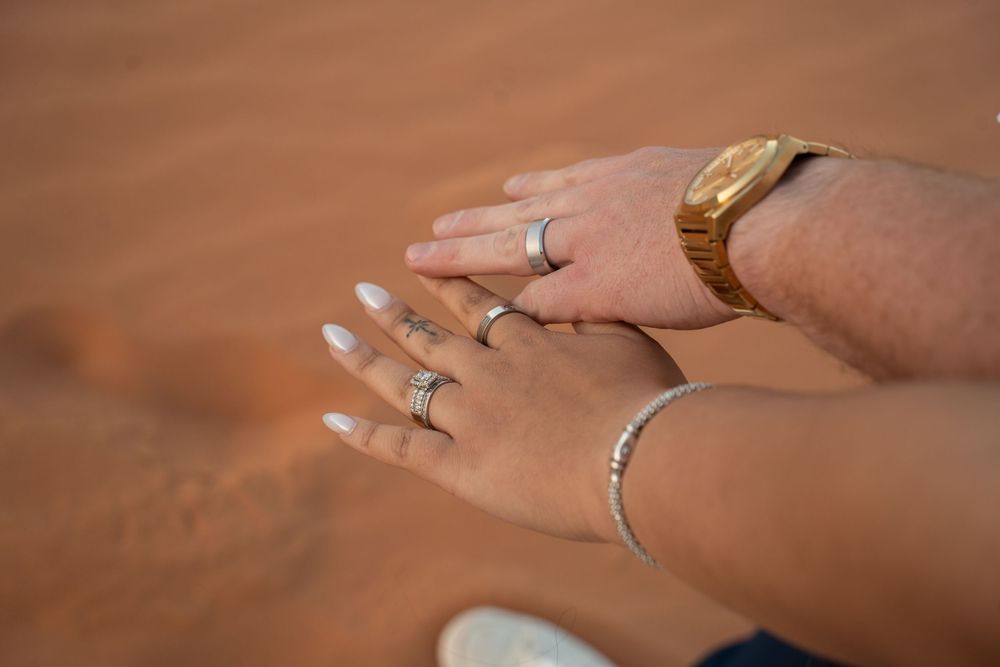
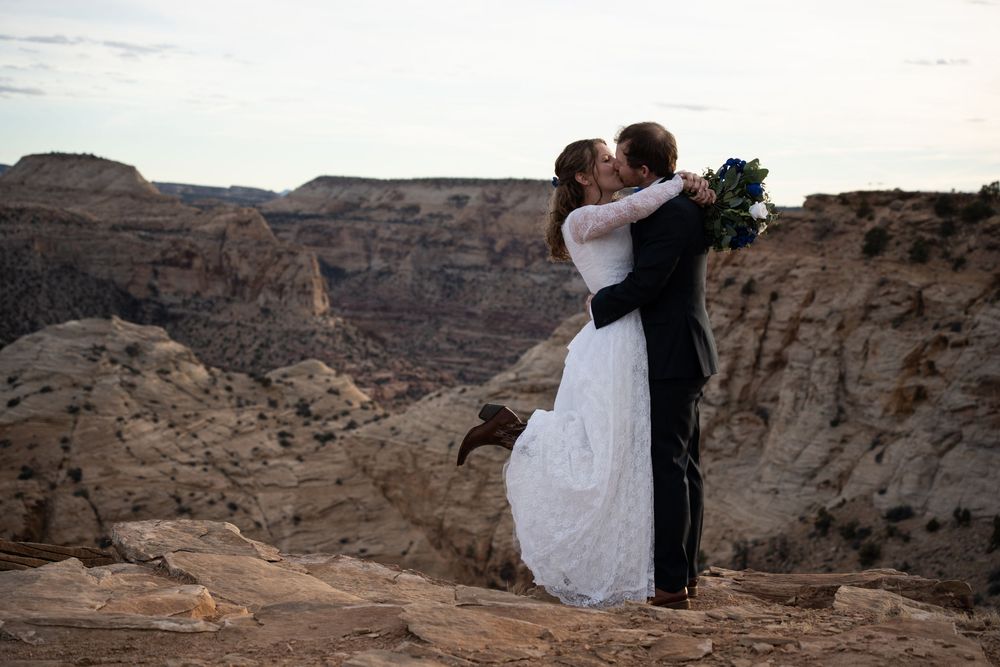
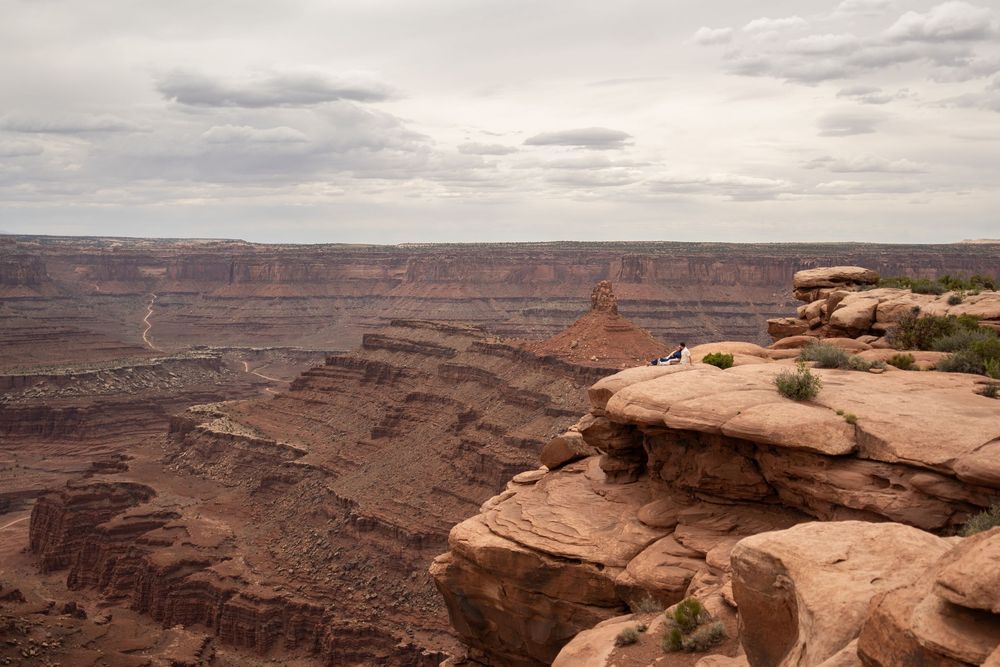
A quick note before you keep reading: I haven’t photographed an elopement on Antelope Island yet, so you won’t find a gallery of ceremonies here from me. What you will find is everything I’ve researched on permits, the ceremony spots the park will let you use, and the bison safety rules that matter more here than almost anywhere else I shoot. The photo above is from a Coral Pink Sand Dunes shoot near Kanab, a different southern Utah location with a warm desert palette, labeled here rather than passed off as this island.
If an Antelope Island elopement is what you’re picturing, I’d love to help you plan it and be the one who closes that gap. See my Utah elopement photography for packages and what’s included, or go straight to contact to start talking through your date.
TL;DR
Four official ceremony spots: Buffalo Point, Fielding Garr Ranch, Beach Area, and Ladyfinger Point, plus an "other" option the park reviews case by case.
Day-use entrance fee: $15/vehicle (up to 8 people), every guest's car pays it, permit or not.
A Special Use Permit, if your ceremony needs one, runs $60 base; the park decides through its own application, not your headcount.
No new permits get issued September 15 through November 15 while staff prep for the Annual Bison Roundup.
Biting gnats show up near the shoreline April through June; pack a head net, not just repellent.
About 41 miles and 45 minutes from downtown Salt Lake City, no flight or multi-day drive required.
Elopement photography starts at $3,100, and Antelope Island sits close enough to the standard coverage radius that travel likely isn't added on top.
Why Elope at Antelope Island
Most of Utah’s elopement spots are red rock: canyons, arches, mesas. Antelope Island is the opposite. It’s an island in a salt lake, with open grassland, mountain silhouettes across the water, and a herd of several hundred free-roaming bison that outnumber most of the crowds you’ll see on a weekday.
That contrast is the draw. If your engagement photos already happened somewhere red and dusty, or if the idea of getting married surrounded by open water instead of slot canyons sounds like you, this island offers a look nothing else near Salt Lake City does. Picture this instead: you’re standing on a bluff with the entire Great Salt Lake stretched out behind you, the Wasatch peaks catching the last light across the water, and the only sound is wind and, somewhere off in the grass, a bison snorting at nothing in particular.
It’s also close. A 7-mile causeway is the only way on or off, and the drive from the entrance booth to most of the park’s ceremony spots takes minutes, not the hour-plus you’d spend getting deep into a national park’s backcountry. That matters more than it sounds like it should. A lot of couples picturing an elopement assume it has to mean a multi-day trip to Zion or Moab, flights booked, PTO burned, a whole production. Antelope Island lets you build the same kind of ceremony, vows that count, a backdrop worth remembering, a photographer documenting all of it, into a single day trip from the Wasatch Front.
The light does something here you won’t get anywhere else in the state. Because the island sits surrounded by water, sunset color reflects across the lake’s surface in a way a landlocked overlook can’t reproduce, and on a still evening the causeway itself becomes a photo, a straight line of road with water on both sides running out toward the mountains. Add a bison silhouette in the middle distance and you get a set of photos that reads instantly as "this couple got married somewhere unusual," which is the reaction most elopement couples are chasing.
And because it’s a state park rather than a national park, the whole process runs through one office instead of a federal bureaucracy: one application, one point of contact, four named spots to choose from up front so you're not guessing at what's even allowed.
Tell Me Your Date and I'll Tell You What Fits
Give me your timeline and what you're picturing, water at your back, a mountaintop trail first, a historic ranch, and I'll walk you through which of the four spots matches it before you fill out a single form.
Here’s what stalls couples out on Antelope Island: it’s not far enough away to force a decision, so the research drags on for weeks instead of days.
Add it up. An hour reading the park’s own wedding application PDF, trying to figure out whether "Special Use Permit" applies to a two-person ceremony or just bigger weddings. Another hour cross-referencing bison safety articles because the idea of getting married near a two-thousand-pound animal that can outrun a car is, reasonably, a little unnerving. Thirty minutes trying to figure out which of the four named spots even fits your vision, since the park’s own listing gives you a name and a location, not a photo of what it looks like at golden hour. Another chunk of time worrying that a spot this close to Salt Lake City will read as a compromise instead of a deliberate choice, something you settled for because a proper trip wasn’t in the budget or the calendar.
That’s easily a full evening of research, spread out over a couple of weeks because it never feels urgent enough to sit down and finish in one sitting, for a decision you're only making once.
I’ve done that homework already. I’ve read the park’s wedding application front to back, cross-checked the bison safety guidance against the state's own wildlife resources, and mapped out which of the four ceremony spots handles wind, crowds, and light the way you'd want it to for your specific date and time. When you tell me what you're picturing, I can tell you in one conversation which spot fits and what the application process looks like for your headcount, not just repeat back the same four names off the park's website.
You don’t need to piece together a state government PDF and three different bison safety blog posts yourself. You need one conversation with someone who's already done that work for you.
Best Spots for Your Ceremony
The park’s own wedding application lists four named locations to choose from, plus an "other" option if you have somewhere specific in mind that isn’t on the list. Here’s the full depth on each one, plus one more feature worth knowing about even though it isn’t an official ceremony site.
Buffalo Point: The 360-Degree View
If you want the photo that makes people ask "wait, where is that," Buffalo Point is your spot. A viewing deck sits at the top of a moderately steep, roughly half-mile trail with about 300 feet of elevation gain, and what you get at the top is a full 360-degree view: the lake stretching in every direction, the rest of the island rolling out below you, and White Rock Bay visible to the west, a stretch of shoreline known for some of the best sunset light on the island, framed by pink dolomite boulders that catch a warm glow in evening light.
Being elevated and away from the shoreline is a meaningful advantage during gnat season. The no-see-ums that plague the beach from April through June concentrate near standing water and low grass, so a ceremony up on the deck sees noticeably fewer of them than one down on the sand. The tradeoff is wind. Because you're exposed on all sides at elevation, Buffalo Point catches more breeze than any of the other three spots, which is worth planning for if you're wearing a veil, a loose dress, or anything else that needs to behave for photos.
The half-mile trail up isn't difficult by Utah standards, but it isn't paved either, and it climbs steadily enough that heels or slick-soled dress shoes are a serious liability. Most couples change into flats or hiking-friendly shoes for the walk up and switch back for photos once they're at the top, or just commit to sturdy shoes for the whole ceremony.
Sunset is the obvious draw here, but sunrise works too, and it comes with a quiet upside: you'll likely have the deck to yourselves, since most visitors to the island show up midday.
Distance: Roughly half a mile one-way, about 300 ft of elevation gain, on a dirt trail.
Best for: A sweeping panoramic backdrop and the least gnat exposure of the four spots.
Watch for: Wind at elevation; dress and hair need to hold up to it.
Best time: Sunset for the classic shot; sunrise for near-total privacy.
Fielding Garr Ranch: Utah's Oldest Standing Home
Fielding Garr built the ranch house here in 1848, and it's still standing on its original foundation today, the oldest Anglo-built structure in Utah to hold that distinction. Families lived in it continuously until 1981, when the state took over the island and turned it into a park. That's not a detail I'm including for trivia's sake: it changes how the location feels underfoot. You're not standing near a replica or a staged historic site, you're standing somewhere people lived and worked for over 130 years.
Your ceremony and photos happen outside, on the grounds and around the picnic area near the ranch house, not inside it. The Ranch House interior and the Sheep Barn are both off-limits to weddings, and the park is strict about nothing permanent touching the site, no nails into the trees, no stakes into historic ground, nothing left behind. Given that this building predates the state of Utah's own founding, that rule makes sense the moment you see the place in person.
Fielding Garr Ranch sits further south on the island than the other three spots, which means a longer drive in from the entrance gate, worth factoring into your day-of timeline. It also carries its own separate fee structure on top of the base Special Use Permit, covered in full in the Permits & Legal section below, since it scales with your headcount differently than the other three locations.
For a couple who wants their elopement to feel rooted in something older than themselves, adobe walls and hand-laid stone instead of a scenic overlook, this is the spot on the island that delivers that feeling most directly.
History: Built 1848, oldest Anglo-built structure in Utah on its original foundation.
Access: Outdoor grounds and picnic area only; the Ranch House interior and Sheep Barn are off-limits.
Location: Further south on the island; budget extra drive time from the entrance gate.
Fee: Separate site rental fee on top of the base permit, see Permits & Legal below.
Beach Area: Water at Your Back
The park's application lists this option simply as "Beach Area." On an island with several stretches of shoreline, that almost always means Bridger Bay Beach, the developed sandy area near the marina with picnic pavilions and restrooms close by, the most accessible beach setup on the island.
This is the most classic "water at your back" ceremony photo Antelope Island offers: the lake stretching out behind you, mountains on the far shore, sand under your feet instead of a trail. It's flat, it's easy to reach, and it needs the least physical effort of any spot on this page, which matters if you're bringing guests who can't manage a hike or if you'd simply rather not deal with trail dust on your wedding day.
The tradeoff is the same one that makes the beach appealing in the first place: proximity to the water. That's also where the spring gnats concentrate most, so a Beach Area ceremony scheduled anywhere between April and June needs a solid plan for them, a head net at minimum, timing around the worst hours if you can. Outside that window, the beach is one of the easiest, most forgiving spots on the island to work with.
Because it's near the marina, it's also the closest of the four spots to the temporary visitor information setup while the main visitor center stays closed for construction, worth knowing if you want a bathroom break or last-minute questions answered close by.
Likely location: Bridger Bay Beach, near the marina.
Distance: Flat, no hike required.
Watch for: The worst of the spring gnat season, April through June.
Best for: Guests who can't manage a hike, or a couple who wants zero physical effort built into the day.
Ladyfinger Point: The Easiest Hike With a View
Ladyfinger Point sits near the north tip of the island, close to the visitor center, on an easy, roughly half-mile round trip trail with only about 50 feet of elevation gain, the gentlest hike of the four official spots by a wide margin. If Buffalo Point's climb feels like too much for your group but you still want a view that required a short walk to earn, this is the compromise.
It's another strong sunrise and sunset spot, looking out over the lake toward Egg Island just offshore, a small island within the island that adds a natural focal point to the wider water view rather than just open horizon.
Because it sits near the visitor center and marina area, it's also one of the more convenient spots logistically: closer parking, shorter walk, easy access for anyone helping coordinate the day. That convenience does come with slightly more foot traffic than Buffalo Point tends to see, since it's an easier draw for casual visitors too, so timing around the quieter parts of the day still matters here.
Distance: Roughly half a mile round trip, only about 50 ft of elevation gain.
Best for: The gentlest official hike, with an earned view as the payoff.
Nearby: Egg Island, visible just offshore.
Best time: Sunrise or sunset; expect a little more foot traffic than Buffalo Point since it's easier to reach.
Frary Peak: Not a Ceremony Site, But Worth Knowing About
Frary Peak isn't one of the four spots the park lists on its wedding application. If it's not one of the four, I'm not going to pretend it's an option without a caveat: getting married there specifically would mean requesting it under the "other" category and getting the park's direct approval first, which isn't guaranteed.
What Frary Peak is worth knowing about is as a pairing for the day itself. At roughly 7.1 miles round trip with about 2,326 feet of elevation gain, it's an undeniably difficult hike, rated hard, typically taking 4.5 to 5 hours, and it tops out at 6,596 feet, the highest point on the island. Some couples who consider themselves serious hikers build a Frary Peak summit into their trip, either the day before their ceremony or as a celebratory hike the morning after, even though the actual vows happen at one of the four approved spots.
If an actual mountain-summit challenge is part of how you two define an adventure together, this is where that happens on Antelope Island, just not as the ceremony location itself.
The Bison, and How to Stay Safe Around Them
Antelope Island's bison roam free across the whole park, including right up against the roads and trails leading to every spot above. Utah's Division of State Parks recommends the "thumb test": hold your arm straight out, stick your thumb up, and if you can still see the bison around it, you're too close and need to back away. Park Manager Doranne Pittz puts it more simply: whatever distance you think is enough, double it.
A few practical rules that matter on your wedding day specifically: stay inside your vehicle if a bison is on or near the road, never cross open rangeland to get closer for a photo, and if a bison stops what it's doing to look at you, that's your cue to slowly back away, not move in for a better shot. Bison can run up to 40 miles an hour, far faster than they look standing still, and a docile-looking animal grazing fifty feet off the trail can close that distance faster than either of you could react.
This is also why the park's application asks for a backup location, not just a first choice. If a bison decides your ceremony spot looks like a good place to nap twenty minutes before your vows, the plan shifts to your second option instead of forcing a shot at an unsafe distance. Build that flexibility into your mindset going in, not just your paperwork.
Found Your Spot? Let's Talk Timing and Permits
Once you know which of the four fits you, the next call is timing, gnats, wind, the September 15 permit cutoff, and what the application asks for. I'll walk you through all of it.
Best Time of Year to Elope at Antelope Island, Month by Month
Antelope Island runs on a different climate rhythm than red rock country. There's no true monsoon season here and no 100-degree slot canyon heat, but the lake and the open exposure bring their own quirks, wind, gnats, and a hard permit deadline that has nothing to do with weather at all. Here's how each month plays out.
January: Cold and quiet, with average temperatures in the low 30s and colder overnight. Snow can dust the island's grassland and the mountains across the lake, which photographs beautifully if you don't mind the chill. Trails are close to empty, and it's one of the few months where you might have Buffalo Point entirely to yourselves.
February: Similar to January but starting to thaw, with daytime temperatures creeping into the upper 30s and low 40s. Still one of the quietest windows on the calendar, and still within the December through February drone permit season if aerial photos matter to you.
March: Temperatures climb into the mid-40s to low 50s, and the island starts to wake up. No gnats yet, still light crowds, but spring storms off the lake can move in fast, so keep an eye on the forecast closer to your date.
April: A strong month overall, highs in the mid-50s to low 60s, green starting to show on the hills, comfortable hiking weather for the walk up to Buffalo Point or Ladyfinger Point. The catch: the biting gnats typically start appearing near the shoreline by the back half of the month, so a Beach Area ceremony this late in April is a coin flip.
May: Highs move into the mid-60s to low 70s, and the island is at its greenest. Gnats are in full swing near the water, so this is a strong month for Buffalo Point specifically, elevated and away from the shoreline, if you want spring color without the bugs.
June: Warm, highs pushing toward the upper 70s to near 80, with long daylight hours that give you flexibility on ceremony timing. Gnats remain active through most of the month before starting to taper off. The longest days of the year mean a later sunset ceremony is realistic without cutting your evening short.
July: Hot, highs regularly in the mid-to-upper 80s, though the lake's breeze takes some of the edge off compared to inland desert heat. Gnats are largely gone by now. A midday ceremony in direct sun on the beach or at Ladyfinger Point will be uncomfortable for anyone in formal clothing, so lean toward morning or evening.
August: The hottest month, with highs commonly in the mid-80s and sometimes higher, dry conditions, and occasional regional wildfire haze that can soften or dull the sky in some years, worth checking a near-term forecast rather than assuming clear skies automatically. Early morning or the couple hours before sunset are your best windows.
September: Temperatures ease into the mid-70s early in the month and keep dropping, one of the most comfortable stretches of the year. Here's the catch that trips people up: the park stops issuing new Special Use Permits on September 15 while staff prepare for the Annual Bison Roundup. If you want a September date, your application needs to be in well before that cutoff, not during the same month you're hoping to marry.
October: Highs in the low-to-mid 60s, comfortable and quiet, arguably the single best month for temperature and light on the island. The permit blackout continues through mid-November, so this month is really about locking in a date for next year or the following spring rather than applying fresh.
November: The permit blackout lifts November 15, right around when the Annual Bison Roundup itself typically wraps up, usually held in the late October to early November window. Temperatures drop into the 40s, and the island empties out fast once the roundup crowds clear. A late-November ceremony can be strikingly peaceful if you don't mind bundling up.
December: Cold, highs near or below freezing on a typical day, and the quietest stretch of the entire year. This is also when drone permits open back up, through February, so a December elopement is one of the few times you could realistically add aerial footage to the day. Confirm the visitor center and water service status before you go, both have been affected by an ongoing construction project as of this writing.
How to Plan Your Antelope Island Elopement: My 3-Step Process
The park's own process is straightforward once you know the order. Here's how it breaks down once you reach out to me, the three concrete decisions that move your date forward.
Step 1
Pick a Primary Spot and a Backup
Walk through the four spots above and choose your favorite, plus a considered second choice, not an afterthought. Fielding Garr Ranch carries extra fees and a longer drive; Buffalo Point and Ladyfinger Point both need a short hike; the Beach Area needs the least effort but the most gnat planning in spring. Tell me your priorities, easiest access, best light, most privacy, and I'll help you land on the pairing that fits your day.
Step 2
Submit the Wedding Application Early
The park's wedding application is also how they decide whether a Special Use Permit applies to your plans at all. Get it in well ahead of your date, and if you're eyeing anything in September or October, get it in before September 15, since no new permits start again until November 16. I'll walk through the form with you so nothing gets left blank or misfiled.
Step 3
Lock In Your License, Vendors, and Bison Plan
Pick up your Davis County marriage license a week or two ahead, not months out (it's only valid for a limited window). Book your officiant, decide on a Utah self-solemnized ceremony instead if that fits you better, and confirm your photographer. We'll also walk through what to do if a bison parks itself near your spot on the day, so it's a shrug and a shift to plan B, not a scramble.
What to Expect on Your Elopement Day
Here's the full timeline of an Antelope Island elopement day, start to finish, so nothing on the actual day catches you off guard.
MORNING
Cross the Causeway Together
Most couples treat the drive across the 7-mile causeway as the actual start of the day, the moment the city noise falls away and the island opens up in front of you. I'm usually already on-site scouting light and checking your primary ceremony spot for company, human or bison, before you arrive.
ARRIVAL
Gate, Gear, and a Bison Check
We stop at the entrance gate for the day-use fee, then head toward your ceremony spot. If your primary location has a bison parked nearby or another group set up for photos, this is when we make the call to shift to your backup instead of forcing it.
THE CEREMONY
Vows, Documented As They Happen
Whether you're using an officiant or self-solemnizing under Utah law, I photograph the ceremony as it unfolds, not staged reenactments after the fact. Wind is a significant factor at Buffalo Point especially, so we'll have already talked through hair, veil, and dress logistics before this moment arrives.
AFTER
Portraits With the Lake and the Herd
Once the ceremony wraps, we shift into portraits, the two of you against the open water, the mountains across the lake, and if the bison herd cooperates from a safe distance, a "we got married on an island with bison" backdrop that's hard to fake anywhere else in Utah.
Getting to Antelope Island, Where to Stay & Eat, and What to Budget
Getting There
Antelope Island sits about 41 miles north of downtown Salt Lake City. From I-15, take Exit 332, head west on Antelope Drive to the park's entrance gate, then continue 7 miles across the Davis County Causeway onto the island itself. Door to door from downtown, that's roughly 45 minutes in normal traffic.
Salt Lake City International Airport sits a little further out, roughly an hour by car, slightly longer than the drive from downtown itself. That means flying in and driving straight to the island the same day is technically realistic. I'd still build in a buffer. A delayed flight threatening a ceremony time tied to a Special Use Permit is a stress no one needs on their wedding day, so an overnight nearby beats a same-day sprint even when the math says you could make it work.
Where to Stay
No hotels sit on Antelope Island itself. Layton, about 15 miles from the park entrance, has the closest concentration of lodging, mostly familiar chain hotels rather than boutique properties. Syracuse sits even closer to the causeway but has fewer options to choose from. Neither town is a scenic destination in its own right, so most couples treat the hotel as a practical home base the night before and let the island itself carry the memorable part of the trip.
If camping fits your style better than a hotel room, the park runs its own campgrounds, including one at Bridger Bay near the beach and another at White Rock Bay known for particularly strong sunset views, worth considering if you want to wake up on the island the morning of your ceremony instead of driving in.
Where to Eat
The most memorable option is on the island itself: Island Buffalo Grill operates seasonally, March through the beginning of November, at the marina, serving buffalo burgers with a lake view, a fitting way to celebrate right after your ceremony if your date falls in that window. Outside that season, or if you want something more substantial, The Bird in Syracuse serves homestyle cooking with an outdoor patio worth catching at sunset, and Rumbi Island Grill in Layton offers a Polynesian-inspired menu that works well for a celebration dinner. Book ahead if you're planning a group meal on a weekend.
Budget Considerations
Beyond photography, plan for: the $15 per-vehicle day-use entrance fee (every guest's car, not just yours); the $60 Special Use Permit base fee if your ceremony needs one; a $60 Davis County marriage license; optional reserved parking at $5 per stall or exclusive-access signage at $50 to $100 if privacy from other visitors matters to you; and Fielding Garr Ranch's separate site fee if that's your spot. Add lodging in Layton or Syracuse if you're staying over, and a celebration meal afterward if that's part of your plan. Compared to a red-rock elopement requiring flights and multiple nights away, Antelope Island's total added cost beyond photography stays comparatively modest, which is part of why it fits a couple working with a tighter timeline or budget without feeling like a downgrade.
September 15 Is a Hard Deadline, Not a Sales Tactic
Unlike most of the spots I shoot, Antelope Island has an actual hard cutoff: no new Special Use Permits from September 15 through November 15. If a fall date is even a maybe, get your application moving now, before the window closes on its own.
Sturdy, flat shoes. The trails to Buffalo Point and Ladyfinger Point are uneven and rocky, and the beach area has soft sand. Save the heels for the reception, if you're having one.
A fine-mesh head net. Only if you're eloping between April and June, when the biting gnats near the shoreline show up. Bug spray won't help against them.
Sun protection. There's almost no shade anywhere on the island, so sunscreen and a hat matter even on a mild day.
A windbreaker or light layer. Wind off the open water picks up fast, especially up on Buffalo Point.
Water, more than you think you need. Water service on the island has been affected on and off during the ongoing visitor center construction, so don't count on refilling a bottle once you're there. Bring enough for the whole day, especially if you're hiking to your ceremony spot.
Cash or card for the entrance booth. Every vehicle pays the day-use fee at the gate, guests included.
A copy of your Special Use Permit, if you have one. Keep it with you on the day in case a ranger asks.
Binoculars, if you have a pair. Spotting a bison from a safe distance before you're close enough to need to react is the whole point of the "double it" rule, and binoculars make that a lot easier.
Which Antelope Island Spot Fits You?
Four official spots, one honorable mention. Here's the short version: match your priority in the left column to the location that delivers it.
If you want…
Best spot
Effort
Extra fee beyond the base permit
A 360-degree panoramic view and the fewest gnats
Buffalo Point
Moderate, ~0.5 mi, 300 ft gain
None
History underfoot and a rooted, storied setting
Fielding Garr Ranch
Easy, on-site access
Separate site fee, scales with headcount
Classic water-at-your-back photos, zero hiking
Beach Area
None, flat sand
None
The easiest hike with a rewarding view as the payoff
Ladyfinger Point
Easy, ~0.5 mi, 50 ft gain
None
A serious hike built into the trip (not the ceremony itself)
Frary Peak (paired with one of the four spots)
Difficult, ~7.1 mi, 2,326 ft gain
Not an official ceremony site; requires "other" approval if used as one
A few patterns from how couples tend to land on a spot: the couple who wants the biggest "how did you find this" reaction almost always ends up at Buffalo Point. The couple bringing an older relative or anyone who can't manage a hike goes straight for the Beach Area. The couple drawn to Utah history, or who wants their ceremony to feel rooted in something specific rather than just scenic, picks Fielding Garr Ranch. And more couples than you'd expect choose Ladyfinger Point specifically because it splits the difference: a legitimate trail, a sweeping view, without asking much of anyone in the wedding party.
Permits & Legal Requirements
Every visitor, ceremony or not, pays the standard day-use entrance fee: $15 per vehicle (up to 8 people), $10 for seniors 65 and older, $5 per motorcycle, or $3 per person if you're arriving by bike or on foot. That fee applies to your guests too, permit or not.
Whether you also need a Special Use Permit for your ceremony depends on your specific plans, and the park makes that call through its wedding application, not a guess based on group size. If a permit is required, the base fee is $60, and other charges can apply depending on what you're bringing.
Two optional add-ons worth knowing about: reserved parking runs $5 per stall, and exclusive access to your ceremony location (the "Reserved For" signage that keeps other visitors out of your shot) runs $50 to $100. Neither is required, but both help if you're picturing a private-feeling ceremony at a spot that's open to the public the rest of the day.
Fielding Garr Ranch carries its own separate fee structure on top of the base permit: $100 for up to 100 people and 20 vehicles, plus $50 for every additional 25 people, capped at 150 people total. That site rental fee doesn't cover the park's vehicle entrance fee, which every guest's car still pays at the gate.
Timing matters more than almost anything else here. Applications should go in well ahead of your date, and no new Special Use Permits get started between September 15 and November 15, while the park prepares for the Annual Bison Roundup. You'll also need a Utah marriage license, and since Antelope Island sits in Davis County, the Davis County Clerk is your most convenient local option: $60, which includes two certified copies, no waiting period between applying and picking it up, and valid for about a month once issued.
Fees, application timelines, and permit rules can change year to year, so confirm current numbers directly with the park before you apply. If you book with me, I'll walk this whole process with you rather than leave you to piece it together alone.
Spot
Base entrance fee
Special Use Permit (if required)
Extra fee
Buffalo Point
$15/vehicle
$60 base
None
Fielding Garr Ranch
$15/vehicle
$60 base
$100 (up to 100 people/20 vehicles), +$50 per additional 25, capped at 150
Beach Area
$15/vehicle
$60 base
None
Ladyfinger Point
$15/vehicle
$60 base
None
Other location
$15/vehicle
Case-by-case park approval
Varies by request
Why Plan This With Someone Who's Done the Homework
One conversation instead of a stack of PDFs. I've read the park's wedding application closely enough to tell you what it's asking, not just repeat the four spot names back to you.
A backup plan built in from the start. Every spot recommendation comes with a second choice that's just as strong, because a bison doesn't check anyone's ceremony schedule before deciding where to graze.
Season-specific advice, not generic tips. Gnats in May call for a different plan than wind in January, and I'll tell you which one applies to your actual date.
Straight answers on cost. Park fees, permit fees, and my photography quote, laid out clearly before you commit to anything.
No pretending I've shot here before when I haven't. I'll tell you plainly what I know from research versus what I'll be learning for the first time alongside you, and either way, you'll get a photographer who prepared for this location specifically instead of treating it like any other lakeside backdrop.
Photographer
Your Antelope Island Elopement Photographer
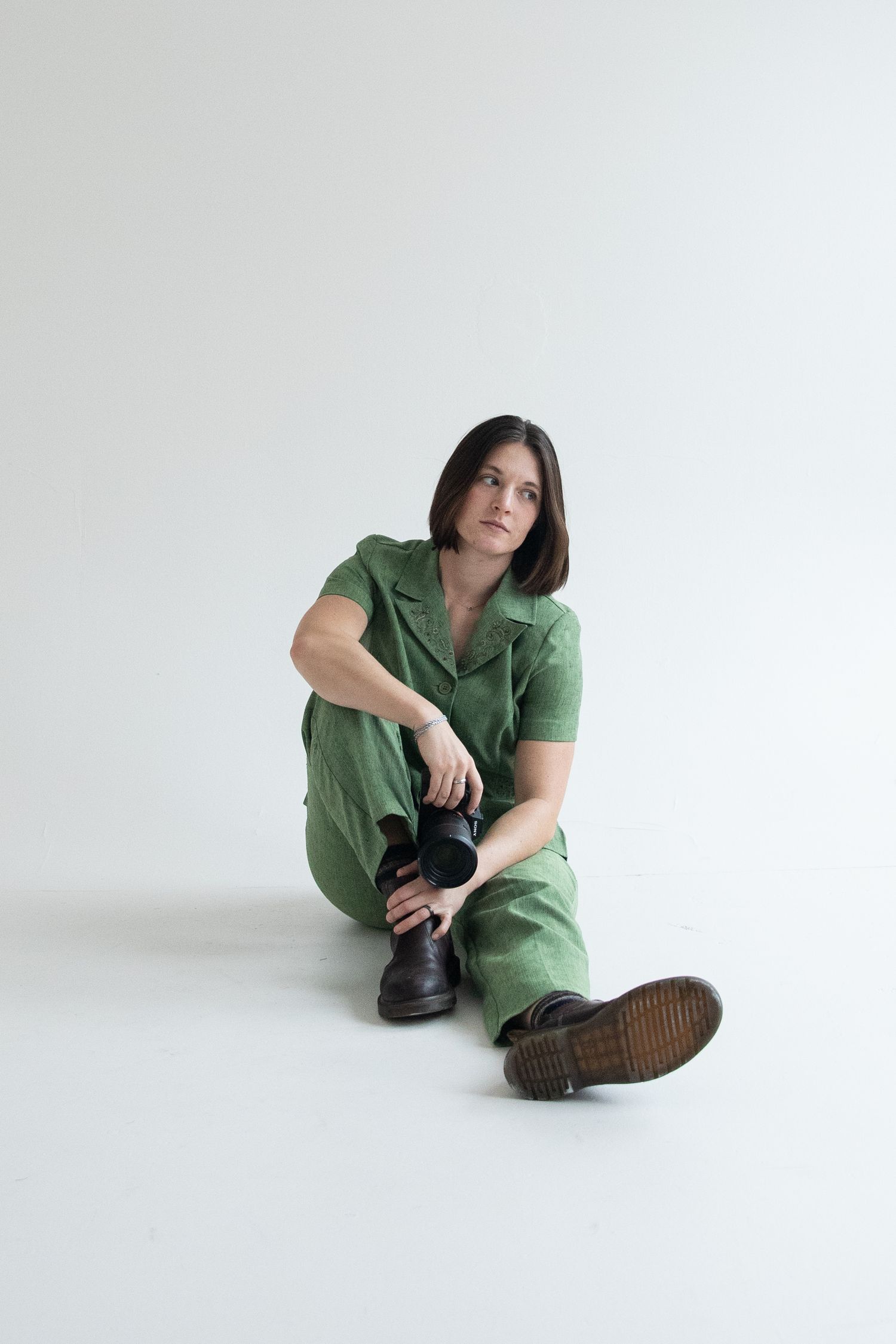
I'm Jade, a Utah-based elopement photographer, and Antelope Island is one of the locations I get asked about most that I haven't shot yet. I've read through the park's own wedding application more than once, scouted the four ceremony spots on maps and in trip reports from other visitors, and cross-checked the bison safety guidance against the state's own wildlife resources, so I'm ready to be the one who documents the first elopement I bring here myself. What I can't offer yet is a gallery of past Antelope Island ceremonies, and I'd rather tell you that directly than dress up a stand-in photo as something it isn't.
The bison, the open water, and that long straight causeway give this island a completely different feel from the red rock most of my portfolio comes from, and I've built out a solid plan for how to work with all three: where the light holds longest, which spot handles wind best, and how to keep a respectful distance from the herd without losing the shot.
Elopement photography starts at $3,100, confirmed current at my elopement packages page, with travel added only if a location sits outside the standard Wasatch Front radius. Antelope Island, about 45 minutes from downtown Salt Lake City, sits well inside that range, so travel fees likely won't apply here the way they would for a Moab or Zion elopement. I'll confirm your exact number on a planning call before you book anything.
Frequently Asked Questions About Eloping at Antelope Island
Do we need a Special Use Permit to elope at Antelope Island?
The park decides that through an application, not a guess based on your headcount. You fill out the same wedding application whether it's just the two of you and an officiant or a full guest list, and the park tells you if a Special Use Permit applies to your plans. If it does, the base fee is $60, with extra charges possible for reserved parking or exclusive access signage.
How much does it cost to elope at Antelope Island in total?
Budget for two park costs on top of your photographer: the $15 per-vehicle day-use entrance fee (every guest's car pays this too, permit or not) and the $60 Special Use Permit base fee if your ceremony requires one. Add reserved parking at $5 per stall or exclusive-access signage ($50 to $100) only if you want either, plus a $60 Davis County marriage license. My elopement packages start at $3,100, separate from anything paid to the park or county directly.
Why can't we get a wedding permit between September and November?
The park doesn't initiate any new Special Use Permits between September 15 and November 15 while staff prepare for the Annual Bison Roundup, one of the island's biggest logistical events. If a fall date is what you want, the fix is timing: get your application in well before September 15, since that window closes fast and the park won't make an exception for it.
Can we fly a drone for aerial photos at our ceremony?
Only from December through February, and only with a signed permit from the visitor center ($15 for a single day, $30 for multiple), flown inside a designated zone on the island. The rest of the year, Antelope Island is closed to drones entirely. I cover this in more detail, including why winter is a strong trade-off for a proposal or elopement here, on my guide to flying a drone for a Utah proposal.
When do the biting gnats show up, and does that ruin an elopement?
No-see-ums show up near the shoreline from April through June, and regular bug spray doesn't do much against them. Pack a fine-mesh head net if your date falls in that window rather than counting on repellent, and know that a ceremony up on Buffalo Point, away from the water's edge, tends to see fewer of them than the beach does.
Can we get married inside the historic ranch house at Fielding Garr Ranch?
No. Fielding Garr Ranch is on the National Register of Historic Places, so your ceremony and photos stay outside, on the grounds and around the picnic area. The Ranch House interior and the Sheep Barn are both off-limits, and nothing permanent gets attached anywhere on site, including nails into the trees.
How far is Antelope Island from Salt Lake City, and can we fly in and elope the same day?
The park sits about 41 miles north of downtown Salt Lake City, roughly 45 minutes by car, and about an hour from Salt Lake City International Airport. Technically you could land and drive straight to a ceremony the same day. I wouldn't plan it that way. Flight delays are common enough that I'd rather build in a buffer than have a missed connection threaten your ceremony window, especially with a Special Use Permit tied to a specific time.
Where should we stay if we want to be close to Antelope Island the night before?
Layton, about 15 miles from the park entrance, has the closest concentration of hotels, mostly familiar chains rather than boutique properties. Syracuse sits even closer to the causeway itself but has fewer lodging options. Neither is a scenic destination on its own, so most couples treat the hotel as a practical home base and save the memorable setting for the island the next morning.
Do we need to bring our own officiant, or does the park provide one?
You bring your own. Antelope Island State Park handles the location, the permit, and the rules around it, not the ceremony itself. Utah allows self-solemnized marriages if you'd rather skip a third-party officiant entirely, which some elopement couples choose specifically for a location like this where it's already just the two of you.
What happens if a bison shows up near our ceremony spot?
You wait it out or move to your backup spot. Bison on Antelope Island roam freely and don't follow anyone's schedule, including a couple's ceremony time. This is why the park's application asks for a second-choice location: if a bison has parked itself at Ladyfinger Point twenty minutes before your ceremony, we shift to the backup rather than force a shot at unsafe distance.
Can family or friends come to an Antelope Island elopement, or does it have to be just the two of us?
Either works, and the park's process is the same regardless. The wedding application doesn't ask you to declare an elopement versus a full wedding, it just asks for your plans and issues a Special Use Permit if one applies. Some couples bring two witnesses and nothing else; others bring a small group and treat Buffalo Point like a scaled-down wedding. Decide your headcount before you apply, since it can affect whether reserved parking or exclusive-access signage make sense for you.
Does an elopement this close to Salt Lake City still feel like a getaway?
Once you're across the causeway, the city disappears fast. The island has spotty cell service in several spots, no highway noise, and a horizon line that's water and mountains instead of buildings. Couples who choose Antelope Island specifically because it's close often tell me the short drive is what let them do this at all, a full multi-day trip to a national park wasn't realistic for their schedule, but the setting itself doesn't feel like a quick stop on the way to somewhere else.
Ready to Start Planning?
If the Great Salt Lake and a bison herd sound like the backdrop you want, I'd love to help you build an Antelope Island elopement that's entirely yours.