The short version: how to propose at Cedar Breaks National Monument starts the same way it does at every other park on my list. A standard proposal here needs zero permits, since Cedar Breaks only requires paperwork for an actual wedding ceremony. Add a natural amphitheater at 10,000 feet, limestone spires dropping more than 2,000 feet below the rim, an entrance fee under Zion's or Bryce's, and a fraction of the crowds you'd find at nearby Bryce Canyon, and you've got one of the quietest, highest proposal spots in Utah.
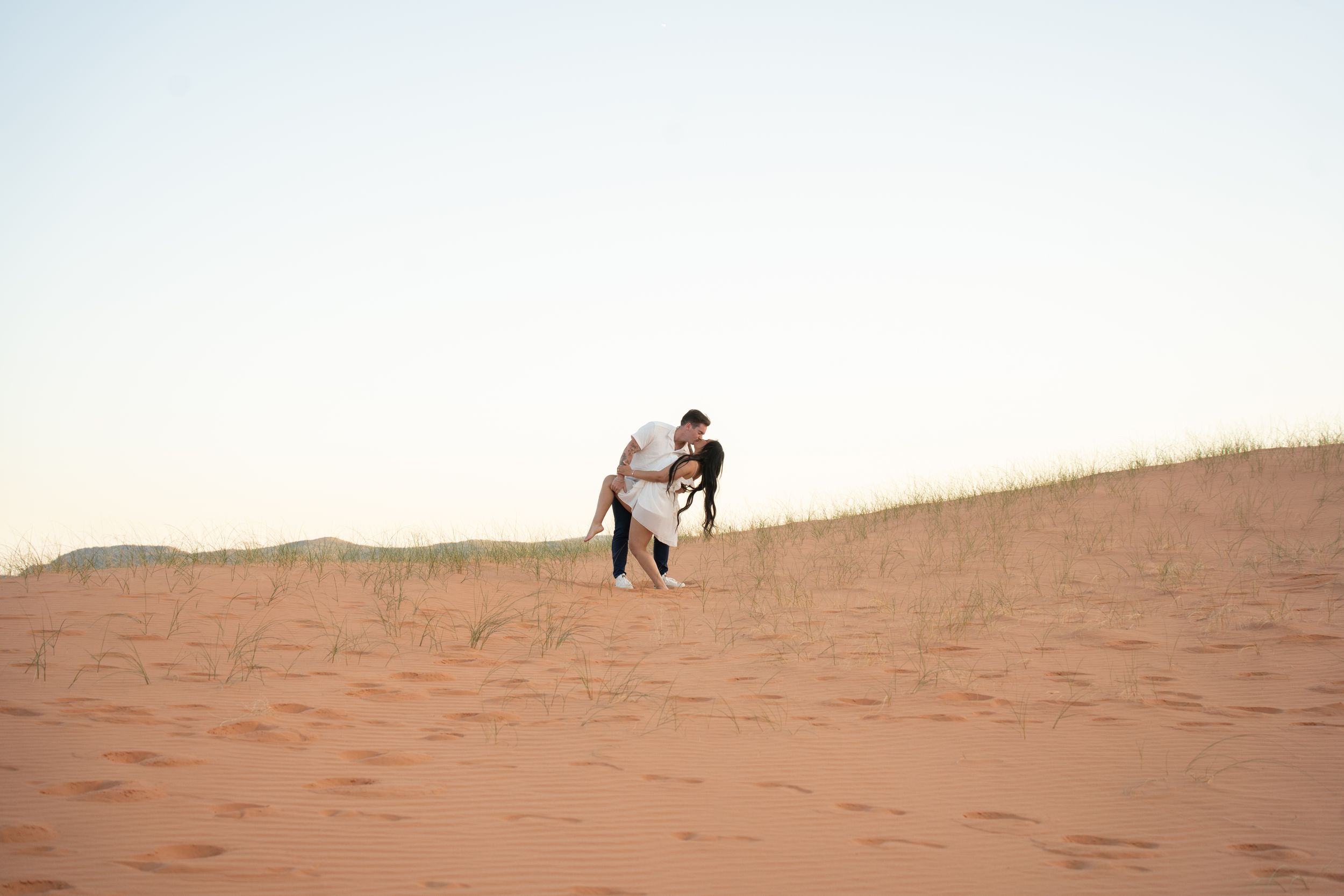
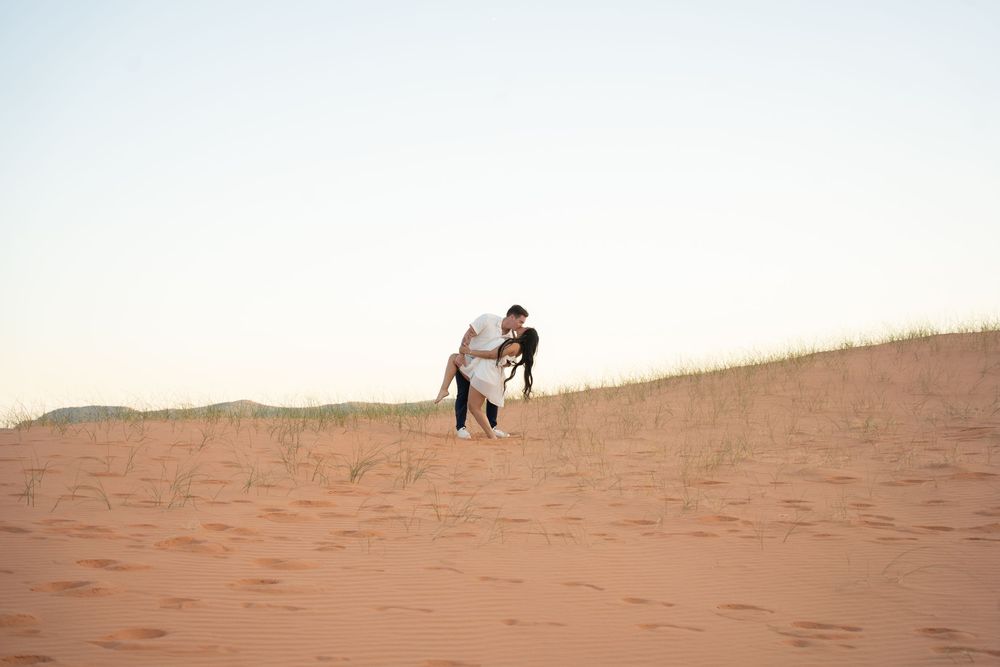
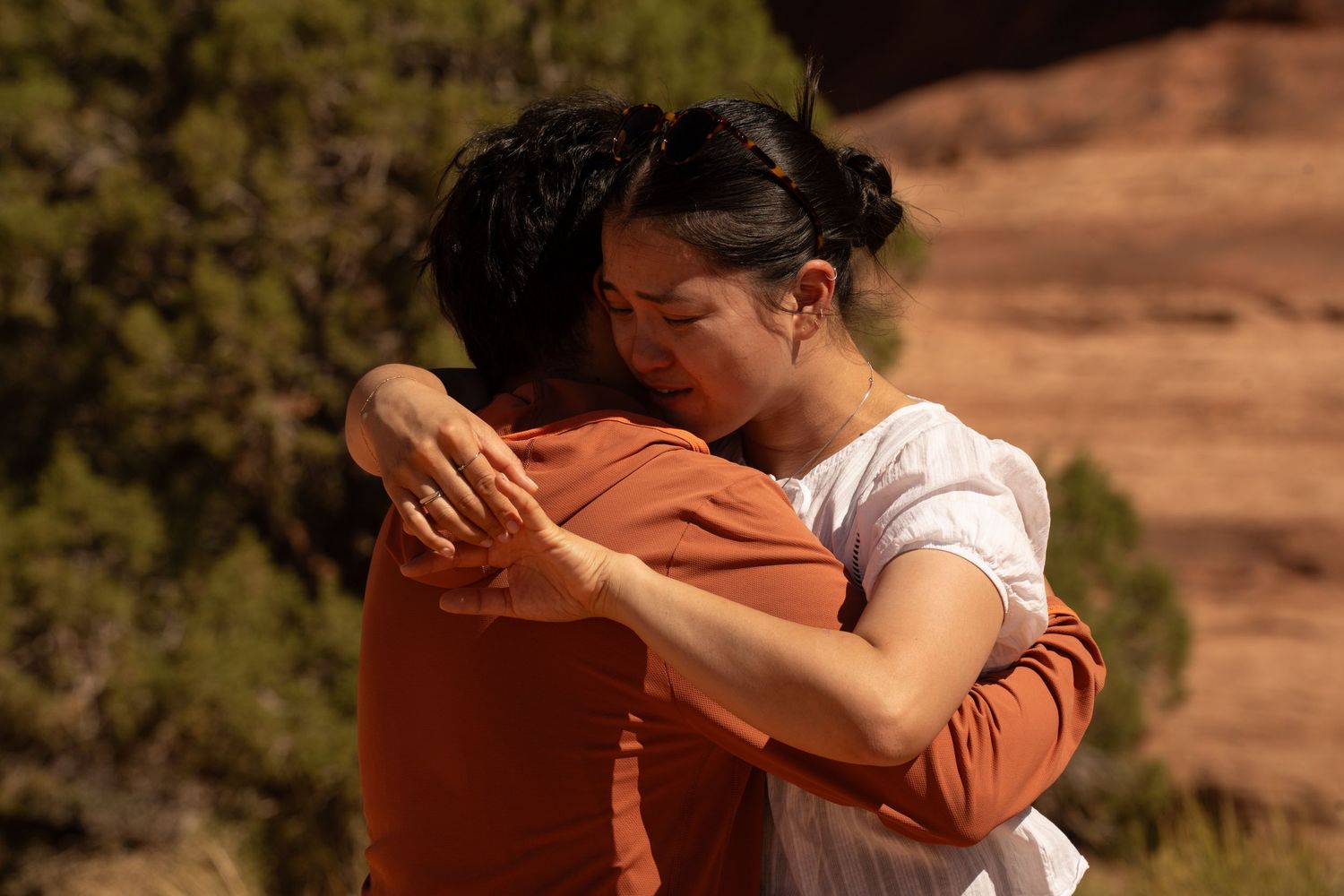
A quick, upfront note: I don't have a dedicated Cedar Breaks proposal session to show you yet, so you won't find a gallery of Cedar Breaks proposal photos on this page. What you will find is everything I've researched about permits, timing, fees, and six distinct overlooks and trails in the monument, useful whether you book me or someone else. The image above is from a Coral Pink Sand Dunes shoot near Kanab, a different southern Utah location with a desert look rather than Cedar Breaks' alpine amphitheater, labeled that way rather than passed off as Cedar Breaks.
TL;DR
A standard proposal at Cedar Breaks needs no permit. Only an actual wedding ceremony requires the park's Special Use Permit.
Entrance costs $25/vehicle for 7 days, $20/motorcycle, or $15/person; the monument is card-only, no cash accepted.
The scenic drive (SR-148) typically stays open late May through mid-November, so this is a warm-season-only location.
Cedar Breaks sits at over 10,000 feet, noticeably cooler than the desert parks even in summer, and altitude is an important planning factor.
Six spots covered here: North View Overlook, Point Supreme Overlook, Chessman Ridge Overlook, Spectra Point, Ramparts Overlook, and the Alpine Pond Trail loop.
Proposal photography starts at $845, with travel to Cedar Breaks built into your quote, and you'll have your photos within 24 hours.
Why Cedar Breaks Is Worth Proposing At
Cedar Breaks solves a problem Bryce Canyon, an hour down the road, can't: it gives you the same eroded, spire-and-color amphitheater without the crowd standing next to you.
The monument is a natural amphitheater carved into the Markagunt Plateau at over 10,000 feet, with limestone spires dropping more than 2,000 feet below the rim in bands of white, orange, and red. It's the same kind of formation that draws people to Bryce Canyon or Zion, just from a higher, cooler vantage point, and at a $25 vehicle entrance fee that undercuts both Zion's $35 and Bryce Canyon's $35.
What sets Cedar Breaks apart from every other spot on my list isn't just the view, it's the elevation itself. At over 10,000 feet, this is the highest place I shoot a proposal anywhere in Utah, and it shows: alpine meadows and bristlecone pines along the rim instead of desert scrub, air that stays cooler even in the middle of summer, and a sky at dusk that feels closer than it does from any lower-elevation park. Propose here in late September and you get gold aspen color layered over the amphitheater's white and orange rock, a combination the desert parks simply can't offer.
The amphitheater itself formed the same way Bryce Canyon's did: water and ice slowly carving soft limestone into spires, fins, and hoodoos over millions of years, the same process, just a separate formation a couple thousand feet higher and roughly an hour's drive away. Some of the bristlecone pines growing along the rim here are among the oldest living trees in Utah, quietly holding on in thin, rocky soil that most trees can't survive in, a detail that adds a different kind of weight to a proposal set among them beyond just the view.
Cedar Breaks vs. Bryce Canyon: Which One for Your Proposal?
Since the two sit close enough to visit in the same trip, this is the comparison couples ask me about most. Neither is the "better" park, they solve different problems.
Bryce Canyon has the bigger reputation, the bigger crowds, and a larger network of maintained trails winding down into the hoodoos themselves, so you can walk among the spires, not just look at them from above. Cedar Breaks skips that in-canyon access entirely, everything here is a rim view or a short walk along the edge, but it trades that for a fraction of Bryce's visitor traffic, a distinctly different elevation and climate, and a lower entrance fee. If your partner's dream shot is standing among hoodoos at eye level, that's Bryce. If the priority is a dramatic amphitheater view with almost nobody else around, that's Cedar Breaks.
A lot of couples don't pick one, they do both: a sunrise proposal at Cedar Breaks, quiet and cool, then an afternoon or sunset walk through Bryce's main trails once the moment's already happened and there's no more pressure riding on the light or the crowd.
Tell Me Your Travel Dates
Give me your dates and what you’re picturing, wide overlook or a short walk to a private ledge, and I’ll confirm the road’s open and send back the spot that fits.
The Challenge With Planning a Cedar Breaks Proposal From Out of State
Here’s what stresses couples out about planning this from far away: Cedar Breaks barely shows up in the standard Utah national park itinerary, so there’s a fraction of the blog posts and geotagged photos you’d find for Zion or Bryce, and what does exist rarely tells you the details that change your plans.
Add up what that costs you. Not knowing the scenic drive closes for roughly half the year, and finding that out only after booking a January trip. Underestimating how a 10,000-foot elevation hits your body differently than a desert hike, and showing up short of breath on what looked like an easy walk on a map. Not realizing the monument doesn’t take cash, and getting turned away at the entrance station with nothing but bills in your wallet. Small on their own, but the kind of small mistakes that can derail a day you only get one shot at.
I’ve researched Cedar Breaks directly against the National Park Service’s own permit, fee, and seasonal-access pages rather than repeating secondhand information. When you tell me your travel dates, I can confirm the road’s open before you build a trip around it, not after.
There’s a second layer to this too: because Cedar Breaks gets so little dedicated coverage compared to Bryce Canyon or Zion, a lot of the advice that does exist online is really written for Bryce and just assumes it applies here. It doesn’t, the season is shorter, the elevation is higher, the entrance fee is different, and the permit rules for a ceremony split guest caps by site in a way Bryce’s don’t. Planning from a generic southern-Utah checklist instead of Cedar Breaks’ own specifics is how a couple ends up surprised on the day that matters most.
Best Spots to Propose at Cedar Breaks National Monument: 6 Options
Six spots along one scenic drive, each a distinctly different experience despite sitting minutes apart. None of these require a permit for a proposal, only an actual wedding ceremony does, so pick based on the view and privacy level you want, not the paperwork.
North View Overlook: The Widest Frame
North View is one of the larger, more open overlooks along the rim, a strong pick if you want the amphitheater to fill the whole frame without needing a wide-angle lens to do it. It’s also one of the two sites approved for a wedding ceremony at the monument’s full 30-guest cap, which tells you something about how much usable space it has, even though a proposal here needs no permit or guest cap at all.
Distance: Short walk from a dedicated pullout along SR-148.
Land & permit: National Park Service; $25 vehicle entrance fee; no permit for a proposal.
Best for: The widest, most open view of the amphitheater.
Point Supreme Overlook: The Easy Stop by the Visitor Center
Point Supreme sits right near the visitor center, an easy stop with a wide view and the shortest possible walk from a parking area of anywhere on this list. It’s also the trailhead for the Alpine Pond Trail and the Spectra Point/Ramparts Trail below, which makes it a natural home base if you want to scout more than one spot in a single visit before deciding.
Distance: Essentially no walk; adjacent to the visitor center parking area.
Land & permit: National Park Service; $25 vehicle entrance fee; no permit for a proposal.
Best for: Minimal walking, and easy access to the two trails below.
Chessman Ridge Overlook: The Quiet Middle Point
Chessman Ridge is a smaller, quieter vantage point along the drive, between the more heavily visited North View and Point Supreme stops. If the goal is a view without much company, and you don’t need the absolute widest angle North View offers, this is worth a look on your way through.
Distance: Short walk from a roadside pullout.
Land & permit: National Park Service; $25 vehicle entrance fee; no permit for a proposal.
Best for: A quieter overlook without sacrificing much of the view.
Spectra Point: A Short Hike to a More Private Ledge
Spectra Point is reached by hiking out along the rim from near Point Supreme, roughly a mile each way, a walk that trades Point Supreme’s convenience for a more private, less-trafficked vantage point directly over the amphitheater. Ancient bristlecone pines, some among the oldest living trees in the state, line parts of the route.
One planning note if a seated ceremony is ever part of your future here: chairs aren’t permitted at Spectra Point under the park’s wedding rules, worth knowing even though it doesn’t affect a standard proposal.
Distance: Roughly 1 mile one-way from the Point Supreme trailhead, moderate given the elevation.
Land & permit: National Park Service; $25 vehicle entrance fee; no permit for a proposal.
Notable feature: Ancient bristlecone pines along the route.
Best for: More privacy than the drive-up overlooks, without a serious hike.
Ramparts Overlook: The Most Dramatic Drop
Ramparts is the most dramatic of the five named overlooks, with the steepest, most sweeping drop-offs into the amphitheater of anywhere on this list. Reaching it on foot from Point Supreme extends the Spectra Point walk to roughly 2 miles one-way, a demanding hike at this elevation even though the mileage looks modest on paper.
Like Spectra Point, chairs aren’t permitted here under the park’s ceremony rules, and it’s capped at 10 guests for an actual wedding, both signs of how compact and dramatic this specific vantage point is. For a proposal, none of that caps anything, it’s simply the most striking view in the monument if you’re willing to walk for it.
Distance: Roughly 2 miles one-way from Point Supreme via the Spectra Point/Ramparts Trail.
Land & permit: National Park Service; $25 vehicle entrance fee; no permit for a proposal.
Best for: The single most dramatic view in the monument, for a couple willing to earn it.
Alpine Pond Trail: The Forest Option
If the rim overlooks feel too exposed or too on-the-nose for what you’re picturing, the Alpine Pond Trail is Cedar Breaks’ one distinctly different option: a roughly 2-mile loop through subalpine forest, past ancient bristlecone pines, and around a sinkhole pond formed by the same limestone geology that carved the amphitheater below.
It’s rated easy relative to its distance, but don’t underestimate what 10,000 feet of elevation does to an “easy” hike if you’re not acclimated. This is the pick for a couple who wants a forest-and-meadow setting rather than a dramatic overlook, or who wants a proposal spot with more privacy built into the walk itself.
Distance: Roughly 2-mile loop, easy grade, moderate at elevation.
Land & permit: National Park Service; $25 vehicle entrance fee; no permit for a proposal.
Notable feature: Ancient bristlecone pines and a natural sinkhole pond.
Best for: A forest setting instead of an open rim overlook, and more built-in privacy.
Found Your Spot? Let’s Lock In the Timing
Once you know which of these six fits you, the next call is timing: whether the road’s open, fall color, and how to pack for the elevation. I’ll help you work all three out.
Best Time of Year to Propose at Cedar Breaks, Month by Month
Cedar Breaks only works part of the year, which narrows this decision more than almost any other park on my list. The scenic drive along SR-148 typically opens in late May and closes for snow sometime around mid-November, depending on that year’s snowpack, so I wouldn’t plan a December-through-April date here at all, the monument itself becomes snowshoe/ski/snowmobile-only terrain in winter, not accessible for a standard proposal visit.
Late May: The road typically reopens for the season, though exact timing shifts year to year with snowpack, worth confirming close to your date. Expect lingering snow patches and cool temperatures even as the drive opens.
June: Wildflowers begin appearing in the alpine meadows as the ground fully thaws. Daytime temperatures are comfortable at elevation, though still noticeably cooler than the desert parks below.
July: Peak wildflower season and the warmest stretch of the year here, though even July afternoons run markedly cooler than a Moab or Capitol Reef summer day at the same hour. Afternoon thunderstorms are common at this elevation, worth timing around.
August: Similar to July, warm days, cool nights, and continued afternoon storm risk. A strong month for wildflowers still holding on at elevation.
September: Temperatures begin cooling, and the tourist traffic that peaks in summer starts easing off. Early September is still summer-like at this elevation; the bigger shift comes toward the back half of the month.
Late September: The standout window. Aspens along the rim turn gold and orange, layering fall color over the amphitheater’s white-and-orange limestone in a combination unique to this location among my Utah spots. This is a narrow window, so lock in a date early if fall color is the whole reason you’re considering Cedar Breaks.
October: Cooling fast, with the fall color window typically closed by early-to-mid month. Still open and hikeable, with noticeably thinner crowds than September.
Early-to-mid November: The tail end of the season before the road closes for snow. Expect cold temperatures and a meaningful possibility of an early closure if snowpack arrives ahead of schedule, so build flexibility into a late-season date.
How to Plan Your Cedar Breaks Proposal: My 3-Step Process
Cedar Breaks has six spots along one road and a permit rule that only applies to weddings, so most of the planning work is confirming the season and matching a spot to your privacy preference and comfort with elevation.
Step 1
Share Your Dates and Vision
Tell me your travel dates. I’ll confirm SR-148 is open for your date (typically late May through mid-November) before we plan around it, and walk you through how the six spots compare, drive-up overlook versus an actual walk to Spectra Point, Ramparts, or the Alpine Pond loop.
Step 2
We Pick the Spot and Pack for the Elevation
No permit office, no approval email to wait on for a proposal. We pick a spot together, and I’ll tell you what to pack for temperatures and thinner air that run noticeably different from the desert parks below. Keeping the moment a surprise is its own piece of the plan, covered in the FAQ below.
Step 3
If a Ceremony Is in Your Future Too
Plenty of couples come back to marry at the same overlook where they got engaged. That’s a separate permit process from a proposal, with its own site-by-site guest caps and rules, covered in the Permits & Legal Requirements section below.
What to Expect on Proposal Day
Here’s the full timeline of a Cedar Breaks proposal day, start to finish, so nothing on the actual day catches you off guard.
HOUR −1
Already in Position
I’m on site before you arrive, set up with a clean sightline to your spot, camera ready, blending in like any other hiker or photographer along the rim. If the plan calls for a specific angle at Ramparts or a bench along the Alpine Pond loop, I’ve already found it and I’m waiting there.
ARRIVAL
You Show Up, Cover Story Intact
You walk up just like you would on any other scenic stop or short hike, whatever cover story we built together. I stay far enough back that your partner has zero reason to suspect a photographer nearby is there for you specifically.
THE MOMENT
Down on One Knee
This is the only part I can’t script, and it shouldn’t be scripted. I shoot continuously through the moment with a longer lens from a distance, so I capture the actual reaction, not a recreated one. Once you’re both up and celebrating, I move in closer for the ring shots and the two of you together.
AFTER
Celebration Photos, Same Session
Once the shock wears off, we shoot celebratory portraits: the ring, the two of you against the amphitheater view, whatever you want to do next. Since we’re already there and the light’s usually still good, there’s no need to plan a separate trip back for engagement photos.
Getting to Cedar Breaks, Where to Stay & Eat, and What to Budget
Getting There
Cedar Breaks has no commercial airport of its own; the closest reasonable option for most out-of-state couples is Cedar City, roughly 23 miles away via SR-14, a manageable drive rather than a full-day haul. Cedar City Regional Airport does carry limited commercial service on a regional carrier, though route options are thin, worth checking directly before counting on it since small-market flight schedules change often. St. George Regional Airport and Salt Lake City International Airport are the two nearest full-service commercial airports beyond that, both requiring a longer drive up or down I-15 to Cedar City before the final stretch up SR-14, and most out-of-state couples end up routing through one of those two rather than Cedar City directly. If you’re already in southern Utah for Bryce Canyon, the drive between the two parks is roughly an hour, an easy add-on rather than a separate trip.
Build in buffer time for the elevation change alone. Climbing from a desert-floor town to over 10,000 feet in a single drive is a bigger physical shift than the mileage suggests; if you're not used to elevation, give yourself time to adjust before attempting one of the longer walks on this page.
Where to Stay
Brian Head, a small mountain town just north of the monument, is the closest option with proper lodging and dining, popular with skiers in winter and hikers in summer. Cedar City, about 23 miles away, has more variety and lower rates most of the year, at the cost of a slightly longer drive up SR-14 each way. Couples splitting a Bryce Canyon and Cedar Breaks trip often base out of one town and treat both parks as day trips.
Where to Eat
Options inside the monument itself are minimal, plan to eat before or after your visit rather than during it. Brian Head has a handful of casual, mountain-town restaurants suited to a post-hike meal; Cedar City, being the larger town, has a wider range, including options for a proper celebration dinner if you want more choices than a small mountain town offers.
Budget Considerations
Beyond the photography itself, plan for: the entrance fee ($25/vehicle for 7 days, or the park’s own $45 annual pass if you expect to return, card only, no cash accepted); lodging in Brian Head or Cedar City, which swings by season; gas for the drive up SR-14; and a meal afterward, likely in Cedar City if you want more than a casual mountain-town option. None of the six spots on this page add any fee or permit cost beyond the entrance pass. Your biggest actual line item beyond the trip itself is the photography, and that’s the one piece I can give you an exact number on before you book anything.
Your Trip Window Is the Only Deadline That Matters Here
No permit office, no application to wait on, for a standard proposal anywhere in the monument. The actual deadline is the season itself, once SR-148 closes for snow, this location is off the table until late May. Reach out as soon as your dates are set.
Warm layers. Temperatures at 10,000 feet run noticeably cooler than the desert parks, and weather can shift fast even in summer.
Sturdy footwear. Overlook trails and the walks out to Spectra Point, Ramparts, or the Alpine Pond loop all have uneven, rooted, or rocky footing.
More water than you'd pack for a similar desert hike. Elevation dehydrates faster than heat does, and the effect catches people off guard.
A card, not cash. The monument doesn't accept cash at the entrance station; bring a credit or debit card.
Sun protection. Thinner air at elevation means stronger UV exposure than the same sun feels like at a lower elevation, even on a cool day.
Nothing that gets left behind. Skip confetti and rice entirely. Whatever you bring for the moment leaves with you.
Which Cedar Breaks Proposal Spot Fits You?
Six options along one road is easy to compare in person, but here’s the short version from your couch: match your priority in the left column to the spot that delivers it.
If you want…
Best spot
Effort
Fee/Permit
The widest possible view of the amphitheater
North View Overlook
Minimal
$25 entrance
Zero walking, easy access to the trails too
Point Supreme Overlook
Minimal
$25 entrance
A quiet view without much company
Chessman Ridge Overlook
Minimal
$25 entrance
More privacy, a short walk, ancient trees
Spectra Point
Moderate, ~1 mi
$25 entrance
The single most dramatic drop-off view
Ramparts Overlook
Moderate, ~2 mi
$25 entrance
A forest setting instead of an open rim
Alpine Pond Trail
Easy–moderate, ~2 mi loop
$25 entrance
Still not sure? A few patterns worth knowing: the couple who wants the classic amphitheater photo with the least effort goes for North View or Point Supreme. The couple who wants that same view but without company walks out to Spectra Point or Ramparts instead. And the couple who wants something that doesn’t look like every other rim overlook picks the Alpine Pond loop, forest and bristlecone pines instead of an open drop-off.
Permits & Legal Requirements for a Cedar Breaks Proposal
Here’s the section most guides bury in fine print halfway down the page. I’m putting it up front and making it simple. The short version: nothing on this page requires a permit for a proposal. Permits only enter the picture for a formal wedding ceremony.
Good news for anyone proposing (not marrying) at Cedar Breaks: a standard proposal, no officiant, no ceremony, just the two of you and a ring, doesn’t require any special permit. That requirement only kicks in for an actual wedding ceremony, which is a common point of confusion worth clearing up up front.
If you already know you’ll want to come back and marry here, Cedar Breaks requires a Special Use Permit submitted at least three weeks before your date. The application fee covers the first two hours of processing; additional processing time runs $50 an hour, and monitoring, which the park often requires on site, adds another $50 an hour per monitor, including their travel time. Group size caps at 30 total, spread across the five approved ceremony overlooks: North View and Point Supreme each hold up to 30 guests, while Chessman Ridge, Spectra Point, and Ramparts cap at 10. Picturing your guests seated? Skip Ramparts and Spectra Point, chairs aren’t permitted at either site.
A few other rules apply to any ceremony here: no amplified sound or PA system, decorations need approval ahead of time and banners aren’t allowed, and there’s no confetti, rice, birdseed, or releasing animals of any kind. Live flowers and arrangements are fine as long as they don’t contain seed pods. Drones are banned across every unit of the National Park System, Cedar Breaks included, the same as everywhere else on my list. Wildlife distances apply too: stay at least 150 feet from condors and 25 feet from other wildlife, since the rim does see condor activity in season.
Entrance itself is a separate cost from any ceremony permit: $25 per vehicle for 7 days (up to 15 passengers), $20 for a motorcycle, or $15 per person on foot or bike for anyone 16 and older, with kids 16 and under free. The monument doesn’t accept cash at all, card only. If Cedar Breaks is the only stop on your Utah itinerary, the park’s own $45 annual pass beats the $80 America the Beautiful pass on price; if Bryce Canyon or another fee park is also on your list, the broader pass covers both.
For your proposal, none of the ceremony rules above apply. We just need to plan around park entry, the season the road is open, and a spot with the light and privacy you want. If a ceremony is on the calendar too, the county clerk in Iron County (or any Utah county) issues marriage licenses with no waiting period.
Why Book Someone Who Already Knows Cedar Breaks
No permit office to wait on. A standard proposal needs zero paperwork, so your booking timeline runs on my calendar and the season the road is open, not a government turnaround time.
Primary-source research, not a recycled blog post. Every fee, elevation figure, and seasonal detail on this page comes directly from the National Park Service, not a guess or a years-old number that’s since changed.
Season-aware planning. Cedar Breaks isn’t open year-round like the desert parks; I’ll confirm SR-148 is open for your date before you build a trip around it.
Upfront about what I have and haven’t shot. I’ll tell you plainly which spots I’ve documented and which I haven’t, rather than passing off a stand-in image as something it isn’t.
One quote, no surprises. Travel to Cedar Breaks is factored into your number upfront, on a planning call before you book anything, not added as a surprise line item afterward.
A Bryce Canyon pairing plan, if you want one. Since the two parks sit about an hour apart, I can help you sequence a trip that includes both, Cedar Breaks for the proposal itself, Bryce for a sunrise or sunset walk once the pressure’s off, without you having to figure out the logistics from scratch.
Cedar Breaks Proposal Photos
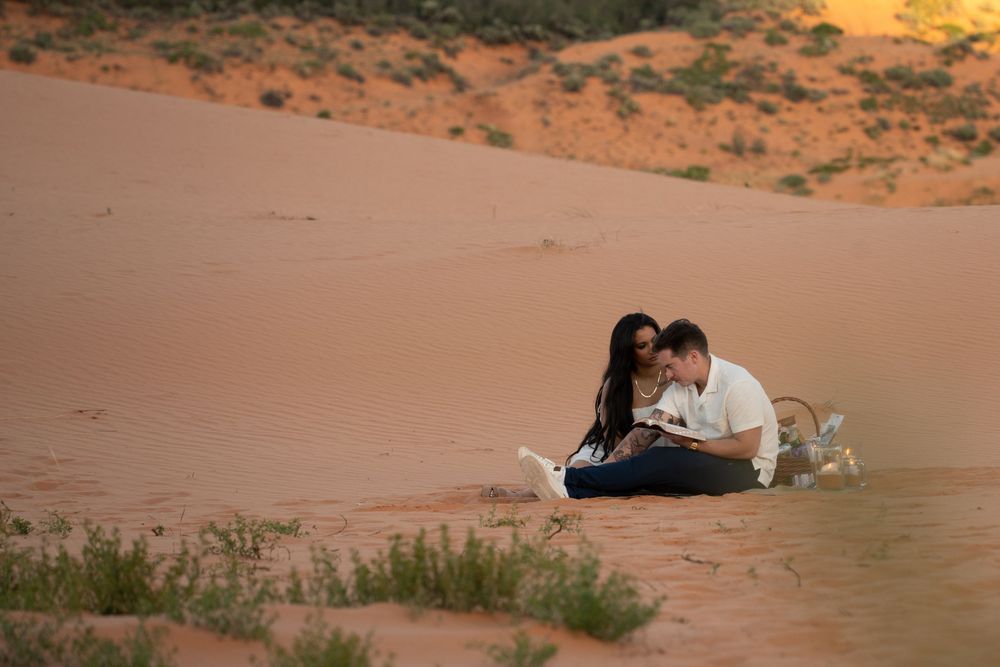
I don’t yet have a dedicated Cedar Breaks proposal session to show you. The image on this page is from a Coral Pink Sand Dunes shoot near Kanab, a different southern Utah location with a desert look rather than Cedar Breaks’ alpine amphitheater, and it’s labeled that way rather than presented as Cedar Breaks. If a quiet, high-elevation overlook proposal is what you’re picturing, that’s what I can plan for you here.
Cedar Breaks pairs naturally with a Bryce Canyon trip: the two sit about an hour apart, so it’s easy to plan a proposal at one and a sunrise or sunset walk at the other. See my Bryce Canyon proposal photography guide for permit details on that side of the trip. Staying near Brian Head or comparing places to sleep first? My glamping comparison for the Bryce Canyon area covers drive times to Brian Head and Cedar Breaks from five different properties. And if red rock without the elevation gain fits your trip better, my Zion proposal photography and St. George proposal photography pages cover other spots in southern Utah.
Photographer
Your Cedar Breaks Proposal Photographer
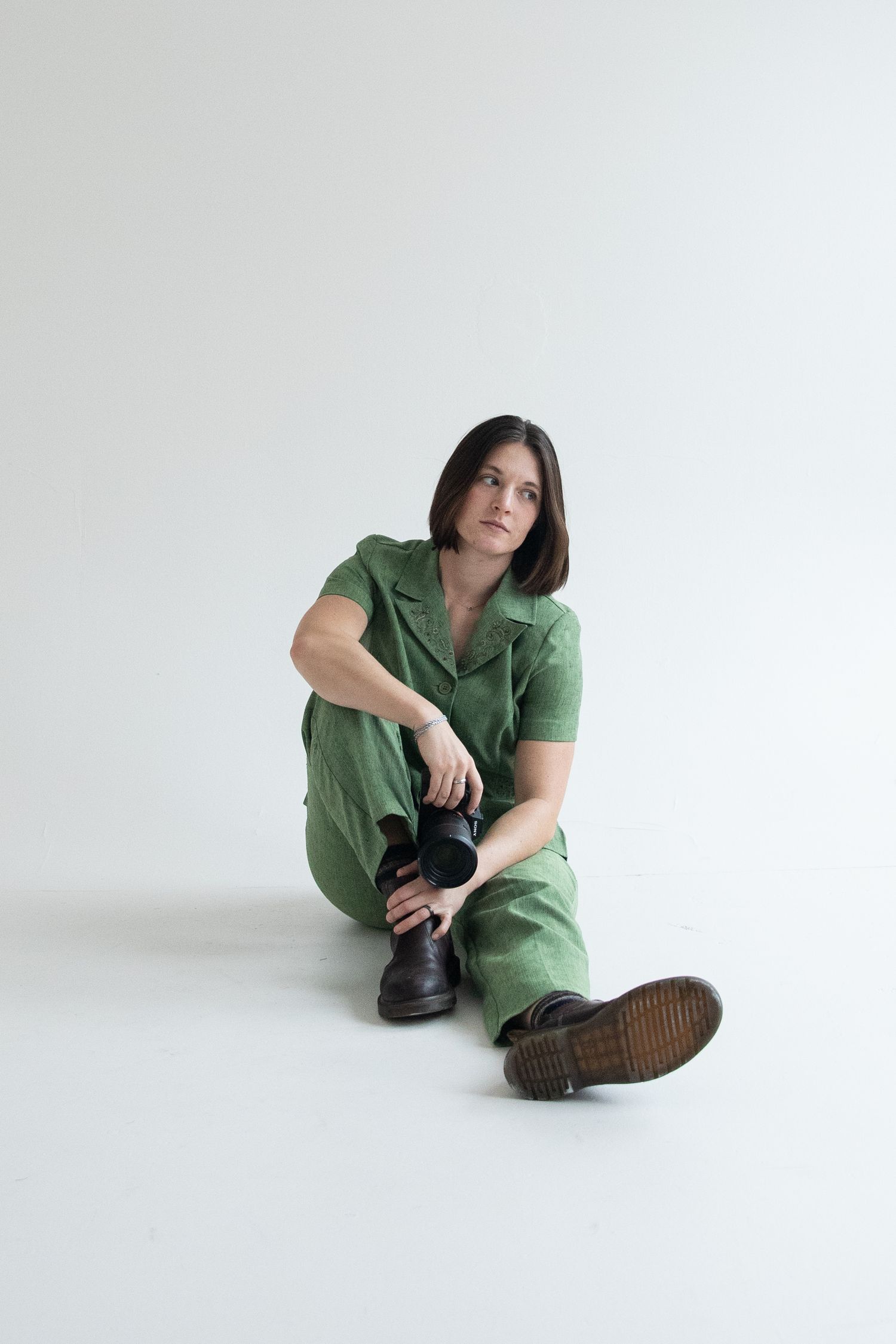
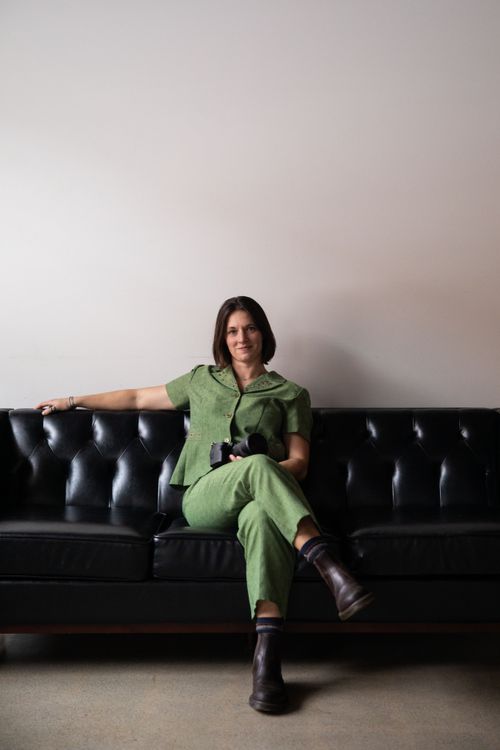
I’m Jade, a Utah-based proposal photographer, and Cedar Breaks is one of the highest, quietest overlooks on my list to shoot. I haven’t documented a proposal here yet, so instead of a gallery, this page is built from research pulled directly from the National Park Service: current fees, the season the road stays open, permit rules for the six spots above, and the details that change your plans, like how a 10,000-foot elevation hits differently than a desert hike.
Proposal photography starts at $845, with travel added since Cedar Breaks sits well outside the standard hour-of-Wasatch-Front radius. You’ll have 40+ edited images and video within 24 hours. Tell me what you’re picturing and we’ll work it into your quote.
Ready to Plan Your Cedar Breaks Proposal?
Tell me your travel dates and what you’re picturing, and I’ll confirm SR-148 is open, help you pack for the elevation, and send back a plan that keeps her in the dark until you’re already on one knee.
Frequently Asked Questions About Cedar Breaks Proposals
Do you need a permit to propose at Cedar Breaks National Monument?
No, that requirement only applies to an actual wedding ceremony, not a standard proposal. One rule worth knowing either way: drones are banned across every unit of the National Park System, Cedar Breaks included, so an aerial shot of the amphitheater isn’t an option here regardless of what you’re planning.
What's the entrance fee at Cedar Breaks, and can I pay with cash?
$25 per vehicle for 7 days (covers up to 15 passengers), $20 for a motorcycle, or $15 per person on foot or bike, with anyone 16 and under free. No, the monument doesn’t accept cash at all, bring a credit or debit card. If you expect to return, the park’s own $45 annual pass beats the broader $80 America the Beautiful pass on price for a Cedar-Breaks-only visitor.
How much does it cost to hire a proposal photographer for Cedar Breaks?
Utah proposal photography starts at $845 for a proposal within about an hour of the Wasatch Front, and Cedar Breaks sits well outside that range, so travel is built into your quote. That’s separate from any park permit fees, which only apply if you’re planning a ceremony rather than a proposal. I’ll work out your number with you on the planning call before you book anything.
Does booking a Cedar Breaks wedding ceremony reserve the overlook just for our group?
No, and this catches people off guard. The Special Use Permit doesn’t grant exclusive use of the area, so other visitors stay free to walk through while your ceremony happens. The park also won’t allow generators or outside electrical power at any site, and parking is restricted to designated areas only.
What’s the best time of year to propose at Cedar Breaks?
Late September, if fall color is part of your vision. That’s when the aspens along the rim turn, giving you gold and orange against the amphitheater’s white and orange rock without giving up the alpine setting. It’s a narrower window than the roughly late-May-through-mid-November season the road stays open, so I’d lock in a date early if fall color is the whole point.
Is the altitude a legitimate concern for a Cedar Breaks proposal hike?
It’s worth planning around, yes. At over 10,000 feet, even an easy-sounding walk like the Alpine Pond loop can feel more strenuous than the mileage suggests if you’re coming from sea level or a lower-elevation city. Give yourself a day to acclimate if your schedule allows, drink more water than you think you need, and don’t schedule a hike immediately after a long drive up from the desert floor.
Does weather change fast at Cedar Breaks?
Yes, more than it does at the desert parks below. Afternoon thunderstorms build quickly at this elevation through the summer months, and temperatures can drop sharply once a storm rolls in or the sun dips behind the rim. I plan most Cedar Breaks proposals for morning specifically to get ahead of that pattern, and I keep an eye on the forecast right up to your date so we can shift timing if a storm looks likely.
How close can we get to wildlife while scouting a Cedar Breaks proposal spot?
The park asks visitors to stay at least 150 feet from condors and 25 feet from other wildlife. Worth knowing before you pick a quiet, off-trail overlook, since the amphitheater rim does see condor activity in season.
Should we propose at Cedar Breaks or Bryce Canyon?
It depends on what you’re picturing. Bryce Canyon has maintained trails that drop down among the hoodoos, so you can stand at eye level with the spires, and a bigger crowd to match its bigger reputation. Cedar Breaks stays rim-level, no in-canyon trail access, but trades that for a fraction of Bryce’s visitor traffic, a cooler climate, and a lower entrance fee. Plenty of couples do both on the same trip: propose at Cedar Breaks, then spend the afternoon walking Bryce’s trails once the pressure’s off.
Is there an airport near Cedar Breaks?
Cedar City Regional Airport has limited commercial service on a regional carrier, worth checking directly since small-market flight schedules change often. Most out-of-state couples still fly into St. George or Salt Lake City and drive the rest of the way, since those airports carry far more route options and are rarely much slower once you account for connection times.
Can you keep a Cedar Breaks proposal a surprise?
Yes, the same approach I use everywhere else. I scout the overlook ahead of time, blend in like just another hiker with a camera, and shoot from a distance so she has no idea until you’re already down on one knee.
How fast will we get our Cedar Breaks proposal photos?
Within 24 hours. You’ll have 40+ edited images and video of the moment the very next day.
Written by
Jade Jarvis
Utah-based wedding, elopement, and proposal photographer since 2025. I've researched Cedar Breaks' permit rules, fees, and elevation quirks directly against primary sources, so the advice here comes from actual planning, not guesswork.