Accessible Proposal Spots in Utah: 8 Wheelchair-Friendly Park Overlooks
A paved path to a 2,000-foot canyon view exists in Utah, and you don't have to leave the parking lot far behind to reach it.
I get asked about accessible proposal spots in Utah more often than you'd guess, usually from someone whose partner uses a wheelchair, has a mobility limitation, or wants a parent or grandparent along who can't manage loose sand and sandstone steps. Utah's canyon country has more paved, wheelchair-friendly overlooks than most people expect, and they still deliver the kind of view a proposal photo deserves.
Utah has accessible viewpoints in its cities too, boardwalks, paved city parks, scenic pullouts along the highway. This list skips those on purpose. It's built specifically around spots inside national and state parks, chosen for the sweeping, only-in-Utah canyon and desert views that a city overlook can't match.
Every spot below is checked against the park's own accessibility page, not a travel blog's guess, with distances, surfaces, and permit notes so you can plan the day around what it needs. This is a proposal-photography guide, not a comprehensive accessibility resource, so call the park directly if your specific mobility needs go beyond what's noted here.
Zion National Park: Pa’rus Trail
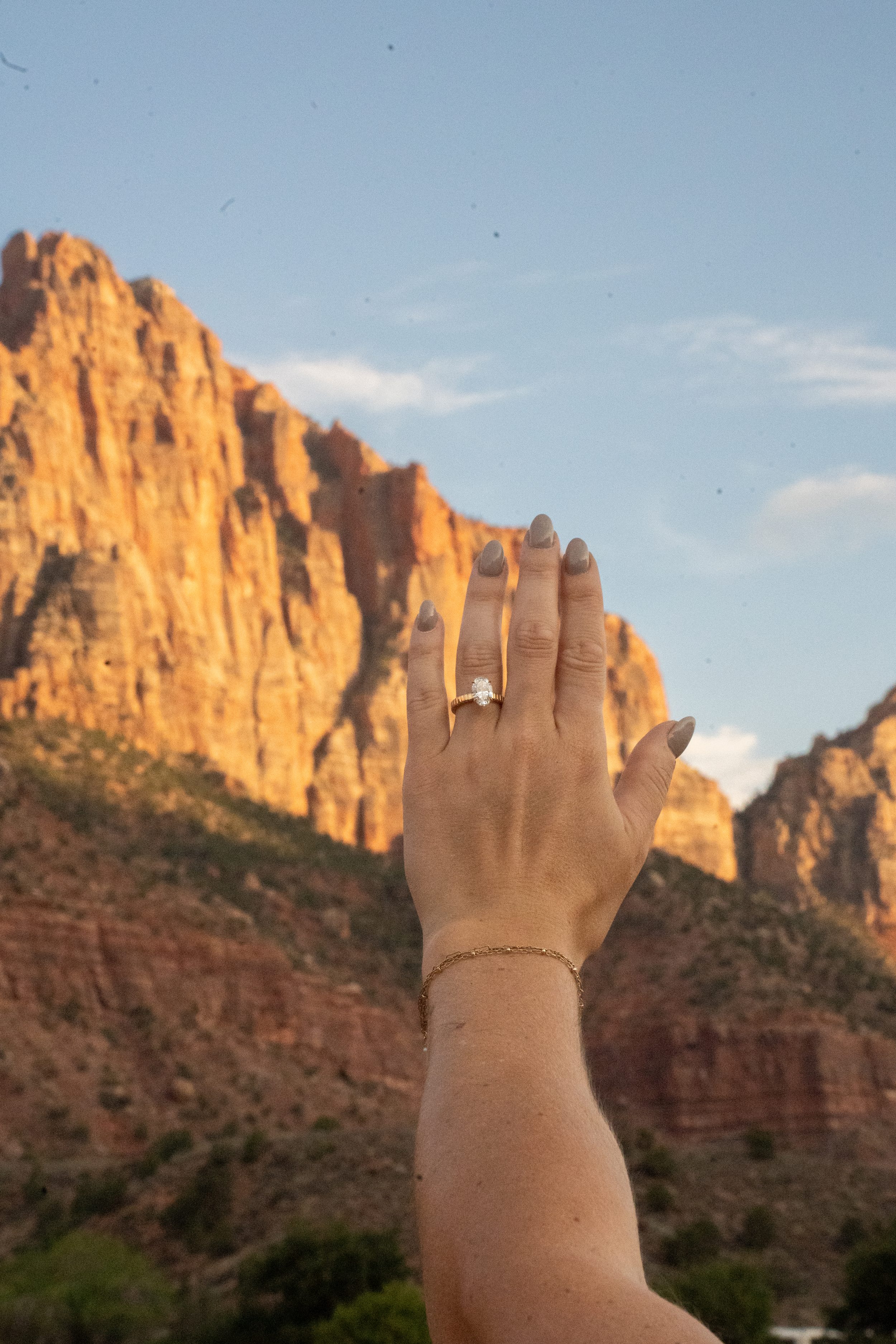
The Pa’rus Trail is paved from end to end, starting at the Zion Canyon Visitor Center and following the Virgin River into the canyon, with the park’s sandstone walls rising on both sides the whole way. It’s the one Zion trail built for this from the start: level, wide, and shared with cyclists and strollers rather than routed over slickrock.
Zion is upfront that no trail in the park, including this one, is legally classified as ADA accessible, since terrain and weather shift year to year. The park’s shuttle buses all carry wheelchair lifts (combined weight limit 600 lbs, chair size limit 45″ by 25″), and an all-terrain loaner wheelchair is available at the Visitor Center for anyone who wants to push further onto rougher ground.
For a proposal, the light along the river corridor in late afternoon is hard to beat, and you don’t need a permit for the walk itself. See the full Zion proposal photographer guide for permit and timing detail beyond this one trail.
Arches National Park: Double Arch Trail
Double Arch is the most reliably accessible named feature in the park: a 0.6-mile round trip on a hard, unobstructed surface, about 9 feet wide with a maximum 5% grade and almost none of the trail exceeding an 8% grade. That’s a different experience than Balanced Rock’s trail nearby, which has a paved section but climbs to a 23% grade and adds rock steps once you're past the parking-lot view.
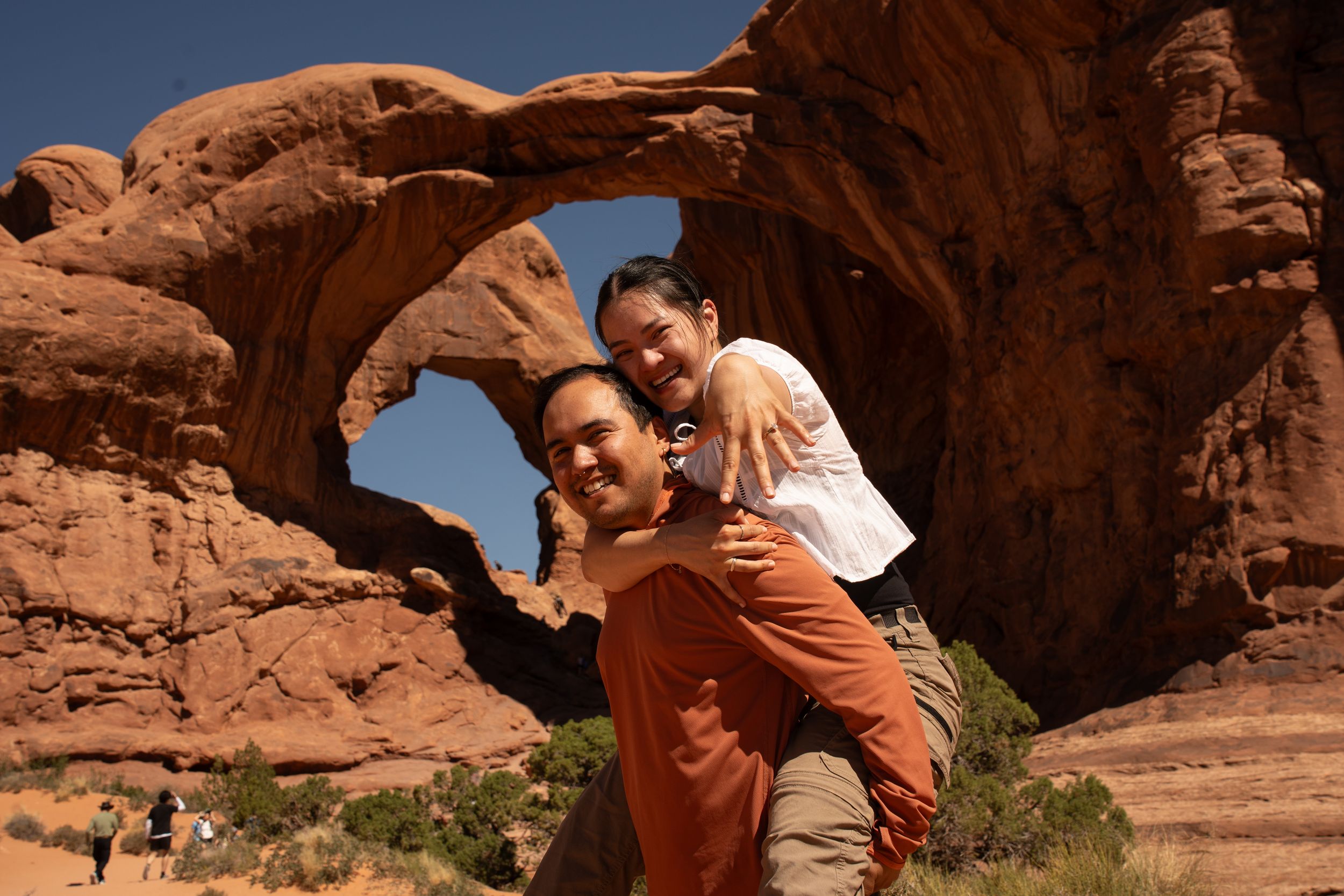
The payoff at the end is a pair of massive sandstone arches meeting at their bases, one of the most photographed formations in the park. The visitor center on the way in has a paved approach, push-button doors, and accessible restrooms.
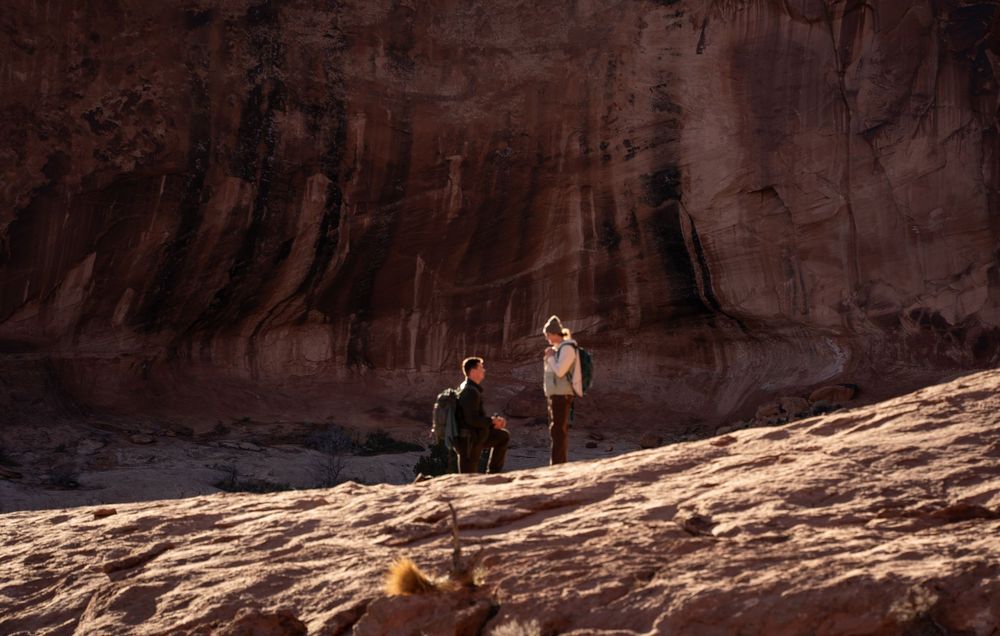
I’ve photographed a proposal at this exact spot: Aaron used a film camera as his cover story to get Lyna to Double Arch, then got down on one knee once they arrived. Read the full story in Aaron and Lyna’s Double Arch proposal, or see the Arches proposal photographer guide for the rest of the park.
Canyonlands National Park: Grand View Point Overlook
Island in the Sky is the district to plan around here: it's the closest to Moab and the park's own accessibility guide names Grand View Point, Green River Overlook, and Buck Canyon Overlook as its three wheelchair-accessible viewpoints. At Grand View Point specifically, a paved sidewalk runs from the parking lot to the main viewing area, though the path continues on gravel beyond that point.
The view is the payoff: Canyonlands' mesas and canyons stretch out below the rim in every direction, with the Colorado and Green Rivers carving through the layers far beneath. Elsewhere in the park, trails can turn to loose sand, gravel, and uneven slickrock without warning, so these three named overlooks are the ones to plan a proposal around rather than any unlabeled pullout.
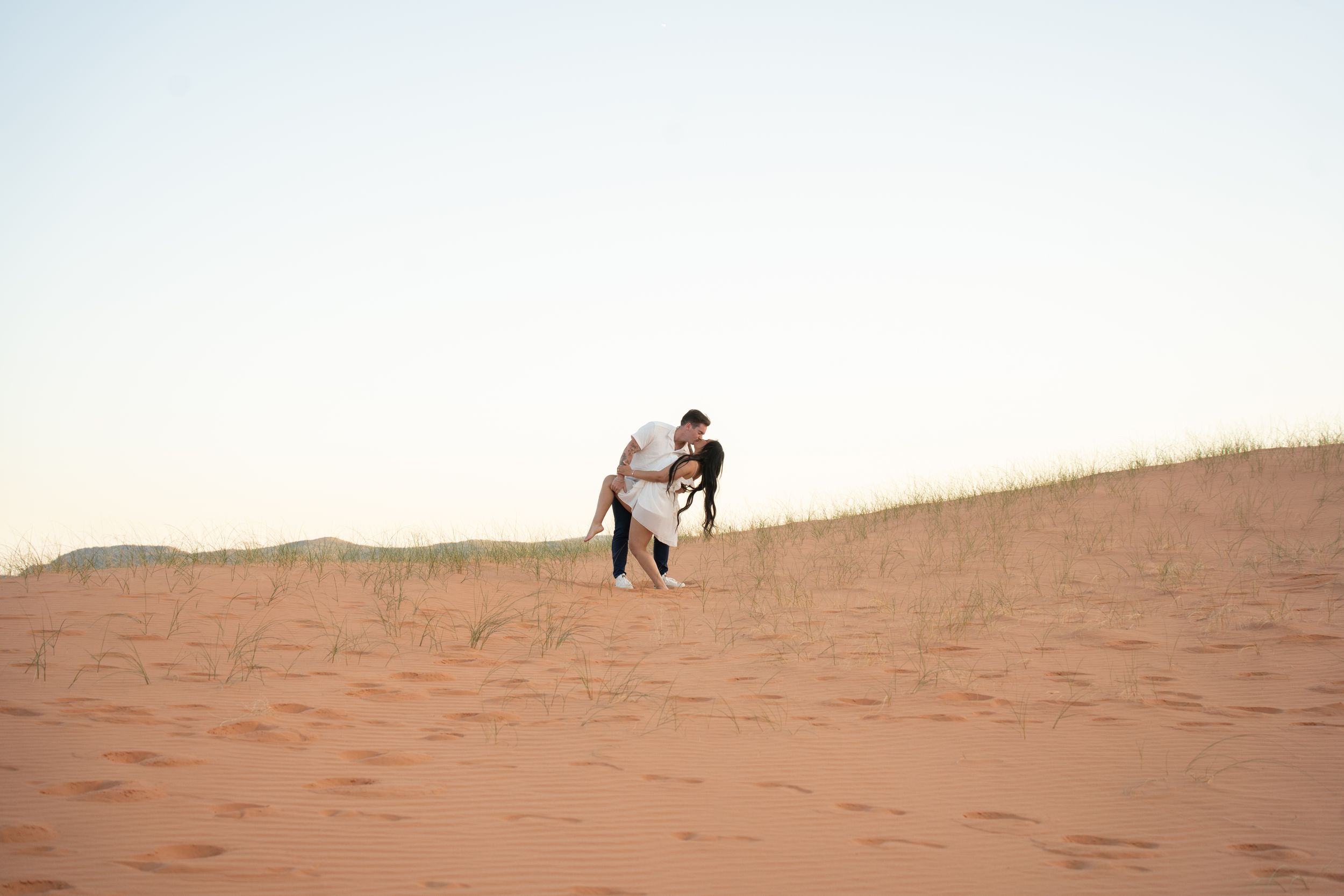
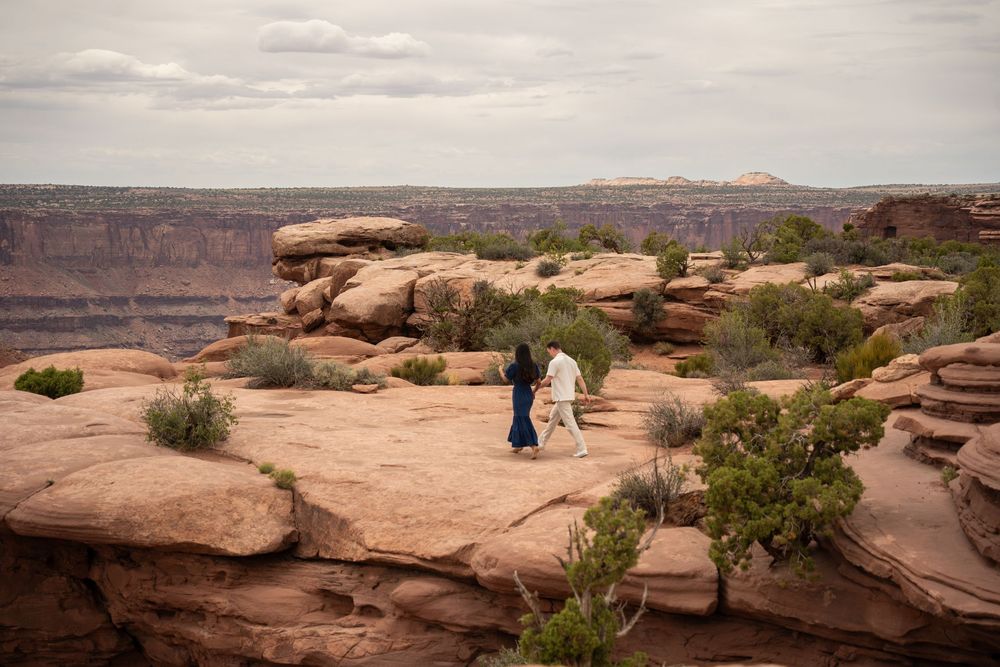
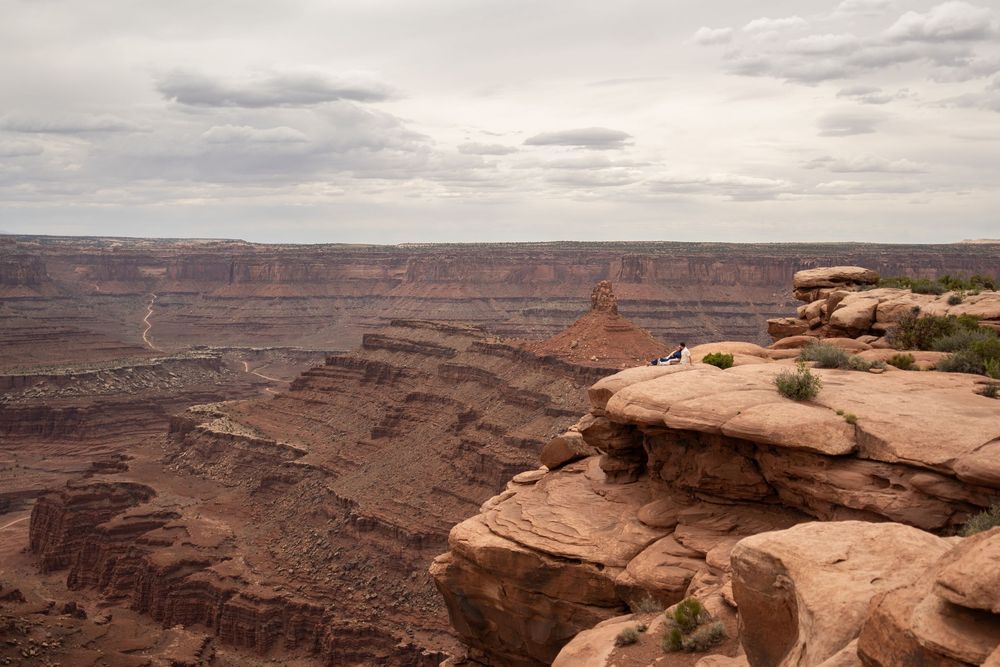
I don’t have a session shot at Grand View Point specifically yet, so the photo below is from a different southern Utah shoot, not staged as Canyonlands. See the Canyonlands elopement guide for more on the district, or the nearby state park entry below for a spot I have photographed.
Bryce Canyon National Park: Sunset Point
Sunset Point has what the park itself calls very good access: a paved, level trail running about 494 feet from the parking lot to the viewing area, with a maximum grade of 4.1% and only 7.6 feet of total elevation gain. A half-mile paved segment of the Rim Trail connects Sunset Point to Sunrise Point if you want to extend the walk along the rim.
The view looks straight into Bryce's amphitheater of hoodoos, the reason most people drive to this park in the first place. Bryce's shuttle buses run powered lifts with room for two wheelchairs on board, typically from April through October, as an alternative to parking at Sunset Point directly.
No session photographed at this specific overlook yet, so the image below is from a different shoot, labeled that way rather than presented as Bryce Canyon. See the Bryce Canyon proposal photographer guide for the rest of the park.
Capitol Reef National Park: Scenic Drive Overlooks
Capitol Reef is built to be experienced largely by vehicle, and the park notes that many of the scenic overlooks and wayside exhibits along the Scenic Drive are wheelchair accessible directly from the pullouts. The Picnic Area along the Scenic Drive adds reserved accessible parking and an accessible restroom if you want to make a stop of it.
In the Fruita Historic District, the Fremont Culture petroglyphs are reachable by boardwalk along Highway 24, and a section of the Fremont River Trail near the Gifford House is wheelchair accessible as well, both worth pairing with a Scenic Drive stop for variety in the backdrop.
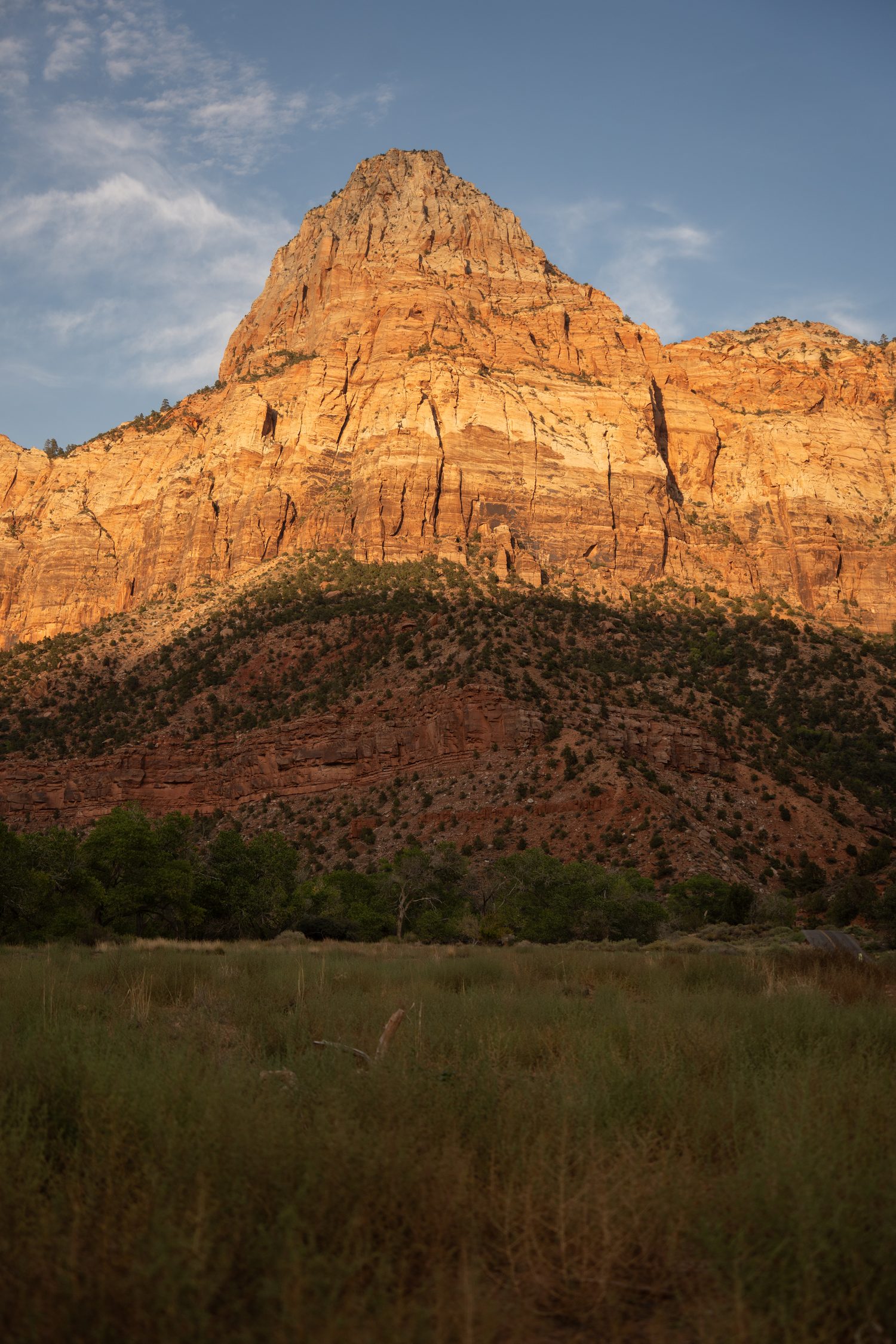
No session shot at Capitol Reef yet, so the photo below is from a different southern Utah location, labeled that way rather than as Capitol Reef.
Dead Horse Point State Park: The Main Overlook
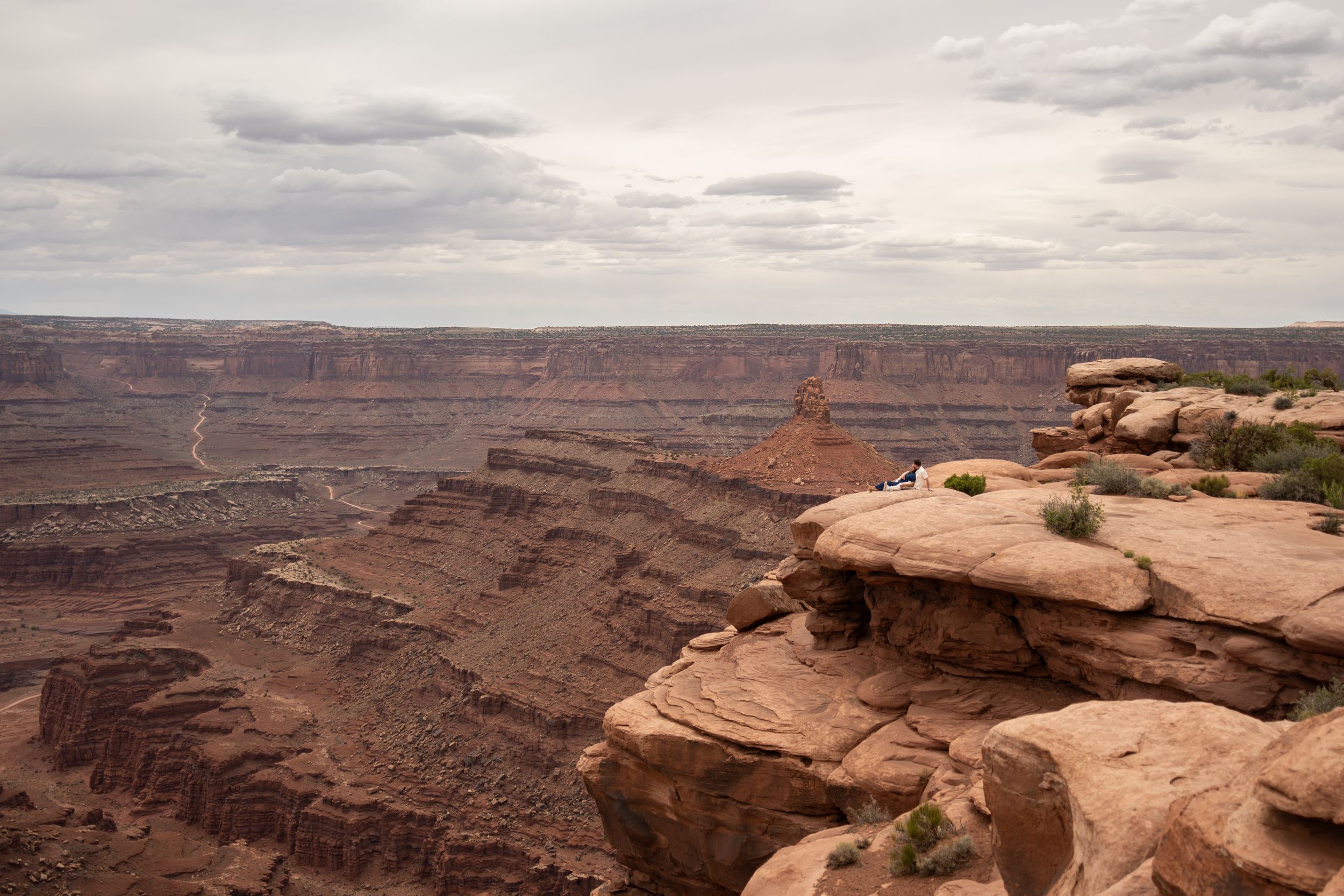
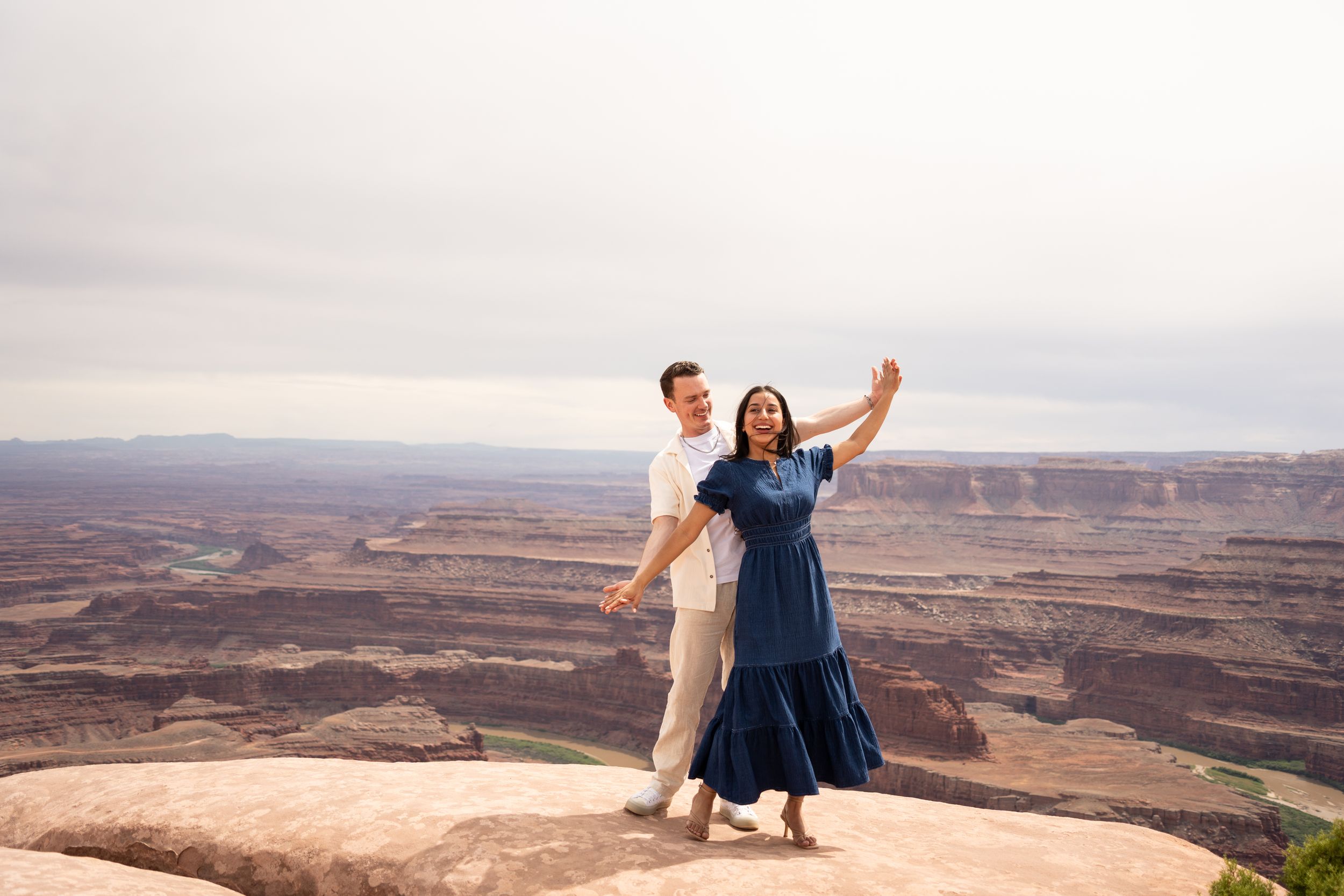
Dead Horse Point is the most accessible of every spot on this list. A paved, ADA-designed pathway runs from the parking lot straight to the main overlook, ending at a metal railing above a sheer 2,000-foot drop to a gooseneck bend of the Colorado River, with Canyonlands stretching out beyond it. A large shelter at the overlook gives you shade or weather cover.
Pavement continues past the shelter in both directions, but those east and west spur trails add steeper sections and short patches of slickrock, so they're not part of the ADA-designed route the main overlook is. A separate paved Visitor Center Nature Trail nearby covers desert plant exhibits if you want a second, shorter stop.
This is one of the most photographed viewpoints in the state, and I've shot proposals here more than once. Read the full Dead Horse Point elopement guide for permit and timing detail.
Antelope Island State Park: Visitor Center & Overlook Areas
Antelope Island sits at the end of a 7-mile paved causeway across the Great Salt Lake, a scenic approach in its own right before you've even parked. The park describes ADA access to most buildings and overlook areas, including the visitor center and its paved viewpoints looking out over the lake and the island's bison herd.
That access has firm limits: the beaches and dirt trails aren't wheelchair accessible, so an all-terrain chair or a companion's help is what gets you past the paved areas. The park doesn't currently keep a loaner all-terrain wheelchair on-site, so call ahead if that's part of your plan.
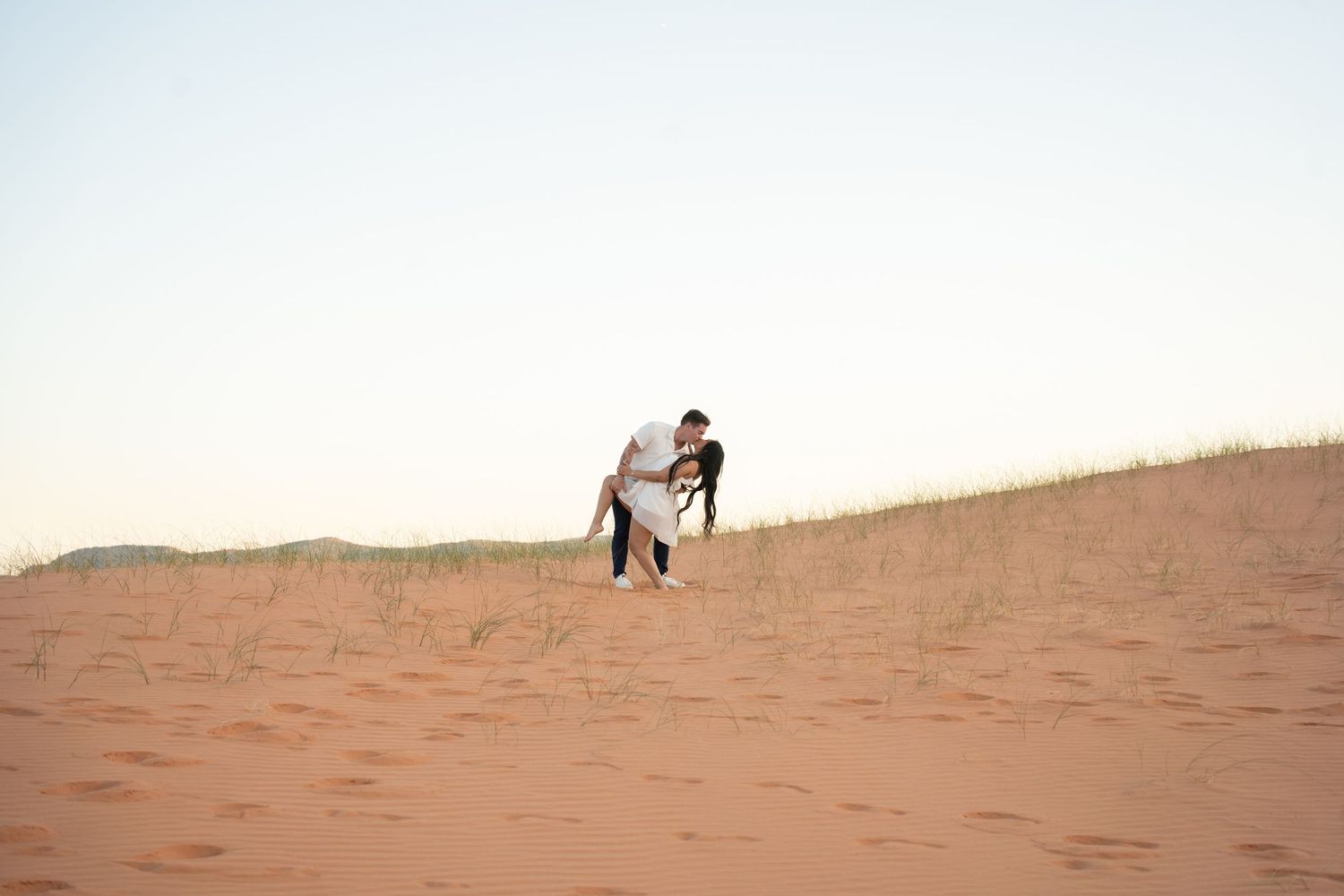
This backdrop reads completely differently from red rock: open water, mountains across the lake, and free-roaming bison rather than sandstone. No session shot here yet, so the photo below is from a different location, labeled that way. See the Salt Lake Valley section of the state parks guide for more on the island.
Snow Canyon State Park: Whiptail Trail & Tortoise Walk
Two paved options exist here. Tortoise Walk is short, 0.15 miles on a wide, flat, ADA-compliant crusher-fines surface ending at a seating area, with large-print and Braille guides available. Whiptail Trail runs much further, 3.5 miles of paved multi-use path shared with cyclists, easy overall aside from a steeper 0.8-mile stretch at its north end. The Snow Canyon Scenic Overlook is reachable either by a short dirt road or a parallel paved multi-use trail, depending on which surface you need.
The backdrop is red and white Navajo sandstone cliffs against black lava rock, a striking combination unique to this park. Snow Canyon also shares a reservable sand wheelchair with nearby Quail Creek and Sand Hollow state parks for its dune sections.
Neither documented St. George session on this site was shot inside Snow Canyon's own boundary, so the photo below is from a different location instead of a mislabeled one. See the St. George proposal photographer guide for permit detail specific to the park.
Frequently Asked Questions About Accessible Proposal Spots in Utah
Are Utah's national parks fully wheelchair accessible?
No, and the parks say so themselves: Zion states outright that none of its trails are considered ADA accessible by law, since red rock terrain shifts with erosion and weather. What each park does publish is a specific list of paved or hard-packed segments confirmed on its own accessibility page, which is what this list draws from rather than a general assumption that any park-labeled "scenic overlook" will work for a wheelchair.
Which of these parks has a loaner all-terrain wheelchair?
Zion keeps an adventure wheelchair, an "Extreme Motus" model, available to borrow at the Zion Canyon Visitor Center for trails rougher than the paved options. Snow Canyon shares a reservable sand wheelchair with Quail Creek and Sand Hollow state parks for its dune area. Antelope Island doesn't keep one on-site as of this writing, so call ahead if that's part of your plan there specifically.
Do you need a permit for a proposal photo session in a national park?
Usually not. Under current National Park Service policy, still photography with 8 or fewer people, using hand-carried equipment, and not requiring exclusive use of a site, doesn't need a permit or fee, and this applies whether the photographer is being paid or not. A proposal with a photographer is almost always well under that headcount. A staged setup with lighting gear, a large group, or exclusive access to a specific spot is a different situation and worth checking with the park directly.
Do the state parks on this list require a permit for a proposal?
A standard proposal, no officiant, no formal ceremony, typically doesn't trigger Utah State Parks' Special Use Permit process, which is built for weddings and organized events instead. The regular vehicle day-use fee still applies at Dead Horse Point, Antelope Island, and Snow Canyon regardless of what you're there for. Confirm the current rule with the specific park before your date, since fee schedules shift.
How crowded are these accessible overlooks?
The paved overlooks tend to be the most-visited spot in each park, since they're the easiest to reach, so expect company at midday. Early morning or the last hour before sunset thins the crowd at most of these, and at Zion and Bryce Canyon, the shuttle systems that serve these overlooks run on a set seasonal schedule (Bryce's shuttle typically runs April through October), so check current shuttle hours before you build a timeline around one.
Eight spots, all paved or hard-packed at the section that matters, all inside a national or state park, and all capable of a view worth kneeling down for. Pick the one that matches the trip you're already planning, and the accessibility question stops being a reason to settle for a parking-lot photo.
Planning an Accessible Proposal Somewhere on This List?
Tell me which park and what mobility needs matter for your day, and I'll confirm the current trail and permit details directly with the park, then plan around the light and the logistics so you're not the one making the calls. Surprise proposals stay hidden until you're already on one knee, with 40+ edited photos and video delivered in 24 hours.
No obligation until your exact plan and quote are locked in.
Written by
Jade Jarvis
Utah-based wedding, elopement, and proposal photographer since 2025. I checked every accessibility detail above against each park's own source before writing a word of this guide.